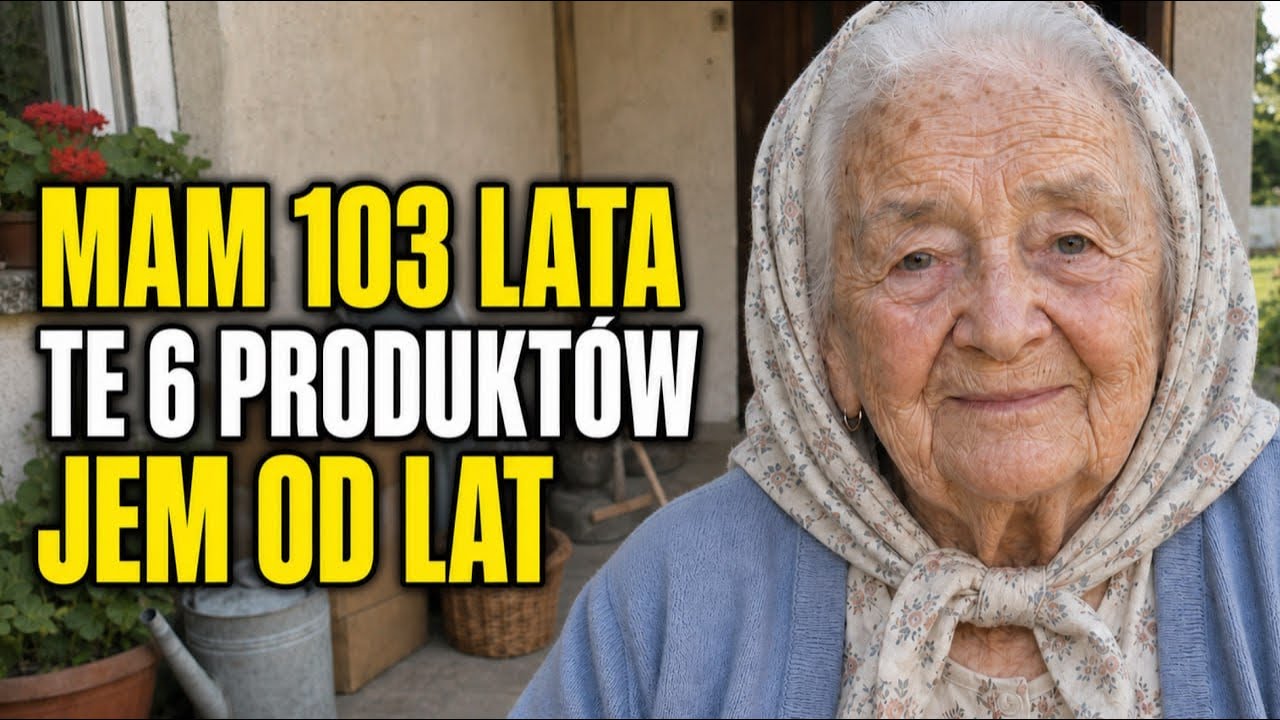
My granddaughter set up the camera and said, “Grandma, just talk. ”
Easy for her to say. The moment someone tells you to act natural, you sit there like you’re posing for an ID photo. For a week now, they’ve been asking what I ate that made me live this long.
As if a person could be cooked from a recipe. I can tell you what kept coming back to my table all my life, but I won’t turn an ordinary potato into a holy picture. No potato ever promised me a hundred years. No egg ever signed a contract with me.
I had a bit of sense, a bit of luck, a few good doctors, and a character that even illness didn’t always feel like fighting with. My name is Antonina. I turned 103 in March. For 46 years, I worked as a seamstress.
First in a small workshop, later in a cooperative. I sewed coats, fixed dresses, and more than once rescued a pair of trousers for a man who had only grown around the waist but insisted the fabric had shrunk. After all those years, I know one thing: a person is a bit like clothing. It isn’t held together by one strong stitch.
It’s held by many small stitches, made regularly and without much noise. Food was the same for me. I didn’t eat only six things. There were soups, vegetables, sometimes fish, sometimes meat.
Whatever was available and whatever the household could afford. But six foods came back more often than the others, and those are the ones I’ll tell you about. I’ll also tell you about one foolish thing I did after I turned 70, because I believed that in old age you should barely eat. It ended with me on the steps outside a bakery, legs like cotton, someone else’s bag under my head.
But we’ll get to that. The first thing is potatoes. When you have five mouths to feed and one salary, you don’t ask whether potatoes are healthy. You ask whether there will be enough until Saturday.
Potatoes were always in the cellar, in a sack, sometimes big, sometimes tiny as stones. You peeled them thin, because thick peeling was waste. My mother could look at a badly peeled potato in a way that made you feel guilty toward the whole farm. I usually boiled them in their skins.
With dill, a bit of butter, or soured milk if we had it. Other times, we mashed them into soup, baked them on a tray, or fried them up. Nothing went into the trash the next day. My husband Stefan claimed there was no dinner without meat.
I told him there was no dinner without money either. He ate the potatoes and even took his plate to the sink. Though I didn’t consider that a healthy sign. More like a temporary flash of insight.
Potatoes gave us an ordinary, filling meal. They didn’t need a two-page recipe. They didn’t pretend to be something they weren’t. When the children were small, I put the pot in the middle of the table.
Everyone took what they needed, but first they looked to see if there would be enough left for others. Today, a person can buy food from the other end of the world and still not notice that someone beside them hasn’t been served yet. I’m not saying everyone should eat potatoes daily. If you have diabetes, kidney problems, or a specific diet prescribed, you have to work out portions with your doctor.
A potato won’t be offended if you eat less. My portion was one that let me stand up from the table without help from family or the saints. That was my measure. The second thing is eggs.
An egg was working food for me. I boiled two in the evening. One for myself, one just in case. In the workshop, there was always someone who said in the morning she wasn’t hungry, and at eleven o’clock stared at someone else’s breakfast like a cat watching a herring.
I wrapped the egg in paper, with a slice of bread and a cucumber. I ate at the machine when there were lots of orders. Today they’d call that unhygienic. Back then, the bigger threat was the manager if you were late with a coat before the holidays.
My friend Hela brought hard candies to work. She said sugar gave her strength. It did, for about fifteen minutes. Then Hela would rest her head on a bolt of fabric and say she thought the weather was changing.
I ate my egg and went back to sewing. Not because I knew about protein. Back then, protein mainly made me think of what’s left after you separate the yolk. I just knew that after an egg, I wasn’t hungry for a long time.
At home, eggs were soft-boiled, fried, or added to dumplings. I never made medicine out of them. They were food. Later, people said eggs were bad, then that they were fine.
Then someone had another opinion. I didn’t chase every bit of news. I asked my doctor, got my tests done, and watched how my body reacted. That’s less dramatic than arguing with the whole world, but you sleep better at night.
If someone has high cholesterol, heart disease, or other restrictions, don’t take my lunchbox as a prescription. I’m telling you about my table, not giving advice. The egg came from a hen, the milk from a cow, and the gossip from a neighbor. At least you knew where everything came from.
The third thing was a bit harder because you could also smell it. Peas and beans. I cooked a big pot once or twice a week. Beans had to be soaked, peas picked through, everything boiled patiently.
From that came soup, a spread for bread, or a side to onions and potatoes. It wasn’t food for show. A bean doesn’t look elegant even when you put it on your best plate. But it was cheap, filling, and could wait in the cupboard.
At the end of the month, bread was cut thinner, and that was our whole diet. When my grandson was small, he asked why everyone opened the windows after pea soup. I said it was for health. I wasn’t lying.
Fresh air never hurt anyone. We didn’t have separate snacks. If a child was hungry between lunch and dinner, they got a slice of bread or a chore. Most often, both helped.
Beans also taught me something important. Cheap doesn’t mean worse, and expensive doesn’t mean necessary. Over the years, I sewed for women who came with very expensive fabric and a very bad idea. A person can spend a lot of money and still look bad.
It’s the same with dinner. But beans aren’t for everyone. Some tolerate them poorly, others have to watch their potassium or fiber. I soaked them long.
I poured the water out and started with a small portion. With age, I learned that courage at the table isn’t about spending the rest of the night proving your point to your stomach. The fourth thing is buckwheat groats. And it was the groats, along with potatoes and bread, that I gave up after 70, when I let someone convince me that a person ages from everything that fills you up.
I was 78 then. In the hairdresser’s waiting room, a woman was talking about how her cousin stopped eating bread, potatoes, and groats. She lost seven kilos and felt like a young girl. I never saw that cousin.
I didn’t know how old she was, what illnesses she had, or whether she really felt like a girl or just bought a shorter skirt. But I came home and decided I would be modern too. For several weeks, I ate less and less. Cottage cheese, some vegetables, coffee, sometimes a piece of meat.
I avoided potatoes, bread, and groats as if they were waiting around the corner with a stick. At first, I was proud of myself. Then I started feeling cold. Then I lost strength going up the stairs.
I said it was my age. After 70, you can blame almost anything on age and no one argues. One day, I went out for bread. In front of the bakery, I felt faint.
I sat down on the steps, and some woman put a bag of towels under my head. I remember my first thought was very sensible: I just hoped her eggs wouldn’t break. My daughter took me to the doctor. The doctor ran tests.
She asked what I ate, how much I drank, and what medications I took. When I told her about my diet, she took off her glasses and said, “Mrs. Antonina, you don’t need punishment. You need a proper meal.
”
I’m not claiming the groats alone put me back on my feet. I started eating enough, drinking regularly, following the recommendations, and stopped running experiments without consultation. Groats returned to the table, most often with fried onions, vegetables, or a bit of sauce. A normal portion.
That experience mattered more to me than all the stories from waiting rooms. Someone else’s way might help them, but that doesn’t make it law for the whole street. The body isn’t a dress. You can’t keep taking it in at one place and expect it to fit everywhere.
Since then, when someone tells me to completely cut out some ordinary food, I ask first: why, for how long, and what should I eat instead? Those are three very useful questions. The fifth thing is cottage cheese. Not every day, not half a kilo.
A few spoonfuls with onion, chives, or radish. Sometimes on bread, sometimes next to potatoes. Cottage cheese was my supper when I didn’t feel like cooking for long. Stefan called it bird food.
He’d say, “Give a person something real. ” So I gave him something real, and then watched him eat my cottage cheese out of the bowl. What hurt me most wasn’t the food. It was sitting at the table with a man who always had to be right.
Fortunately, Stefan was only right in his own mind. At home, I still knew where the clean socks were, where the bills were, and where the cellar key was. That was enough to keep the right order. Over time, cottage cheese became convenient because I could eat a small portion and not feel empty afterward.
But there’s no single answer for everyone. Some don’t tolerate dairy, others have to watch salt or protein. I choose plain cottage cheese and don’t salt it the way I used to. The doctor once told me less salt.
Stefan asked, “And maybe less doctor? ” I cut the salt. I didn’t answer my husband, because a person shouldn’t get into every argument, especially before supper. The sixth thing looks the least serious.
An apple. Not juice, not syrup, not an apple-flavored tablet. A plain apple, sometimes sour, sometimes bruised. My father planted an apple tree behind the house when I was still young.
It wasn’t pretty. It grew crooked. One branch hung low, another nearly over the roof of the shed. It gave so much fruit that by autumn we were all tired of it.
We made compote, applesauce, and apple cake. We dried slices for winter. A bruised apple went into the pot. No one threw away a whole fruit just because it had a spot on one side.
My mother used to say, “Cut out what’s bad, don’t insult the rest. ” Only years later did I understand she wasn’t only talking about apples. At work, I always kept one in my drawer. Sometimes it sat there for two days because I forgot.
When I finally took it out, Hela would ask whether I planned to eat it or hatch it. After Stefan died, I barely ate for a while. Not because I decided to die. The food just lost its time.
When you live with someone for over 60 years, the day is divided into shared sounds. His footsteps, the kettle, the chair being pushed back, the question of what’s for dinner. Suddenly everything goes quiet. For the first week, I still put two cups on the table.
Then I put the second one away and got angry at myself. One day, my neighbor Mrs. Lidia came over with soup. On top, she placed an apple.
She said, “Please reheat the soup. The apple is for later, and tomorrow I’ll come to check. ” It wasn’t the apple that saved me. It was that someone was coming tomorrow.
I ate the soup and left the apple for the evening. The next day, Lidia came in without knocking, as was her habit, looked into the pot, and only then asked how I was feeling. From then on, I tried to eat at regular times, even when I was alone. A small meal is still a meal.
The table doesn’t have to be full for you to sit at it. I still eat apples today, but I don’t say everyone should. If you have to control your sugar, have trouble chewing or digesting, you choose fruit to match your health. Sometimes I bake the apple.
It’s gentler, warm, and smells like home. So those were my six things. Potatoes, eggs, peas or beans, buckwheat groats, cottage cheese, and apples. It’s not all I ate.
It’s not a diet for a hundred years. It’s six ordinary foods I kept coming back to because they were available, filling, and I could make a meal out of them without a big production. Now I’ll say something these kinds of stories often don’t say. My husband ate at the same table and didn’t live to a hundred.
My sister ate similarly and had diabetes. Hela was thin her whole life and had heart trouble. Food matters, but it doesn’t keep books fairly. There are genes, illnesses, chance, living conditions, treatment, and things you only find out after tests.
If six foods guaranteed a hundred years, the priest would announce them after Mass, and the store would sell them in one bag. There is no such bag. If someone promises you certain health and long life, watch your wallet closely. A person who knows the future shouldn’t need to earn money from other people’s capsules.
I was lucky with a few doctors. I took my prescribed medications, got tests done, even though I hated having blood drawn. I moved, because for most of my life there was no other way. After lunch, I didn’t go to a workout.
I went to hang the laundry, bring something up from the cellar, water the flowers, or check why it had suddenly gotten so quiet in the kitchen. When children go quiet, it usually doesn’t mean anything good. The movement had no name. It was part of the day.
Today I walk less. I have a cane, and I’m not ashamed of it. A person doesn’t get younger by pretending nothing hurts. I also eat less than I did 30 years ago.
A smaller plate, a calmer pace. I don’t take seconds just because two spoonfuls are left and it would be a shame to dirty a container. I used to eat faster. In the workshop, every minute counted.
Only in retirement did I notice that dinner doesn’t run away. I sat down, put the spoon down between bites, and started feeling when I was full, not only when I had to unbutton my skirt. At my age, a person knows that not every emptiness needs to be filled with food. Sometimes you’re missing conversation, sometimes sleep, sometimes the courage to tell someone you can’t manage alone.
Then cake only helps until the last crumb. The best dinners weren’t always the best food. I remember a Sunday when I burned the soup. The potatoes were overcooked, and Stefan brought herring so salty you could drink half a well afterward.
At the table sat the children, the grandchildren, my neighbor Lidia, and some boyfriend of my granddaughter whose name no one remembered. It was cramped. Someone was laughing, someone spilled the compote. Stefan was telling a story we’d all heard many times.
And today, I would trade many elegant dinners for one more hour at that table. Not because the soup was healthy. Because everyone was still there. For years, I thought the most important thing was to feed the family well.
Only later did I understand you also have to sit down with them. I often didn’t sit. I served, brought more, cleaned up, got up for salt, for compote, for a clean plate. While others talked, I was already thinking about the dishes.
The women of my generation knew how to feed the whole house, but they didn’t always know how to let themselves be part of it. That’s what I regret. Not a missing vitamin, not an overcooked potato. I regret those moments when everyone sat together and I stood with my back to the stove, because I thought something still needed fixing.
A seamstress always sees a crooked stitch. Only life isn’t a client’s coat. You can’t rip it apart and sew it from the beginning. That’s why today, when someone comes over, I don’t run straight to the kitchen.
First, I sit down. Tea can wait two minutes. A person can’t always. If you want to take something from my story, don’t immediately buy six foods and make a hundred-year plan out of them.
Look at what you already have. Maybe there’s one simple dinner after which you feel good. Maybe a breakfast that doesn’t leave you hungry an hour later. Maybe a food you gave up only because some stranger called it unfashionable.
Talk to your doctor if you’re sick or on medication. Get tested. Don’t treat yourself with someone else’s story. Then choose one small thing you can repeat.
A good dinner doesn’t have to impress. It has to feed you and leave you strength for the rest of the day. For 46 years, I sewed clothes. The strongest ones weren’t made of the most expensive fabric.
The strongest ones were well cut and sewn with small, even stitches. I see life the same way. One potato won’t do anything. One egg won’t fix your health.
One apple won’t stop time. But thousands of ordinary meals, a bit of movement, treatment when it’s needed, and people who check whether you ate your soup can make quite a strong fabric. Does that mean I’m 103 because of it? I don’t know.
And an honest person should sometimes say, “I don’t know. ” I can only say this was my way of getting through ordinary days, and life, even a very long one, is made mostly of ordinary days. So don’t make me into proof. I’m one old woman who had a bit of luck, a stubborn family, good doctors, and a pot that was rarely empty.
If you have someone to sit down at the table with today, sit down for real. Don’t stand with your back to the stove. Don’t fix the tablecloth while someone is trying to tell you something. The soup can be a little salty.
The plate can be chipped. A person can have a bad day. Not everything has to be thrown away right away. My mother said it about bruised apples.
Cut out what’s bad. Don’t insult the rest. That’s probably the wisest thing I took out of the kitchen. My granddaughter is standing behind the camera now, motioning for me to look straight into the lens.
I’m looking. I’ve said my piece. Now turn off that camera, child.
The groats are getting cold.