I’m in my 70s now, and if there’s one thing age has taught me, it’s that a peaceful old age does not happen automatically. Some people grow older and softer. Others grow older and heavier inside. Same wrinkles, same gray hair, completely different spirit.
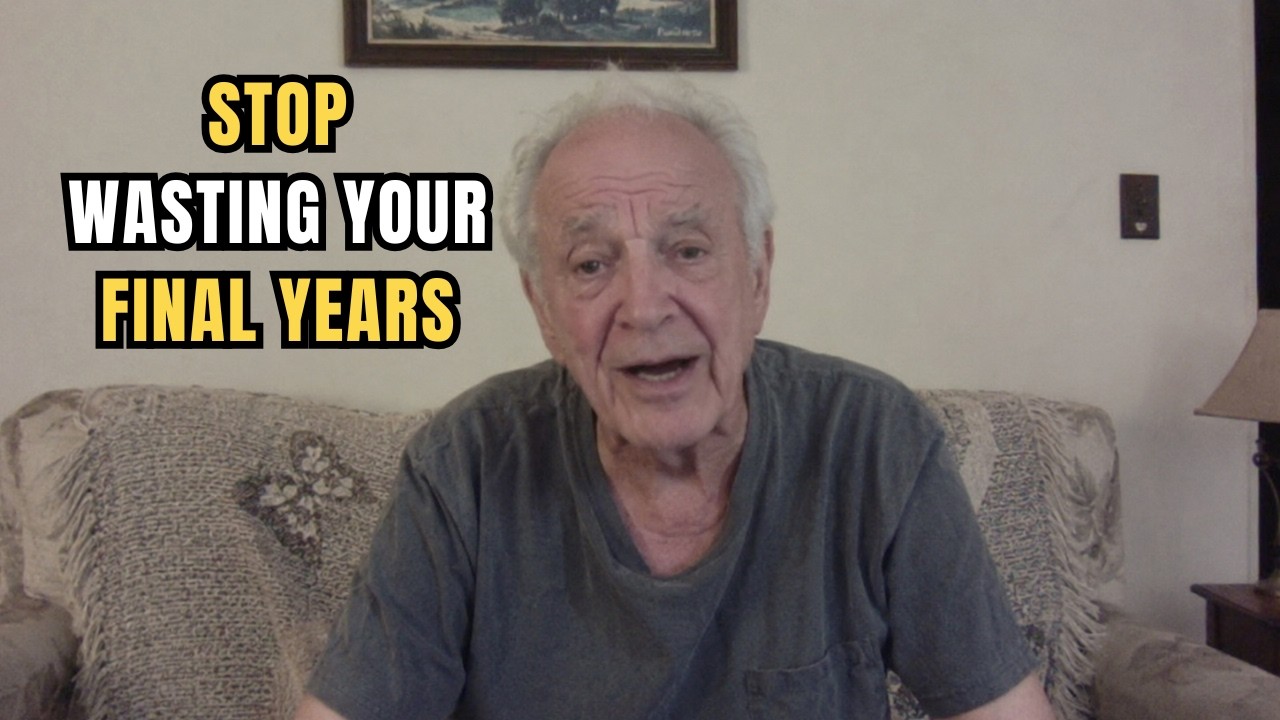
And after watching friends, neighbors, brothers, even myself go through these seasons, I started noticing certain habits that quietly steal joy from older people. They don’t look dangerous at first. Most of them feel reasonable, familiar, even normal. But they drain the soul little by little.
Tonight, I want to talk about them honestly—the way an old man talks when he has nothing left to prove and no reason to pretend anymore. The first thing that wastes your later years is carrying old resentment for far too long. I used to think holding on to anger made me strong. I really did.
When I was younger, somebody betrayed me in business, cost me money, embarrassed me publicly, nearly destroyed my confidence for years. And every time I remembered it, I would replay the conversation in my head like an old recording. I’d think of what I should have said, what I should have done. Sometimes I’d be driving alone, and suddenly I’d be arguing with a man who hadn’t been in my life for 20 years.
Isn’t that strange? The body gets old, but the mind can keep dragging the past into the present like it happened yesterday morning. And the dangerous part is that resentment starts becoming part of your identity. You stop saying “something painful happened to me” and slowly begin saying, “This pain is who I am.
”
I’ve seen older people build their entire personality around one betrayal, one divorce, one unfair sibling, one ungrateful child. Every conversation somehow circles back to the wound. The face changes when they talk about it. The voice tightens.
They become younger emotionally, almost frozen in the year the hurt happened. I say this gently because I understand it deeply. But at some point, you have to ask yourself how much of your remaining life you are willing to donate to a painful memory. Because the person who hurt you may have moved on long ago.
They may not even remember. Meanwhile, you are still carrying them around in your chest every single day. That is a terrible burden for an old heart to carry. I learned very late in life that forgiveness is not about saying what happened was acceptable.
Some things were wrong. Some things were cruel. But forgiveness is deciding that your peace matters more than continuing the argument inside your own mind. One morning a few years ago, I was sitting quietly before sunrise and I realized something that embarrassed me.
I had spent more time thinking about old pain than appreciating the life still sitting right in front of me. The coffee in my hand, the birds outside, my grandchildren laughing in another room. I was physically alive in the present, but emotionally living in old chapters that had already ended. That realization shook me.
So now, whenever painful memories return, I try to pause before feeding them. I breathe slowly and remind myself, “That was then. This is now. ”
It sounds simple, but old age teaches you that peace usually comes from simple things repeated many times.
Now, the second thing that wastes your later years is worrying about everything you cannot control. And my goodness, older people become experts at this without even noticing. We worry about our children even when they are 50 years old themselves. We worry about the economy, the country, the world, our health, the future, the weather, the news.
Some people wake up and immediately invite anxiety into the room before their feet even touch the floor. I know because I used to do it too. After retirement, I had more free time, and somehow that free time became empty space for worry to grow. I’d watch the news for hours thinking I was staying informed, but really I was feeding fear.
By nighttime, my nervous system was exhausted, and yet nothing in my actual life had changed. The mind loves the illusion of control. Worry makes us feel like we are doing something important, but most worrying changes absolutely nothing except our blood pressure. I remember an old friend of mine who spent the last decade of his life obsessing over every possible disaster.
He checked the stock market every hour, watched political debates until midnight, panicked constantly about his adult son’s decisions. And one afternoon, he looked at me and said, “I haven’t felt calm in years. ”
That sentence stayed with me because I realized many older people live that exact way. Constant mental tension becomes so familiar, they mistake it for responsibility.
But wisdom and worry are not the same thing. Caring about people is healthy. Destroying your peace over things you cannot control is not. At some point, you have to understand the difference between what belongs in your hands and what never did.
These days, I ask myself one question whenever anxiety rises. Can I actually do something meaningful about this today? Sometimes the answer is yes. Call someone you love, go for a walk, drink water, pray, vote, help a neighbor, apologize.
Those things matter. But if the answer is no, then I try not to let my mind camp there for hours. Old age should not feel like living inside a storm every day. There is a steadiness available to older people if they stop gripping life so tightly.
I’ve met elderly men who hardly say a word, yet sitting beside them feels peaceful because they are no longer fighting reality every minute. They understand something younger people often don’t. Life keeps changing no matter how loudly you worry about it. Now, the third thing that steals meaning from your remaining years is the desperate need to still feel important all the time.
This one is painful because almost nobody admits it openly. When you’re younger, people need you constantly. Your job needs you, your children need you, your opinions matter in every room. Then one day retirement comes, the kids grow up, technology changes, and suddenly you are no longer at the center of everything.
That transition humbles people more than they expected. I went through it myself. I remember sitting at a family dinner years ago while my grown children made decisions without asking my opinion first. And I felt something ugly rise in me.
Irritation, hurt, pride. I wanted to interrupt, wanted to remind everybody who used to carry this family on his shoulders. But I stayed quiet, and later that night I realized something uncomfortable. I did not actually want to help them.
I wanted to feel significant again. There’s a difference, and many older people suffer because they cannot separate wisdom from ego. They keep trying to prove they are still relevant, correcting everybody, giving advice nobody asked for, starting unnecessary arguments just to feel visible again. But the older I get, the more I admire elders who no longer need attention to feel valuable.
There’s a beautiful kind of strength in a person who can sit quietly without demanding recognition from everyone around them. A calm old man who doesn’t compete for importance brings more peace into a room than somebody constantly trying to dominate it. Age eventually teaches you that being respected by others is unstable. Some people will listen to you, some won’t.
Some will appreciate your sacrifices, some won’t even notice them. But self-respect, that’s different. Self-respect means you stop begging the world to constantly confirm your worth. And honestly, one of the greatest freedoms in old age is no longer needing to win every conversation.
I cannot explain how peaceful life becomes when you stop trying to prove yourself all the time. Sometimes silence protects your spirit better than another argument ever could. Now, the fourth thing I want to speak about is more subtle, but I think it quietly steals years from many older people. It is the habit of postponing inner peace because you believe there will always be more time later.
And I’ll tell you honestly, this illusion follows people all the way into old age. I cannot count how many times I’ve heard people say things like, “Once things settle down, I’ll finally relax. ” Or, “Next year, I’ll focus on myself. ” Or, “When life gets less busy, I’ll start enjoying my days.
”
And then suddenly 20 years pass, the grandchildren grow up. The body changes. Friends start disappearing one by one. And the peace they kept postponing never arrived because life never truly settles down the way we imagine it will.
There is always another problem waiting, another responsibility, another distraction. I remember meeting a man around my age at a doctor’s office years ago. Smart man, hard working, successful. He told me, “I spent my whole life preparing to live peacefully later.
”
I never forgot that sentence because there was sadness inside it. You could hear it. He had worked endlessly, sacrificed endlessly, delayed rest endlessly, and somehow never actually arrived at the life he thought he was building. That frightened me a little because I saw parts of myself in him.
Many older people are physically retired, but mentally still postponing life. They keep saying, “One day I’ll slow down. ” But one day, quietly becomes never. And the truth is, peace is not hiding somewhere in the future waiting for perfect conditions.
Peace has to be practiced now, inside imperfect conditions. Otherwise, you will spend your entire life chasing a finish line that keeps moving farther away. These days, my favorite moments are unbelievably ordinary. Sitting quietly early in the morning before the world wakes up.
Drinking tea slowly without rushing. Looking at sunlight coming through the window. Taking a short walk without carrying my phone. I used to think happiness needed excitement, achievement, recognition.
But old age stripped away that illusion for me. Peace is much quieter than people expect. And sadly, many people postpone that quiet life until their bodies are too exhausted to enjoy it properly. So if you’re listening to me tonight, don’t wait for some magical future version of life before allowing yourself to breathe deeply and be present.
Because time moves faster than you realize once you get older. The weeks become months, the months become years. One day you wake up and notice you have more memories than future plans. That changes a person.
It certainly changed me. And the fifth thing, perhaps the saddest of all, is spending your final years disconnected from yourself. I don’t mean physically alone. Some lonely people live in crowded houses.
I mean spiritually disconnected, emotionally disconnected. People who stopped listening to their own hearts a long time ago because survival became more important than self-awareness. Many older men, especially, grew up in generations where nobody taught us how to process emotions properly. You worked, you provided, you stayed strong, you kept moving.
And eventually, decades pass without ever truly sitting still with yourself. Then retirement comes, silence enters the room for the first time in years, and suddenly all the thoughts you buried start visiting you at night. Regrets, grief, fear, questions about your life, questions about whether you really spent your years on what mattered most. I think that’s why some people become restless in old age—not because they are weak, but because silence finally gives them permission to hear themselves again.
I went through a season like that myself after my wife passed away. The house became unbearably quiet. No television could fully distract me, no busy schedule could cover the emptiness anymore. And for the first time in decades, I had to sit with my own mind honestly.
At first, it was uncomfortable. Very uncomfortable. But little by little, I realized something important. Running from yourself becomes exhausting when you get old.
Eventually, you become too tired to keep escaping. And strangely enough, that can become a blessing. Because once you stop running, you begin noticing things you ignored for years. You notice how precious small moments are.
You notice how much emotional weight you’ve carried unnecessarily. You notice how often your mind lives everywhere except the present moment. Most importantly, you begin understanding that inner peace is not something another person can hand you. Not your children, not your spouse, not money, not distractions.
Peace grows slowly from learning how to sit comfortably inside your own life without constantly needing escape. Some evenings now, I simply sit on my porch and listen to the wind moving through the trees. No music, no television, no urgency. Younger versions of me would have found that boring.
Now I think it may be one of the richest experiences life offers—to simply exist quietly without fighting the moment. That is a form of freedom people rarely talk about. And when I look back on everything we talked about tonight—resentment, worry, needing importance, postponing peace, losing connection with yourself—I don’t see these as moral failures anymore. I really don’t.
I think these are survival habits. Old emotional patterns people carry for decades because life was difficult and they were trying their best. Most people were never taught how to age peacefully. They learned how to work hard, how to endure stress, how to survive hardship, but nobody taught them how to let go gracefully.
Nobody taught them how to grow old without becoming bitter, fearful, or emotionally exhausted. So if you recognize yourself in some of these words tonight, please don’t punish yourself for it. Just notice it honestly. That’s where change begins.
I’ve learned that the later years of life are not really about becoming somebody new. They are about releasing what no longer belongs inside you. Releasing the constant tension, releasing old arguments, releasing impossible expectations, releasing the need to control everything. And once you begin doing that, something surprising happens.
Life starts feeling lighter again. Not perfect, not easy, but lighter. You laugh more easily. You sleep more deeply.
You become softer with people. Even your face changes. I’ve seen elderly people with difficult lives still radiate calm because somewhere along the way they stopped fighting every moment of existence. There’s wisdom in that.
Real wisdom. You know, at this age, I no longer think the goal of life is to impress anybody. I think the goal is to become peaceful enough that your presence itself comforts others. Some people walk into a room carrying noise.
Others walk into a room carrying calm. And I believe older people have a chance to become that calm for the people around them. Not through perfection, not through pretending life was easy, but through honesty, through softness, through finally understanding what truly matters and what never really did. One day all the achievements fade.
The titles disappear. The arguments stop mattering. Eventually, what remains is very simple. Did you love people well?
Did you appreciate being alive while you were alive? Did you allow yourself moments of peace before the years disappeared? Those questions feel more important to me now than almost anything else. So tonight, before you go to sleep, maybe sit quietly for a few minutes.
No television, no phone, no noise. Just sit with yourself gently. Breathe slowly. And ask yourself whether the things stealing your peace are still worth carrying into the next chapter of your life.
Maybe some are. Maybe most are not. Only you can answer that honestly. But I do know this.
It is never too late to soften your heart. Never too late to let go of bitterness. Never too late to become more present.
As long as you are breathing, life is still offering you another chance to come home to yourself.