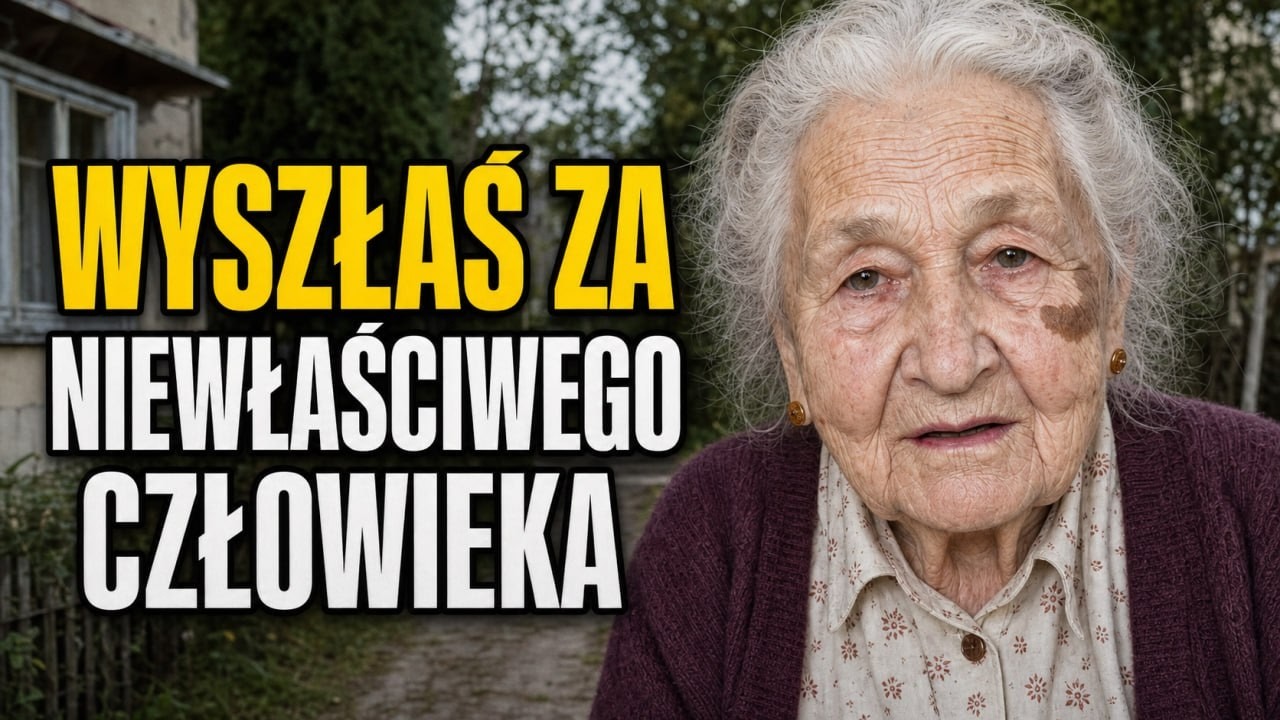
At 96 years old, after 64 years of marriage, I’m going to say something that might offend more than a few young wives. You probably married the wrong man. I did too. Now, before anyone thinks this old lady is telling people to grit their teeth and endure everything, let me set the record straight.
I am not talking about a home where you live in fear. Beatings, humiliation, threats, control, and constant terror—that is not a difficult personality or a test of love. From a place like that, you need to find help and a safe way out. I’m talking about something else.
The unpleasant discovery that sometimes comes after the wedding, when the orchestra has long since stopped playing, and on the table, instead of a cake, lies the bill for the coal. You look at the person next to you and think: “This is really the one I’m supposed to spend my whole life with? ”
I thought that after three years. After five, I even put a suitcase by the door.
I didn’t leave. But not because a neighbor gave me some wise saying and suddenly everything was beautiful. I stayed under three conditions. And the most important thing happened later, when Kazimierz had to show whether he, too, was choosing our marriage—or just the convenience of having a wife still in the house.
My name is Wanda. I met Kazimierz in Skarżysko-Kamienna. He was tall, had dark hair combed back, and worked at the railway workshops. He could fix anything that had a screw, a wire, or a hinge.
Feelings were harder for him. The screw, he could find. The feelings, not so much. We got married in 1954.
I was 24. He was a year older. For the wedding, he wore a navy suit borrowed from his cousin, a bit too wide in the shoulders. I had a dress sewn by my aunt and a bouquet of white carnations.
My mother cried, a neighbor played the accordion, and I was sure that since everyone said he was such a decent boy, life would be decent too. At a wedding, you get flowers, wishes, and very little real information. Our first apartment had two small rooms and a window through which the wind blew so hard in winter that the curtain had a life of its own. Kazimierz came home from work smelling of grease and soap, ate his soup, and told me what they had fixed at the workshop.
After a year, our daughter Ewa was born. That’s when the picture-perfect life ended and the real one began. Kazimierz would leave a wet towel on the door. When I wanted to talk, he stayed silent.
When I, after a whole day with a child, longed for some quiet, he would remember a story about a locomotive and tell it in full, complete with the names of everyone who had been present. The worst part was the money. I divided his paycheck into envelopes: food, rent, coal, the child. Kazimierz believed money existed to solve a problem when the problem was standing right in front of you.
Except sometimes the problem was his brother, sometimes a friend, and sometimes a set of keys without which, he claimed, civilization might grind to a halt. We also argued about Ewa. I wanted to explain things to her. He wanted the child to obey from the first word.
He said life wouldn’t pat her on the head. I replied that if life wouldn’t, then maybe her father could try sometimes. Then there was his mother. My mother-in-law had a key to our apartment and the conviction that God had given it to her along with the right to look into our pots.
She walked in without knocking, tasted the soup, adjusted the curtains, and asked Kazimierz if I always seasoned with so little salt. She didn’t ask me, even though I was standing right there. And Kazimierz stayed silent. He was so good at silence that you could hear the potatoes going cold.
In the early years, I thought a good husband should just know what his wife needed. He, in turn, thought that since I never said anything directly, everything must be fine. Two people, both offended, both waiting for the other to guess. Except he wasn’t a mind reader.
Sometimes he couldn’t even find the newspaper when it was lying right in front of him. The fifth year of our marriage almost became the last. It was autumn. A large portion of the money in the coal envelope was missing.
I had been saving it for two months. Ewa was coughing, the nights were getting cold, and for three days Kazimierz refused to say what he had done. I thought he’d drunk it away, gambled it away, or had some secret life I knew nothing about. Finally, he admitted he had given the money to his younger brother.
The nephew had ended up in the hospital. The brother had no money for medicine or travel. Kazimierz knew I was worried about the heating. So he decided not to tell me.
He decided it was better to lie to me for my own peace of mind. That was his wisdom then. I wasn’t angry that he helped a child. I was furious that he took our shared money and looked me in the eye for three days as if nothing had happened.
I told him that in this house, I was needed for cooking and counting, but not for making decisions. He said I was exaggerating. That one word was enough. I took the brown suitcase from the wardrobe.
I packed two dresses, a sweater, Ewa’s clothes, and a brush. I had no plan. My mother lived in one room with my sister. I just wanted Kazimierz to understand that a wife is not a piece of furniture that always stands in the same spot.
The neighbor from upstairs, Mrs. Janina, married for 30 years, saw me and invited me in for some grain coffee. Ewa fell asleep on the couch, and I told her everything. I waited for Janina to say I was right.
A person in anger isn’t looking for advice. They’re looking for a witness for the prosecution. Janina listened. Then she laughed.
Not at me. More at having heard something she herself knew all too well. She said: “Wanda, each of us married a bit of the wrong man, because the right one isn’t standing ready at the altar. Either you become right for each other over the years, or you remain strangers.
”
I didn’t like that. Wisdom that comforts you right away usually costs very little. This one annoyed me, so I suspected it might contain a grain of truth. But Janina said something else, something more important.
Don’t go back just because you’re afraid to leave. Go back if he, too, is ready to change something. A marriage can’t be pulled along by two people, and it certainly can’t be pulled by one. That was the difference.
I went back that evening, but I didn’t unpack the suitcase. I put three conditions in front of Kazimierz. First, no more spending shared money behind the other’s back—even for a good cause. Second, his mother returns the key and starts knocking.
Third, after a fight we can cool down, but we don’t punish each other with silence for three days. By the next evening at the latest, we sit at the table and talk about what’s really going on. Kazimierz was quiet for a long time. I was about to tell him he was already breaking the third condition before he’d even agreed to it.
Then he said: “Fine. But you have to speak plainly too. Don’t make me guess. I’m no good at it.
”
He was right. It hurt, but he was right. I unpacked the suitcase. I didn’t throw it away, though.
It stayed on top of the wardrobe for the next 59 years. The first real test came three weeks later. My mother-in-law walked in without knocking, carrying a pot of cabbage soup, and asked why Ewa had such thin tights. I looked at Kazimierz.
He turned paler than on his wedding day. He loved his mother and had feared her his whole life. He walked over to her and said calmly: “Mom, leave the key. When you come, you knock.
”
A storm broke loose. My mother-in-law cried, said her son was renouncing her, that I was standing between him and his family. Kazimierz didn’t shout, but he didn’t take back his words either. He walked her to the door and took the key.
That day, he didn’t become the perfect husband. But for the first time, I saw that I wasn’t the only one who had come back to the marriage. He had walked into it too. After that, things were still bad many times.
Conditions don’t work like a magic spell. If one conversation fixed everything, priests would be out of work after a single sermon. Kazimierz still fell silent sometimes. I spoke too sharply and slammed drawers while insisting I wasn’t angry at all.
One thing changed, though. We started coming back to the conversation. Not always the same day. Sometimes we had to sleep on it.
But we no longer built walls out of silence. We sat at the kitchen table after Ewa fell asleep, and each of us said their piece. Over time, I came to understand his silence. In the home of a stern father, a boy was supposed to work, eat, and not bother anyone with feelings.
When Kazimierz was afraid, he didn’t say “I’m scared. ” He went quiet and stiff. That explained his behavior. It didn’t excuse everything.
Understanding another person doesn’t mean you let them hurt you. It just means that instead of fighting a shadow, you finally see the real problem. It was the same with money. Kazimierz grew up poor, wore his brother’s hand-me-down shoes, and remembered a winter without heating.
He saved on shirts but spent on tools, because those tools meant he would always be needed by someone. When I understood that, I didn’t stop watching the envelopes. We simply added another one—for helping family and unexpected matters. We both knew how much was in it.
If money was missing, we talked first. That doesn’t sound romantic, but many marriages are saved not by a bouquet of flowers, but by a clear rule at the kitchen table. When Ewa was 17, she wanted to go to high school, then to nursing school. Kazimierz thought she should learn a trade faster.
He was afraid her dreams would leave her without bread. He said some harsh words to her. Ewa locked herself in her room and barely spoke to him for two days. I took her side.
There was another argument. This time I didn’t pack my suitcase. I just told him: “You’re allowed to be afraid for your daughter, but you’re not allowed to use your fear as a weapon against her. ”
The next evening, he knocked on Ewa’s door.
He said: “I don’t understand your choice, but I have no right to humiliate you for it. ”
There was no beautiful speech. Ewa just answered: “Okay, Dad. ” But from that moment, he started setting aside money for her school ticket.
Years later, she became a nurse. When Kazimierz got sick, she knew how to talk to the doctors. He once told me: “Good thing she didn’t listen to me then. ”
Those were his most beautiful apology, thirty years late.
But with him, everything important came slowly. I won’t pretend I always liked him. I loved him, but there were months when I was happier about his fishing trips than he was. I packed his sandwiches with such enthusiasm he might have thought I was a model wife.
In truth, I just knew that for two days, no one would leave a wet towel on the door. We needed separate air. My friend was Halina from the post office. With her, I talked about books and my mother.
Kazimierz didn’t read novels. He claimed that if a story was made up, there was no point getting worked up over it. He had his friends, his fishing, his allotment garden. We weren’t each other’s whole world.
And that was good. One person can’t be your husband, your best friend, your soul doctor, and the answer to every loneliness. That’s too much even for a saint. And Kazimierz was no saint.
He was my partner. Halina was my friend. My sister was the one I went to cry with. I had my hours, he had his.
That way, we came back to each other not only with grievances, but sometimes with something new to tell. The greatest test came many years later, after the changes in the country. The workshops were reducing staff. Kazimierz was almost 60, and suddenly, the man who had always known why he got up in the morning was stuck at home.
At first he said he would rest. Then he stopped shaving. He sat by the window and watched others go to work. He didn’t want to meet his old colleagues.
Any question about the future felt like an accusation. One morning he said: “I’m not needed by anyone anymore. ”
This was the same man who used to spend money on tools so he’d never feel helpless. Now they all lay in the basement, and he didn’t have the strength to go down and get them.
For almost a year, I carried us. I worked in the school kitchen, took extra shifts, and watched the bills. I was tired and furious that I’d come home after a whole day and he’d still be sitting there in the same shirt. Once I yelled that if he was going to sit and stare out the window all day, at least he could wash the glass.
I’m not proud of that. A tired person can be cruel, precisely where they’d most want to be kind. The next day, I apologized. Then I called his old foreman.
Not to get him a job—there were none. I asked him to come over with some small repair. He brought a broken coffee grinder and pretended he couldn’t manage without Kazimierz. Kazimierz fixed the grinder.
A week later, a neighbor brought a lamp. Then the housing cooperative asked him to adjust the doors in the basement. He didn’t go back to his old job, but slowly, he came back to himself. I didn’t save him with one sentence.
He also had to get up from that chair. I just held the house together for a while when he had no strength. People say marriage should be fifty-fifty. Ours rarely was.
Sometimes I carried two buckets and he carried one. Sometimes he carried everything, and I could barely carry my own body. That’s how it was after my surgery. I was 69.
When I came home from the hospital, I couldn’t get into the bathtub by myself, couldn’t stand for long, couldn’t lift a pot. Kazimierz cooked, cleaned, changed my dressings, and helped me to the bathroom. The first soup he made was so thick a spoon would stand up in it. He said at least it wouldn’t spill.
He wasn’t a natural cook, but he had patience. He never made me feel like a burden. He only said: “You’d do the same for me. ”
He was right.
That’s when I understood why you can’t keep a ledger of merits. If I wrote down every single washed plate and every small offense, I’d also have to count the nights he brought me water, adjusted my pillow, and watched to make sure I was breathing peacefully. In marriage, the balance only closes at the end. And even then, it’s better not to count too carefully, because love looks bad in a spreadsheet.
As we aged, we both changed even more. After 70, Kazimierz grew softer. He got teary at our granddaughter’s school play and held my hand in the cinema, even though he used to say hands were for work. I changed too.
At first, I was afraid to say what I wanted. Then I spoke too harshly. After my mother died, I shut down. And after 70, when the doctor found a suspicious growth, I genuinely became afraid of the end.
Kazimierz sat with me in the hospital corridor. He didn’t know how to comfort me. He said: “I don’t know what to say. But I’m not going anywhere.
”
That was better than beautiful words. The result turned out to be good. But the fear stayed with us for a while and changed the proportions of things. Our arguments got shorter.
Not because we’d suddenly become wise. We simply started to understand that a whole day wasn’t worth wasting over salt in the soup. Once we argued in the morning, and by evening neither of us remembered what it was about. Kazimierz said since the matter had gotten lost on its own, we wouldn’t go looking for it.
The last years weren’t easy. Kazimierz’s heart was failing. His hands shook. I cut his meat for him, arranged his pills, and reminded him what day it was.
After a fall, he was afraid to walk to the bathroom alone. I wanted to do everything myself. I believed that since I was his wife, I wasn’t allowed to hand over even a piece of his care to a stranger. Ewa saw that I was sleeping only a few hours a night and could barely stand.
She suggested a caregiver twice a week. I refused. Then I refused a second time. I was proud, exhausted, and convinced that sacrifice was proof of love.
Kazimierz overheard our conversation. He said: “Wanda, you don’t have to wear yourself out taking care of me. If we both end up lying down, Ewa will really have her hands full. ”
Even then, he could bring great matters down to a simple calculation.
I agreed to the help. It was one of the harder decisions. But a good one. On the days when Mrs.
Teresa came, I went to the market, visited Halina, or simply slept for an hour without listening for any sound. I came back to Kazimierz less irritable and more present. Love isn’t about one person dying of exhaustion a few months before the other. Sometimes the most loyal thing you can do is accept someone else’s helping hands.
Kazimierz died 8 years ago. He was 89. On his last evening, I sat beside him in the hospital. He was sleepy.
I fixed his blanket. I put the water closer and said: “I’ll come in the morning. ”
I said nothing grand. There was no movie-style farewell.
He mumbled that I shouldn’t come back in the dark, because it was slippery out. I replied that I knew how to walk. He died in the early morning, before I got there. It haunted me that our last words were about a slippery sidewalk.
Ewa said: “Mom, he worried about you his whole life. That was his goodbye. ”
And I think she was right. After the funeral, the house became unnaturally quiet.
For the first few weeks, I woke up and waited to hear his cough. I left a second cup on the table. Once, I saw a wet towel draped over the door and felt a moment of relief. It turned out Ewa had hung it there.
For 30 years, I was angry at that towel. After his death, I would have given anything to see it hanging crooked again. Grief has peculiar preferences. A few months later, Ewa and I were organizing the wardrobe.
On the top shelf stood the brown suitcase—the same one I had packed in the fifth year of our marriage. The leather was cracked. The handle was nearly falling off. Inside lay Ewa’s old kerchief and a piece of paper with my three conditions, written in my young, sharp handwriting.
Ewa asked if she should throw it away. I said: “No. This isn’t the suitcase I didn’t have the courage to leave with. This is the suitcase after which we both learned to stay differently.
Because you can stay in many ways. You can stay out of fear, out of lack of money, out of shame in front of people, or because you convinced yourself you have to suffer. I won’t praise that kind of staying. But you can also stay after a conversation, with boundaries, with help from others, and on the condition that the other person also takes responsibility.
That’s what we tried to do. We didn’t always succeed. We hurt each other many times. We stayed silent too long.
We apologized too late. What I regret most isn’t the arguments themselves, but the days after them, when we sat at the same table and pretended the other didn’t exist. A person thinks they have an endless number of dinners ahead of them. Only after the funeral do they understand that every single one was counted.
If today you look at your husband or wife and ask whether this is really the right person, I won’t answer you with one sentence. First, ask yourself four other questions. Are you safe with this person, and can you be yourself? When you say “this hurts me,” can the other person at least try to stop?
Can you both apologize, change a rule, and do something differently—or is it always only one of you giving in? And beneath the anger, is there still respect? If the answer is no, don’t cover it up with my story. 64 years together is not a reward in itself.
A long relationship can be a good life, but it can also be a long misery. The number of anniversaries doesn’t tell the whole truth. But if there is safety, respect, and two people willing to repair things, don’t run away just because the person beside you doesn’t match the picture you had in your head on your wedding day. The person you marry is not the person you grow old with.
They can’t be. Life will change you both. Kazimierz at 30 was stubborn, quick, and certain he had an answer for everything. After 50, he worried about money and closed himself off.
After 70, he softened around his grandchildren. At the end of his life, he needed me to cut his food and give him a hand when he stood up. Which one of them did I marry? All of them.
And none of them completely. He, too, didn’t marry just one Wanda. He got a girl who was afraid to speak up, a woman who slammed drawers, a mother fighting for her daughter, a wife after surgery, a friend, a caregiver, and an old woman who sometimes asked the same question twice. We weren’t ready-made soulmates.
We were two people with flaws, fears, and habits. We learned where the other one hurt, when to speak, and when to just sit beside them. Did I marry the right man? Today I think I was asking the wrong question.
I didn’t marry the right man. I married Kazimierz. And then, for 64 years, we both—sometimes better, sometimes worse—learned to be right for each other. If I could choose again, I would choose him again.
Not because I forgot the suitcase, the arguments, or the lonely nights. But because I also remember the key returned by his mother, the ticket bought for Ewa, the fixed coffee grinder, the soup with the standing spoon, the hand on the hospital corridor, and the last warning about the slippery sidewalk. Love wasn’t one feeling that lasted 64 years without pause. It was a decision repeated many times.
But always, by both of us.