The phone rang and my heart did a little jump. I picked it up, already smiling. It was my daughter. “Hi, Mom.
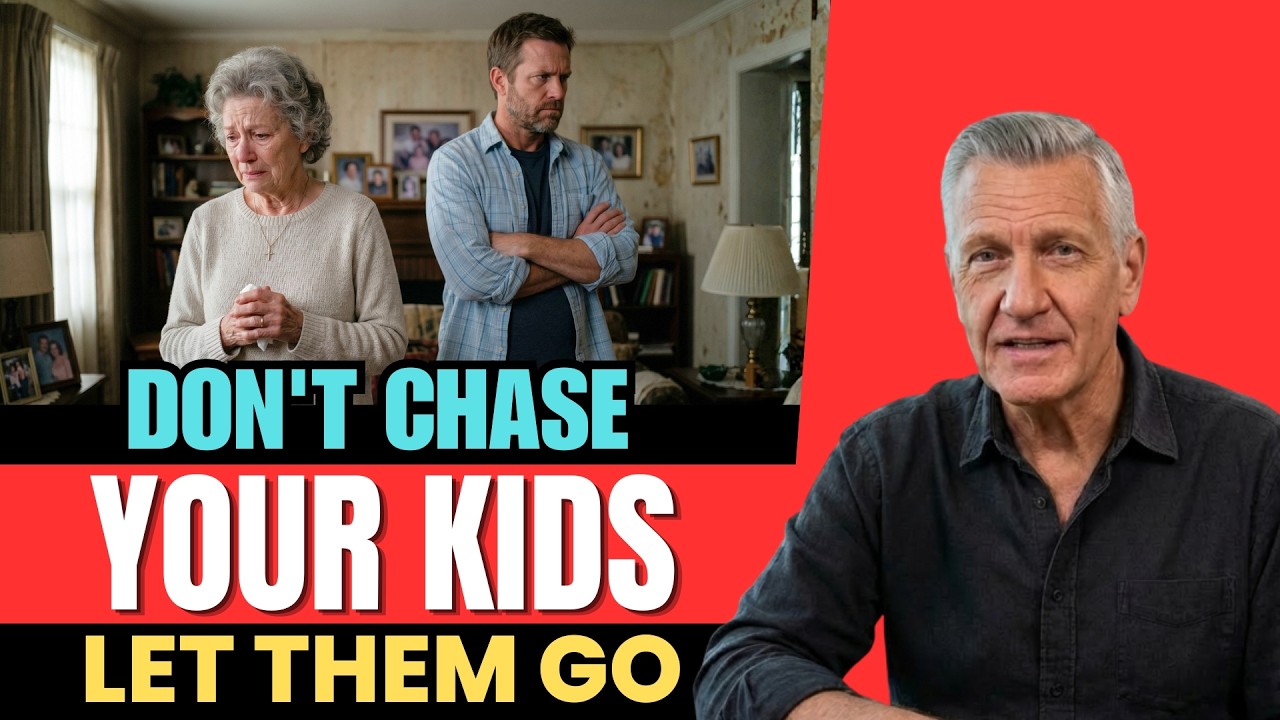
Sorry, I only have a minute. ” A minute. I had spent an hour replaying that minute in my head afterward, or trying to grab onto its edges before it slipped away completely. I have been a psychologist for over forty years.
I have sat across from thousands of people, many of them in their sixties, seventies, eighties. And I have seen the same quiet suffering again and again. It doesn’t come from disease or poverty. It comes from something much more invisible.
Waiting. Waiting for a son to call. Waiting for a daughter to visit. Waiting for someone, anyone, to remind you that you still matter.
I’ve watched that waiting slowly hollow people out. But I’ve also seen the opposite—men and women in their seventies and eighties who carry a kind of calm power. They love their children. They enjoy the visits.
But when the phone doesn’t ring, they’re fine. They have a book to read. A friend to meet. A garden to tend.
I call that quiet freedom. Here’s what happens to a lot of us after retirement. You spend thirty or forty years raising your children. Your identity is wrapped up in being a parent.
You pack lunches, drive to soccer practice, worry about grades and friends. Every decision runs through one filter: What’s best for the kids? Then one day, they leave. And they should leave.
That’s the whole point. You did your job. But nobody prepared you for what comes after. Your social circle shrinks.
Your colleagues disappear. Maybe your spouse is dealing with their own health issues, or maybe they’re already gone. So you start leaning on the one connection that still feels solid—your children. There’s nothing wrong with a close relationship with your adult children.
That’s beautiful. The problem starts when that relationship becomes your only source of meaning, your only source of emotional stability. In my practice, I’ve seen this take three forms. The first is emotional dependence.
Your mood rises and falls based on whether your child called today. If they called, it’s a good day. If they didn’t, you feel forgotten, worthless, like you don’t exist. The second is practical dependence.
You gradually stop doing things for yourself—not because you can’t, but because it’s easier to ask your son or daughter. You let them handle the bills, the appointments, the groceries. Each small surrender chips away at your confidence until you genuinely believe you can’t manage on your own. The third is identity dependence.
The only way you can describe yourself is in relation to your children. I’m Michael’s mother. I’m Sarah’s father. Take that away, and you don’t know who you are anymore.
Here’s the painful irony. The more you need your children, the more strain it puts on the relationship. They start to feel guilty. They feel suffocated.
They pull away—not because they don’t love you, but because being someone’s entire emotional world is too heavy a weight for anyone to carry. And then you feel even more abandoned. So you cling tighter. And they pull further away.
It’s a cycle, and it breaks hearts on both sides. The parents who are happiest in their seventies and eighties are not the ones whose children call every day. They’re the ones who don’t sit by the phone. Let me be clear, because this is where people get defensive.
When I say stop needing your children, I do not mean stop loving them. I mean something much deeper. Needing your children means when they call, you feel great. When they don’t call, you fall apart.
Not needing your children means when they call, you feel great. When they don’t call, you’re still okay. Because you have your own life, your own rhythm, your own reasons to get up in the morning. We call this emotional self-sufficiency—having the internal resources to generate your own sense of stability, purpose, and connection.
And here’s the beautiful thing: it doesn’t push people away. It actually draws them closer. Because when you’re okay on your own, every interaction with your children becomes a choice, not a demand. It becomes a joy, not an obligation.
How do you get there? Through five pillars. First, reclaim your identity beyond parent. Who were you before your children came into this world?
What did you love at twenty-five that you completely forgot by sixty-five? Painting? Fishing? Reading novels late into the night?
Somewhere along the way, you put those things down because your children needed you. But your children are grown now. Those parts of you didn’t die—they’re dormant. I had a client named Diane, seventy-two, who felt like a ghost in her own house.
No hobbies, no interests. She watched television and waited for her daughter to call. I asked her what she loved doing before she had kids. She went quiet for a long time, then said, “I used to write poetry.
” She hadn’t written a single poem in forty-five years. I told her to go home and write one. Just one. It didn’t have to be good.
The next week, she came back with three. Within six months, she had joined a writers group. She had friends. She had something to talk about that wasn’t her daughter’s schedule.
She had a piece of herself back. Second, build a chosen circle. Research shows that older adults who have close friendships outside their family consistently report higher levels of happiness than those who rely solely on family ties. Your children love you, but they’re busy.
They have jobs, spouses, kids of their own. They cannot and should not be your social world. You need at least two or three people you can call on any given day who are not your children. These people won’t replace your family, but they’ll take the pressure off your family.
If you don’t have those people yet, finding them is a skill. Show up somewhere regularly. Say yes to invitations even when you don’t feel like it. It feels awkward at first.
It gets easier. Third, master the practical—refuse to be helpless. Every skill you keep is a piece of freedom you keep. Can you manage your own medication schedule?
Handle your basic finances? Make a video call? Get yourself to a doctor’s appointment? Every time you hand one of those tasks to your children, not because you physically can’t do it but because it’s easier, you give away a small piece of your autonomy.
I’m not talking about situations where you genuinely need medical assistance. That’s different. I’m talking about the slow, voluntary surrender of capability. Fight it.
Learn one new thing on your phone this week. Sort your own pills. Every time you say “I can’t do that anymore” without actually trying, you give away a piece of who you are. Fourth, develop an inner life.
Can you sit alone in a room with no television, no phone, no noise, and feel at peace? If you can, you possess something incredibly rare. There’s a world of difference between solitude and loneliness. Loneliness is being alone and feeling like it’s punishment.
Solitude is being alone and feeling like nourishment. The shift happens when you develop a relationship with your own thoughts, your own memories, your own sense of meaning. Some find it through faith, some through meditation, some through journaling, some through long walks in nature. The method doesn’t matter.
What matters is that you have somewhere to go inside yourself—a place that doesn’t depend on anyone else showing up. Fifth, rewrite the story you tell yourself. Many older adults carry a story that sounds like this: I sacrificed everything for my children. I gave them the best years of my life.
Now it’s their turn to take care of me. That story isn’t wrong—you did sacrifice, you did give. But that story puts you in the role of someone who is owed something, someone waiting to collect a debt. And a person waiting to collect a debt is not free.
They’re a creditor, always watching the account, checking the balance, feeling shortchanged. Consider a different story: I raised my children. I did my job, and I did it well. That chapter is complete.
And now, my life is still mine. I have years left. I have mornings left. I have choices left, and I’m going to use them.
That story doesn’t erase what you gave. It honors it, and then it sets you free from it. You are not a bill your children need to pay. You are a person with a life to live.
Let me share two more stories from my practice. Margaret was seventy-four. After her husband passed, she started calling her daughter three, sometimes four times a day. Her daughter loved her, but she was drowning—two young kids, a full-time job, and a mother who needed constant reassurance that she was still loved.
Eventually, the daughter started letting calls go to voicemail. Margaret would sit staring at the phone, spiraling into despair. She came to me and said, “My daughter doesn’t care about me anymore. ” But that wasn’t true.
Her daughter cared deeply—she was just exhausted. We worked to rebuild Margaret’s world. She joined a community gardening group. She learned to use a tablet.
She made friends at the garden. And something remarkable happened. Her daughter started calling more—not out of guilt, but because talking to Margaret had become enjoyable again. Because Margaret had things to share.
Because the calls felt light instead of heavy. Then there was Robert, seventy-eight, three sons living in different states. His wife had been gone five years. He told me, “I feel like I’m just waiting to die.
” Robert didn’t need therapy as much as he needed a purpose. He’d been an engineer, a veteran, a man who built things. I asked him what he’d want to build now. He started writing his memories—stories from the Navy, stories from raising three boys in a small Ohio town.
He joined a veterans group. The last time I saw Robert, he said something I’ll never forget: “I stopped being a burden and became a person again. ”
Now, some of you are thinking, “That’s fine for healthy people, but I have real health problems. I actually need help.
” And you’re right. If you need physical help, get it. Accept it. There’s no shame in that.
But needing help with your body is not the same as needing someone to fill your soul. You can accept a ride to the doctor and still have emotional independence. You can let your son manage your medications and still have your own identity, your own friends, your own inner life. Some of you might be thinking, “My culture says children should take care of their parents.
” I respect that deeply. But there’s a difference between a child who chooses to care for you out of love and a child who feels trapped into caring for you out of guilt. The first builds connection. The second builds resentment.
When you develop your own freedom, you give your children the space to love you freely. And free love—that’s the only kind worth having. And for those of you thinking it’s too late—in forty years of practice, I have never, not once, met a person for whom it was truly too late. I’ve met people who were seventy-five and started painting for the first time.
I’ve met people who were eighty and made their first real friend in decades. I’ve met people who were nearly ninety who finally stopped waiting by the phone and found peace. It’s not too late. Not for you.
Quiet freedom isn’t a destination you arrive at all at once. It’s built one small choice at a time. One morning where you get up and do something for yourself. One afternoon where you call a friend instead of waiting for your child to call you.
One evening where you sit in silence and realize you’re okay. So here’s my challenge. This week, do one thing you would normally ask your children to do. Schedule your own appointment.
Go to the store. Call a friend you haven’t spoken to in months. And when you do it, notice how it feels. Notice that small, quiet spark of “I did that myself.
”
That spark is the beginning of your freedom. Your children don’t owe you their life. And you don’t owe yours to waiting for them. You still have a life—a real one, with mornings and choices and possibilities.
Live it.