Last Tuesday I took a cup from the china cabinet that my mother had forbidden anyone to touch. White, with a thin blue rim. It had been waiting there for nearly eighty years, always saved for a better occasion. First it was waiting for my engagement.
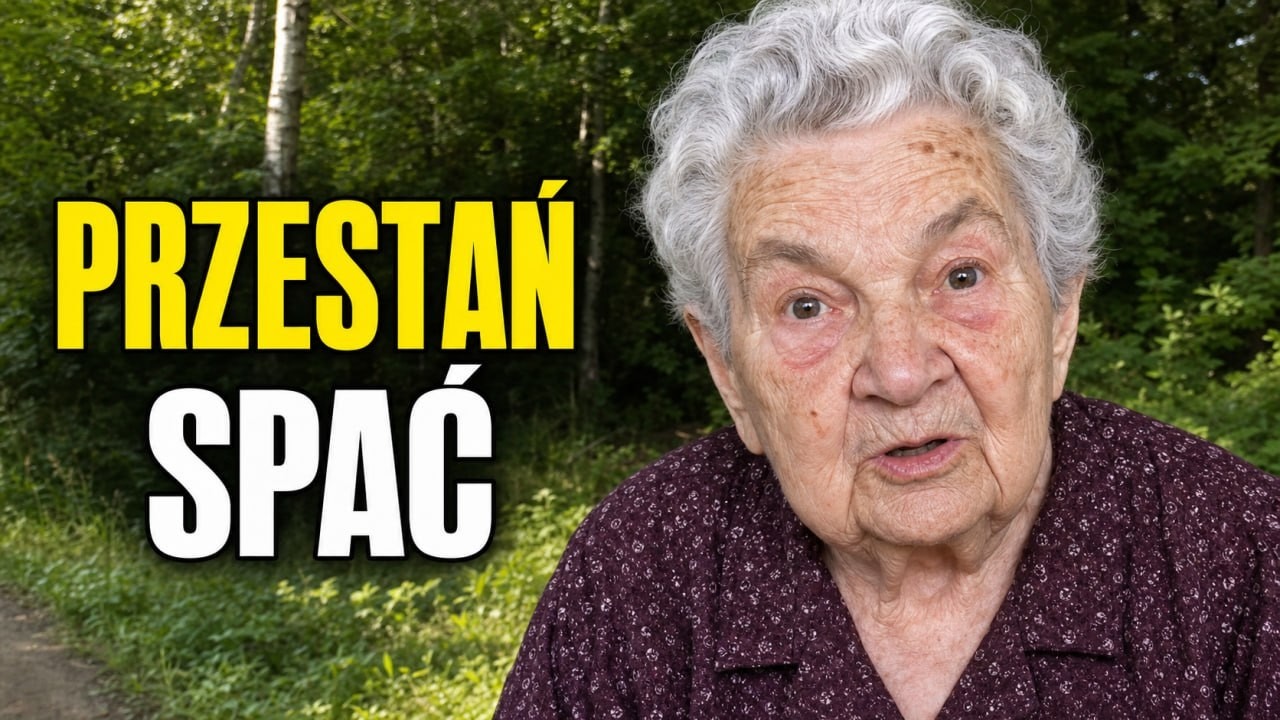
Then for a holiday when everything would be calm. Then for some important guest. Well, the important guest never came. I came instead, an old woman with shaking hands.
I brewed tea, sat at my table, and drank from that cup on an ordinary Tuesday. The tea tasted exactly the same. Only I wasn’t the same anymore. My name is Janina Wróbel.
I’m ninety-seven years old. For thirty-eight years I sold tickets at a small train station outside Kielce. Thousands of times I told people which train to take, which platform to stand on, where to change. And for half my life I couldn’t manage to leave my own station myself.
Before I finish, I’ll tell you about three things. The trip my husband and I saved for every year. The empty chair when my daughter needed me most. And the phone call to my sister that I waited eleven years to make, even though the telephone stood two steps from my table.
The most life I wasted wasn’t when I did something stupid. It was when I told myself, there’s still time. At the station, you learned quickly that trains don’t wait. Sometimes they arrived an hour late, but once they came, they left without asking if it suited you.
I started working young. The ticket booth had a small window, a thick counter, and a drawer that always jammed when the line was longest. In winter people stamped their feet. In summer they asked about trains to the sea.
Kołobrzeg, Ustka, Gdynia. The names smelled of water to me, though I’d never seen the sea. My husband Roman used to laugh that I knew every connection except the one for us. The first time we planned to go was 1968.
We saved some money. Our neighbor agreed to watch the apartment. Roman even bought a light-colored shirt because he thought a man shouldn’t look like he was picking potatoes at the seaside. A week before departure, water started dripping from the kitchen ceiling.
Not pouring, just dripping. One drop, then another. Roman said we’d put a bucket under it and fix the roof when we got back. I said no decent woman goes on holiday while water drips on her table.
To this day I don’t know who made up that rule. Probably some woman who also never went anywhere. We returned the tickets. We fixed the roof.
The next year our daughter Basia got sick. Then Roman changed jobs. Then I couldn’t get vacation time. Then we had to buy coal.
There was always something that looked more serious than joy. Roman would sometimes bring it up. Janka, maybe just three days. And I’d say, why three?
We’ll go properly, a week or two, once everything settles down. That word, properly, can ruin a whole life. Because if you can’t do something perfectly, you don’t do it at all. When we were in our fifties, Roman started walking badly.
First he said it was his back. Then his knee. Finally it turned out his heart wasn’t right either. We could still have gone, just slower, with a transfer, with rest.
I kept waiting for a better year. One November evening we sat in the kitchen. Roman was peeling an apple. The skin kept breaking under the knife.
He said quietly, Janka, I don’t think I’ll ever see the sea. I got angry. Not at him, at the sentence. I told him to stop talking nonsense, we’d go in the spring.
In the spring we didn’t go. Roman went to the hospital. A few months later he was gone. I won’t turn this into a performance.
We had a long, ordinary, good life. We argued about the window, about bills, about who left the light on in the hallway. That’s what marriage looks like, not a picture postcard. But if I could have one thing back, I wouldn’t ask for a big house or a young face.
I’d take Roman’s arm and go with him for those three days I once laughed at. I finally saw the sea years later, with Basia. I stood on the shore in a coat because the wind was brutal. The water was gray, the sand wet, a seagull trying to steal someone’s bun.
I thought, Roman would like this. And then another thought came right behind it. We didn’t need to wait for perfect weather. We never did.
You’d think I would have learned. I didn’t. Grief doesn’t make you wise. Sometimes it just makes you quiet.
At work I stayed the Janina everyone could count on. If someone got sick, I took the shift. If Sunday was short, I came in. I knew the fares, the connections, the people.
Passengers came back years later and remembered my window. I was proud of that. There’s nothing wrong with it. Work kept our house standing.
It gave Basia shoes and notebooks. But a person can get so used to being needed by everyone that she stops noticing who actually needs her. Basia was twelve when she got the lead in the school play. She played a queen with a paper crown.
For two weeks she practiced one line at home, and every time she said it too fast. Mom, will you come? I said of course. On the day of the performance, a colleague called.
Her son had a fever. The manager asked if I could stay late. Just two hours. I thought, school plays happen every year.
A colleague needs help. I stayed. When I came home, the paper crown lay on the table. Basia sat in her room and wouldn’t talk to me.
I explained, work, responsibility, someone had to. She said, Mom, I won’t tell you anymore when I’m performing. You always have something more important. That sentence stayed with me longer than any thanks I ever got at work.
And the worst part is, I didn’t apologize right away. I got offended because she told the truth in a rude way. Adults do that. Instead of hearing the truth, they check whether the child delivered it with the right tone.
Years later I told Basia I still remembered the empty chair in that hall. She said, Mom, I remember it too. But I also remember you sewing my costumes at night. I always had sandwiches for field trips.
That was a lesson. You don’t have to make your parents monsters or saints. You can love someone and still carry a small grievance. Both things can be true.
That’s why I’m telling this honestly. Not so you’ll quit your job and run to the sea, even if the chimney is falling off. Sometimes the roof really needs fixing. Sometimes a child really is sick.
Money doesn’t grow by the fence. It’s about something else. If every joy loses to duty, eventually duty is left alone, and it won’t even thank you. Women of my generation had another strange habit.
We saved everything good for later. In my closet I had towels you weren’t allowed to dry yourself with. A tablecloth you couldn’t stain. A dress I wore so rarely the moths celebrated more holidays in it than I did.
In the cabinet there were glasses for guests. Guests drank from the ordinary ones because we were afraid of breaking the good ones. After my mother died, my sister Zosia and I cleaned out her apartment. We found bedding wrapped in paper, completely new.
She’d kept it for over thirty years. The fabric fell apart in our hands the first time we washed it. Zosia sat on the bed and said, Look, Janka, Mama saved it until it was destroyed. We laughed, though there wasn’t much to laugh at.
Then I did exactly the same thing with that cup. You see? A person can recognize someone else’s mistake from across the room. Her own sits in the cabinet right in front of her, and she doesn’t notice.
Zosia and I had been close since childhood. We shared a bed, wore each other’s clothes, split a slice of bread with sugar. And then as grown women we stopped speaking over something I can’t even describe now without shame. After our mother’s illness, we were both exhausted.
Zosia thought I visited too rarely. I thought she made all the decisions without me. A few sentences were exchanged in the kitchen. One of mine was particularly nasty.
I said, Since you always know better, handle it yourself. And I walked out. The first month I was sure she’d call. The first year I was surprised she didn’t.
After three years I told everyone I didn’t care. After seven, I sometimes picked up the phone and put it back down. After eleven years, I knew I didn’t even remember half the argument. I only remembered that I was waiting.
Here’s the uncomfortable part. By then Roman was already gone. I knew what it meant to put something off. I knew that later guarantees nothing.
And still I waited. Knowing isn’t the same as doing. Wisdom without action is a ticket hidden in a drawer. You have it, but you’re not going anywhere.
One morning an old neighbor of Zosia’s called. She said my sister had been in the hospital but was home now. Nothing serious. Weakness.
That day I walked from window to table. I made soup and didn’t eat it. I washed the same glass twice. In the evening I dialed her number.
Zosia answered, and for a moment neither of us said anything. Finally I said, It’s me. She said, Well, finally. There was no great weeping.
We didn’t go through every hurt. She asked if I still oversalted tomato soup. I asked if she still covered the television with a doily. After an hour my ear hurt from the receiver.
We had two more years. Only two. But they were full. We visited each other.
We argued sometimes. Sisters past seventy don’t turn into angels, they just finish fights faster because a day is too precious to waste. When Zosia died, I didn’t have that weight anymore. There was grief, but there was no unsaid apology.
After eighty, I started changing a few things. Not all at once, no New Year’s list. I just caught myself saying the old words, later, not now, and answered back differently. The first thing is simplest.
I use good things on ordinary days. If I have a pretty cup, I drink tea from it. If there’s a tablecloth, I put it on the table even if the soup might splash. A stain is not a tragedy.
The tragedy is a thing so protected it never serves anyone. I’m not telling you to be wasteful. I still straighten wrapping paper and save rubber bands. Some things even ninety-seven years can’t remove.
But I stopped confusing thrift with a ban on living. The second thing. I call first. I used to keep score of who called last, who sent greetings, who should reach out.
I was running a bookkeeping of feelings, and the balance was always in the red. Now, if I miss someone, I call. If they don’t answer, fine. At least I’m not sitting by the phone like an offended queen with no kingdom.
The third thing. I stopped waiting for a great journey. After eighty, Basia and I went to Sandomierz. One day.
We had lunch, walked the square, and sat down because my legs hurt. Nothing special. On the way back we missed our stop and stood in the cold for half an hour. I remember that day better than many whole years where everything was done correctly.
A trip doesn’t have to be to Italy. Sometimes a bus to a town you’ve passed for forty years is enough. You don’t need perfect weather, new shoes, and an empty calendar. An empty calendar usually arrives when it’s hard to get on the bus at all.
The fourth thing. I stopped giving work the best part of myself. Work is necessary. Honest work gives a person dignity and bread.
But it’s not a family, even when it says, We can’t manage without you. They will manage. After I left the railway, tickets were still sold. The window didn’t wear mourning.
But my daughter remembered an empty chair. If someone in your house has been asking for an hour of your time for a week, don’t answer automatically that it’s a busy period. The busy period has a strange quality. It can last twenty years.
The fifth thing is hardest. I try to notice that something might happen for the last time. I’m not saying this to scare you. At my age, death isn’t hiding behind the woods anymore.
Sometimes it sits on the bench beside me, adjusts its coat, and waits. You get used to the thought. I mean ordinary things. The last time Roman peeled an apple.
The last time Zosia said my name. The last time I could pick up Basia, though I didn’t know it then. When you remember this, you don’t have to make every dinner a holiday. You just don’t get up from the table in the middle of a sentence.
You look at the person’s face when you say goodbye. You don’t say I’ll call, if you know you’ll wait another month. My life was not wasted. I want that clear.
I loved my husband. I raised my daughter. I worked honestly. I had a home, a sister, neighbors, laughter, pots full of soup.
But between all of it there were small closed doors. Behind one was the sea. Behind another, a school hall. Behind a third, my sister’s voice on the phone.
I told myself I’d open them later. I didn’t open them all. So I won’t tell you to throw everything away. That’s easy to say to someone who doesn’t have to pay rent tomorrow.
I’ll say something smaller and more honest. In the next twenty-four hours, do three things. Take out one thing you’ve been saving for a better occasion. Use it now.
Call one person you’ve been waiting for to call you. Pick one small thing you keep postponing. Don’t say someday. Choose a specific day.
Even if it’s just a walk, a meal with someone, a bus to a nearby town. My cup has a small chip near the handle now. Once I would have said it was ruined. Now I see it was finally used.
The better occasion didn’t come with a band. It didn’t knock on the door. It wasn’t wearing a holiday dress. It was an ordinary Tuesday, tea, a table, light through the window.
That was the occasion. Don’t wait for everything to settle down. It never settles.
Later has an ugly habit of arriving when you no longer have the strength to open the door.