Dinner had barely started when the eye roll arrived. The kind that said everything without a word. Then came the sigh, loud enough to interrupt the conversation mid-sentence. And then, when you tried to share something, to offer an opinion, came the tone.
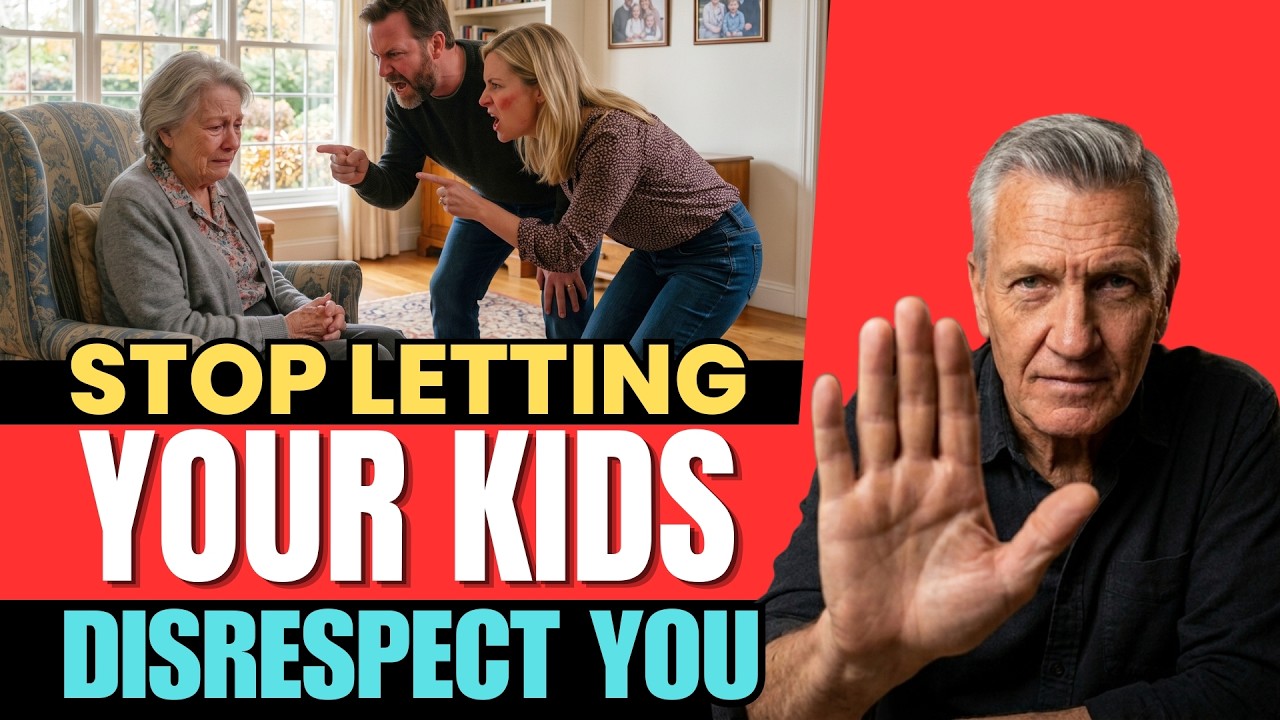
Condescending. Impatient. Sharp enough to sting. You sat there.
Smiled through it. Changed the subject. And later that night, lying in bed, you replayed the moment over and over. When did my own child stop respecting me?
And what am I supposed to do about it? If that scene feels familiar, I want you to know something first. What you felt in that moment was not weakness. It was the natural response of a loving parent who didn’t want to blow things up.
But silence, however peaceful it feels, is actually permission. And today, that changes. Let me give you seven questions. Seven calm, dignified, psychologically powerful questions you can use the next time your adult child disrespects you.
They aren’t designed to start a war. They’re designed to hold up a mirror. To make your child stop, look at their own behavior, and genuinely reconsider. Your child doesn’t need you to scream.
They need you to be unshakable. These questions will make you exactly that. I understand why you’ve stayed silent. You don’t want to make things worse.
You don’t want to push them away. When you’ve spent your life loving someone, confrontation feels like a risk you can’t afford. So you absorb it. You tell yourself it wasn’t a big deal.
You make excuses. They’re stressed. They’re busy. They didn’t mean it.
Maybe. But here’s what happens over time. The behavior doesn’t stop. It escalates.
Without consequences, even gentle conversational ones, a person learns this behavior is acceptable. Every time you swallow it, you send the message: you can do this. I won’t push back. It also destroys the relationship from the inside.
The resentment builds like pressure under a closed lid. You start dreading their calls. You feel anxious before family gatherings. The warmth cools.
One day you realize you’ve drifted apart without ever having a real conversation about why. And it hurts your health. Suppressing emotional pain, particularly from close relationships, contributes to anxiety, disrupted sleep, and diminished self-worth. You matter.
Your emotional health matters. You don’t need to raise your voice to hold your ground. You just need the right words. And those words are questions, because a good question doesn’t attack.
It reflects. It asks the other person to look at themselves. Here are the seven. Question one: Would you speak to your boss the way you just spoke to me?
Let that sit for a moment. Most adult children who are disrespectful to their parents are perfectly polite with their employers. They know how to manage their tone. They exercise restraint every single day at work.
But with you, the parent who fed them, clothed them, stayed up nights worrying about them, the filter disappears. Why? Because you are safe. In the emotional economy of human relationships, parents represent unconditional love.
Unconsciously, that can translate to: they’ll forgive me no matter what, so I don’t have to try as hard. We call this the safest target dynamic. The people we love the most sometimes absorb the worst of us precisely because they’re the least likely to abandon us over it. That doesn’t make it right.
This question names it directly. I counseled a woman named Margaret, sixty-seven, retired teacher, one of the warmest people I’ve ever met. Her son, in his late thirties, had developed a habit of cutting her off mid-sentence and sighing loudly when she expressed an opinion. One afternoon, after he’d snapped at her over the phone, she calmly said, “Would you speak to your supervisor the way you just spoke to me?
”
Silence. Then his voice changed. “No. No, I wouldn’t.
”
That was the beginning of a real conversation. When you ask this question, keep your voice level. Not cold, calm. You’re not accusing.
You’re asking them to apply their own standards evenly. Question two: Do you realize what you just said, or did it just slip out? Not all disrespect is deliberate. A significant portion of hurtful words from adult children are habitual and unconscious.
They’ve developed a way of speaking that they’ve stopped noticing. Like a radio playing in the background, they don’t even hear it anymore. This question flags the behavior without making it a full accusation. You’re not saying, you disrespected me.
You’re asking, did you notice what just happened? That’s a much easier door to walk through. It allows them to say, “Oh, I’m sorry. That came out wrong,” without feeling like they’re confessing to a crime.
It also gives them the benefit of the doubt, and believe it or not, that’s a power move. It communicates: I think you’re better than this. Let’s see if you agree. I worked with a seventy-two-year-old father whose daughter had developed a habit of dismissing everything he said with, “Dad, that’s not how it works anymore.
” It happened so often she didn’t realize she was doing it. He finally asked her, “Honey, do you realize how often you say that to me? ”
She looked genuinely surprised. Then ashamed.
She’d had no idea. Ask this question with warmth. You’re not scoring points. You’re shining a light.
Question three: Is this how you’d want your children to speak to you one day? If your adult child has children of their own, this question stops them cold. Every parent, regardless of how they’re behaving in the moment, has a deep primal desire to be a good role model. But most haven’t connected the dots between what they’re doing right now, possibly in front of those grandchildren, and what their own children are absorbing.
Children are always watching. They are absorbing tone of voice, body language, patterns of interaction. When your grandchild sees their parents speak condescendingly to you, they are filing that away. They are learning that this is how adults treat their parents.
One generation’s behavior becomes the next generation’s template. I remember a session with a couple in their late sixties whose daughter had been particularly sharp-tongued during a holiday visit. The mother quietly asked, “Sweetheart, is this how you’d want Emma to speak to you when she’s grown? ”
The daughter went completely still.
Her own little girl was sitting right there at the table, watching. She didn’t say a word. But something shifted in her eyes. Sometimes the most powerful thing you can do is make someone see themselves through time.
Question four: What exactly have I done to deserve being spoken to like this? This one requires more courage. It is direct. But notice, it is not defensive.
It is not an accusation. It is a genuine request for clarity. When adult children are disrespectful, it’s often because there is frustration underneath. Maybe they have a real grievance.
Maybe they’re carrying an old wound that was never addressed. Maybe they’re exhausted and you happen to be in the wrong place at the wrong time. By asking this, you’re calling their bluff, gently but firmly. You’re saying: if there’s a reason for this, let’s talk about it.
But if there isn’t, then I need you to look at what you’re doing. What typically happens is one of two things. Either they name something real, a specific hurt, and suddenly you have the foundation for an actual conversation. That’s a good outcome, even if it’s uncomfortable.
Or they can’t name anything. They realize in the silence that follows that they don’t have a justifiable reason. And that realization is powerful. It’s impossible to feel righteous about behavior you can’t defend.
A seventy-year-old retired firefighter told me that when he asked his son this question after a particularly dismissive exchange, his son opened his mouth to respond, then just stopped. After a long pause, he said, “I don’t know, Dad. I’m sorry. ”
It was the first real apology in years.
Ask the question calmly. Don’t fill the silence after. Let them sit with it. Question five: Do you understand that I won’t always be here?
I want to be careful here because this can sound like emotional manipulation. It isn’t. It is simply and honestly the most important truth in the room. You will not always be here.
None of us will. That’s not a threat. That is the most factual statement any human being can make. Over forty years of sitting with grieving families, I have witnessed the same thing.
The most common thing adult children say at their parents’ funerals, at bedside in hospice, in the months after they are gone, is: I wish I had said I was sorry. Not, I wish we had taken more trips. Not, I wish we had called more. The wish is almost always about something they said.
A particular moment. A particular tone. A particular cruelty. This question brings that future moment into the present.
It asks your child to look at you right now and understand that time is finite. The moments you are sharing right now are the ones they will remember. It may make them uncomfortable. It may even make them emotional.
But discomfort is not harm. Sometimes discomfort is the very thing that changes behavior when nothing else can. Say it gently. Say it without bitterness.
Say it as the truth it is. Question six: Are you okay? Because the person I raised wouldn’t speak to me like that. This one is my personal favorite.
It sets a firm boundary while simultaneously expressing love. Think about what it communicates. First, it says: I know who you are. I know the person I raised.
And this right here, that’s not them. That is not an attack on their character. It is an appeal to their best self. Second, it asks: are you okay?
Which opens a door. Because sometimes the adult child who lashes out isn’t doing so out of malice. They are overwhelmed. They are struggling financially, relationally, professionally.
They are in pain. And that pain is coming out sideways, directed at the person they feel safest with. Does that excuse it? No.
But understanding it changes how you respond. And asking are you okay invites them to be honest instead of defensive. I had a client, a sixty-five-year-old mother of three, whose middle son had become increasingly curt and dismissive over about six months. She was hurt and baffled.
One day, after a particularly cold phone call, she called him back and said, “Honey, are you okay? Because the son I raised doesn’t talk to me that way. Something must be wrong. ”
He broke down.
His marriage was falling apart, and he had told no one. That phone call opened the door to the most honest conversation they’d had in years. Your love is not a weakness. In this question, it becomes your greatest strength.
Question seven: Can we start this conversation over with respect? This is the question that puts everything into action. After everything that’s been said, after the hurt, the silence, the tension, this question offers a fresh start. A do-over.
But notice what it does not do. It does not pretend nothing happened. It does not let the behavior slide. It acknowledges that something went wrong, and it makes one clear, non-negotiable request: respect.
Not agreement. Not obedience. Not unconditional approval. Just basic human respect.
This question is the culmination of your emotional dignity. You are not angry. You are not issuing threats. You are saying: I am willing to keep talking.
I want to keep talking. But not like that. Let’s try again. It is extraordinarily difficult for an adult child to say no to this.
To refuse to restart a conversation with their own parent with basic decency is a choice they would have to live with. Most won’t make it. And when they accept, when they take a breath and begin again in a different tone, something changes between you. Not dramatically.
Not perfectly. But genuinely. In family therapy, we call this a repair moment. It is one of the most powerful things that can happen in a relationship.
Not the absence of conflict, but the return to connection after it. That return, that willingness to begin again, is what love looks like in practice. And you made it happen. Not by screaming.
Not by giving in. By asking the right question at the right time. These seven questions are not weapons. They are mirrors.
When you ask them calmly, clearly, without malice, you are holding up a reflection and asking your adult child to look at themselves honestly. That is the most respectful thing you can do for them. Not the most comfortable. Not the easiest.
But the most respectful. Because it treats them as a full adult who is capable of doing better. It refuses to let them off the hook by pretending the hurt didn’t happen. You deserve to be spoken to with kindness.
Not because you’ve been a perfect parent. None of us have. Not because you’ve never made a mistake. But because you are a human being who has given this person the entirety of your love, the best years of your life, and the deepest hope of your heart.
That deserves respect. In the next few days, write these seven questions down. Put them somewhere you can see them. Say them out loud.
Practice in the mirror. Not to rehearse a fight, but to find your voice. To feel the steadiness in your own chest when the words come out calm and clear. Because when the moment comes, and it will come again, you won’t be caught off guard.
You’ll be ready. And that readiness, that quiet unshakable confidence, is what changes the dynamic. You are not too old to set boundaries. You are not too late.
And you are absolutely not alone.