The relationship between Patrick and Lindsay Clancy is under intense scrutiny as the murder trial of Lindsay Clancy enters its fourth week, with new testimony revealing the depths of her mental health struggles and the couple’s growing distance before the tragic deaths of their three young children. Lindsay Clancy, a former labor and delivery nurse, is accused of strangling her children Cora, 5, Dawson, 3, and Callan, 8 months, with exercise bands in the basement of their Duxbury, Massachusetts home on January 24, 2023. She survived a suicide attempt and is now paralyzed from the waist down.
Her defense team argues she was suffering from postpartum psychosis and was not criminally responsible for her actions. The prosecution contends the killings were premeditated and calculated.
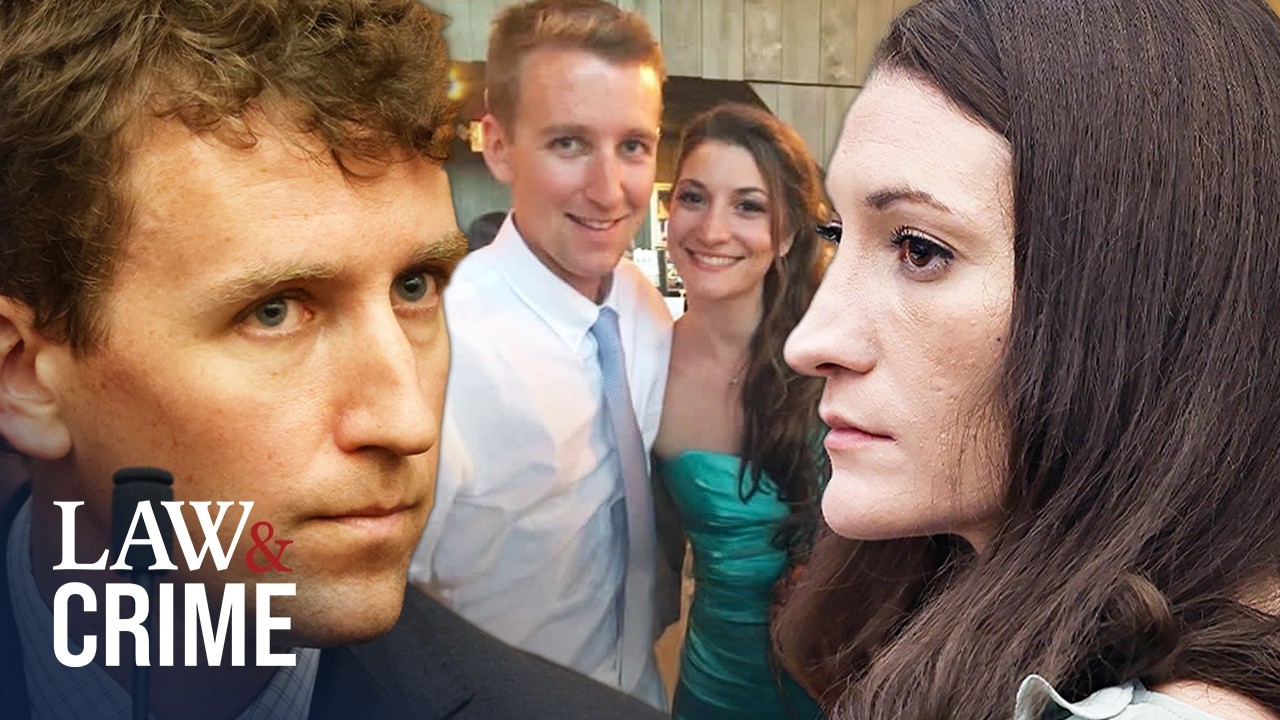 Patrick Clancy, the children’s father and Lindsay’s ex-husband, has become a central figure in the trial, with his testimony and actions in the months leading up to the deaths drawing intense public debate. During cross-examination, Patrick admitted to leaving Lindsay alone with the children multiple times despite her documented mental health crisis, including a two-day business trip to New York in November 2022 and several outings for skiing and brunch. The defense has used these admissions to argue that Lindsay had ample opportunity to harm the children earlier if she had planned to, suggesting instead that she snapped during a psychotic episode.
Testimony from Patrick Clancy revealed a picture-perfect family that was unraveling behind closed doors. He described Lindsay as a dedicated mother who read to her children at three months old, made up songs, and prepared green eggs and ham for Cora. But after the birth of their third child, Callan, in May 2022, Lindsay’s mental health deteriorated rapidly.
She began seeing therapists, was prescribed multiple medications, and was hospitalized at Women & Infants Hospital in Rhode Island in December 2022. Patrick testified that Lindsay was “terrified” of being alone and asked to sleep with her mother, Paula Musgrove, in late November or early December.
The prosecution has highlighted Lindsay’s journal entries, which she began in October 2022, as evidence of her awareness and planning. In one entry, she wrote, “I want to connect with Pat again. I know he needs it.
I need it. I’m terrified of the relationship.” Another entry detailed her sadness over not being able to parent her third child like her first, and her resentment toward her older children.
The defense, however, argues these entries show a woman struggling with severe depression and anxiety, not a cold-blooded killer.
 Patrick Clancy’s testimony has been a flashpoint for online conspiracy theories, with some social media users questioning his fidelity and suggesting he may have been having an 𝒶𝒻𝒻𝒶𝒾𝓇. He has since remarried Rachel Danis, a New York-based infertility doctor, and moved to Manhattan. But no evidence of an 𝒶𝒻𝒻𝒶𝒾𝓇 has been presented in court, and the judge has instructed jurors to focus on the facts of the case.
The trial has also featured testimony from Lindsay’s mother, Paula Musgrove, who described her daughter’s terrifying decline. “She was afraid to be alone,” Musgrove testified. “She actually asked if she could sleep with me.”
Musgrove also recounted a text Lindsay sent in November 2022: “Mom, will you please come up and stay with me for a bit? I’m really sick. Something is wrong.
I had horrible insomnia all night, and I just don’t know how I’m going to get through the day.”
Medical experts have testified about the cocktail of medications Lindsay was prescribed, including antidepressants and anti-anxiety drugs, which she sometimes tapered off or stopped abruptly. Dr. Jennifer Tufts, a psychiatrist who treated Lindsay, noted that she reported intrusive thoughts about harming her children as early as December 2022.
 Despite this, Patrick Clancy testified that he did not feel nervous leaving Lindsay alone with the children on the day of the killings because she was having “one of her best days.”
The defense has argued that the prosecution’s case is built on a “parade of unnecessary evidence,” pointing out that Lindsay has never denied killing her children. The key question for the jury is whether she was legally sane at the time. Under Massachusetts law, a defendant is not criminally responsible if, as a result of mental disease or defect, she lacked the substantial capacity to appreciate the wrongfulness of her actions or to conform her conduct to the requirements of the law.
The trial has drawn national attention, with many women and mothers following the case closely. Criminal defense attorney Nicole Castanovo, appearing on Law&Crime’s “𝒔𝒄𝒂𝓃𝒹𝒶𝓁” program, noted that the prosecution’s decision to try the case rather than accept an insanity plea has backfired. “They’ve really aired the dirty laundry that everybody has,” Castanovo said.
“Patrick Clancy has become the villain because they’ve chosen to do this public stoning of Lindsay Clancy.”
As the defense prepares to present its case, the jury will have to weigh the evidence of Lindsay’s mental state against the prosecution’s narrative of premeditation. The trial is expected to continue for at least another week, with closing arguments likely to focus on the couple’s relationship and the tragic events of January 24, 2023.
 Patrick Clancy’s testimony has been described as flat and unemotional by some observers, but courtroom reporters noted that he broke down crying during breaks. He told The New Yorker after the killings, “I wasn’t married to a monster. I was married to someone who got sick.”
But the defense has seized on his actions, arguing that he failed to protect his children by leaving them alone with a woman he knew was in crisis.
The case has also sparked a broader conversation about postpartum mental health and the support systems available to new mothers. Lindsay Clancy’s story has resonated with many who have experienced postpartum depression or psychosis, with some calling for better screening and resources. The jury’s decision will be closely watched as a potential precedent for how the legal system handles cases involving severe mental illness.
In the courtroom, the tension is palpable. Lindsay Clancy sits in a pink shirt, her expression often blank, as her former husband testifies about their life together. The jury has seen photos of the family smiling on vacation, of the children’s artwork on the walls, and of Lindsay’s Facebook posts celebrating her kids.
But they have also heard the 911 call from Patrick on the day of the killings, in which he says, “I think my wife just killed my kids.”
The trial continues, and the world is watching. For now, the question remains: What was really going on between Lindsay and Patrick Clancy? And will the jury find that Lindsay was a loving mother who snapped, or a cold-blooded killer who planned her children’s deaths?
The answer will come in the days ahead.