A word of warning. This article explores graphic and disturbing stories and may not be suitable for all readers.
The parents of a 17-year-old Indiana girl allegedly lured from her home, killed, and dismembered by a 39-year-old man she met on the video game platform Roblox have transformed their unimaginable grief into a legislative crusade, forcing through two new state laws in just three months since their daughter’s murder. The case, which has sent shockwaves through the digital safety landscape, has also ignited a federal prosecution and a multi-state legal assault on tech giants Roblox and Discord, accused of providing a “digital playground” for predators.
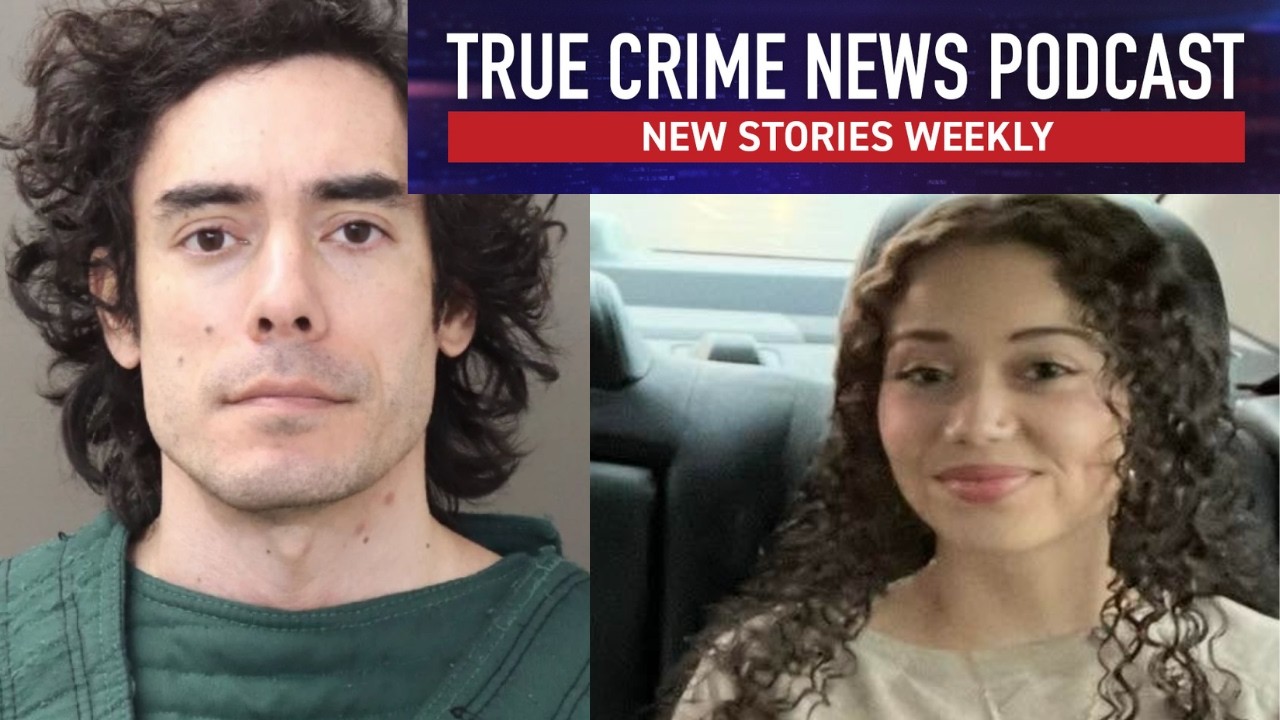 Haley Busby, a high school student from Fortville, Indiana, vanished in the early morning hours of January 6, 2026. She left a note telling her parents not to look for her, but her friends knew nothing of her plans, a red flag that immediately alarmed investigators. Police, initially classifying her as a runaway, quickly pivoted after discovering she had been communicating for over a year with an adult male on Roblox, a platform popular with children and teens.
That man, authorities say, was Tyler Thomas, 39, of Columbus, Ohio.
Using a combination of neighbor surveillance video, license plate readers, and digital forensics, law enforcement tracked a dark-colored SUV that had been seen on the Busby’s street at 3:14 a. m. that morning.
The vehicle, registered to a woman in Florida who told police she had lent it to Thomas, was linked to the suspect. When confronted, Thomas initially told officers he was “touring apple orchards” in the middle of the night, a lie that quickly unraveled as investigators obtained search warrants for his phone and digital accounts.
The contents of those devices, detailed in a federal criminal complaint, paint a harrowing picture of a predator who allegedly groomed multiple minors. Thomas, prosecutors say, used the Roblox platform to initiate contact with children before moving conversations to encrypted apps like Discord, where he allegedly expressed explicit sexual fantasies, including one in which he encouraged a 10th-grade girl to harm herself. The complaint describes Thomas’s communications as “horrific,” detailing his stated intent to produce child sexual 𝓪𝓫𝓾𝓼𝓮 material.
On February 1, 2026, nearly a month after Haley disappeared, Thomas led authorities to her remains in a shallow grave at a park in Ohio. The body had been dismembered. Despite this, Thomas has not been charged with murder.
His attorney has stated that while his client may have done “despicable things,” he did not 𝓀𝒾𝓁𝓁 Haley, suggesting she may have died by accident or natural causes before the dismemberment occurred. Legal experts, including criminal defense attorney Allison Trezel, who analyzed the case on the True Crime News podcast, say this is a plausible, if improbable, defense strategy. “You do need to have manner or cause of death,” Trezel explained.
“Did she die by accident? Did she die of some type of natural cause? And then he dismembered her after the fact.
 Law enforcement has all the time in the world to make sure they get it right.”
Trezel, a legal analyst and friend of the podcast, noted that the lack of a murder charge is likely due to the complexity of determining the cause of death from a dismembered body. However, she emphasized that there is no statute of limitations for murder, and federal charges are already in place. Thomas is currently being held on $1.
5 million bond, charged federally with sexual exploitation of a minor and travel across state lines to engage in illicit sexual conduct. He also faces state charges in Ohio for pandering sexually oriented material involving a minor and tampering with evidence.
The evidence against Thomas is substantial. Police say they found videos and photographs on his phone showing Haley in graphic, compromising positions that match the furniture in an Airbnb he had rented. His GPS data placed him at the trailhead where her body was found for five hours on January 7, the day after she disappeared.
“Those pictures that place both of them at the scene and the bedding and the furniture in the Airbnb, that’s pretty strong evidence,” Trezel said. “It’s almost stronger than a confession.”
The case has become a rallying cry for parents and lawmakers who argue that tech companies are not doing enough to protect children. Haley’s parents, working with legislators in Indiana and Ohio, have spearheaded two new laws, collectively known as “Haley’s Laws,” which were signed by Indiana’s governor on April 1, 2026. The first law requires children under 16 to obtain parental consent to use social media or gaming platforms, linking their accounts to a parent’s.
The second law expands the state’s “Silver Alert” system, which was previously used for missing seniors with Alzheimer’s, to include runaway minors, allowing police to classify them as endangered persons and issue alerts immediately.
 “The idea that a minor is missing and your parents don’t know where you are, perhaps the law should change to reflect that and move it higher up on the list,” Trezel said, echoing the sentiment of Haley’s parents. The new laws also mandate grooming awareness education in schools and establish a “Pink Alert” system for missing children who do not qualify for an Amber Alert. A congressman from Indiana has since introduced a federal bill to expand the definition of an Amber Alert to include high-risk situations beyond abduction.
The legal battle is not limited to legislation. Indiana’s attorney general has filed a lawsuit against Roblox and Discord, accusing them of deceptive practices and violating the state’s Consumer Sales Act. The lawsuit alleges that the platforms knowingly allow predators to lure and groom underage children and that their age verification systems are inadequate.
Similar lawsuits have been filed in other states, including Arkansas, New Jersey, Texas, Kentucky, Nebraska, Louisiana, Tennessee, and Oklahoma. The lawsuits seek monetary damages and penalties of up to $5,000 per knowing violation, a figure that could reach into the millions given the platforms’ vast user bases.
The statistics are staggering. Roblox reported 144 million daily active users in 2023, with 40% of them under the age of 13. Discord has 690 million registered users, with an average age of 16.
The National Center for Missing and Exploited Children reported 675 suspected child 𝒔𝒆𝒙 exploitation cases linked to Roblox in 2019, a number that grew to more than 13,000 in 2023. “Bad guys no longer need to go to playgrounds to take children,” Trezel said. “They now can use digital playgrounds.”
The case has also highlighted the challenges parents face in monitoring their children’s online activities. Haley’s parents were unaware of her relationship with Thomas until after she disappeared. She had kept it a secret, moving their conversations from Roblox to Discord, an encrypted platform that makes it difficult for parents to track.
“How as a parent do you monitor what your children are doing when it’s all on their phone? And you can’t,” Trezel said. “And that’s the problem.”
 The podcast episode, recorded on July 24, 2026, featured a studio audience of law students and college interns who had spent the summer working with Trezel. They discussed the case in detail, with one intern, Jesse, noting that while Discord was the platform used in this case, he was more concerned about Telegram, which has a higher level of encryption and is frequently used in criminal cases involving child exploitation and 𝒹𝓇𝓊𝑔 deals. “I was completely unaware as to how many people, especially of a young age, were on it,” Jesse said of Discord.
“The amount of older people on it is so disproportionate to the younger audience.”
Another intern, Baron, who is fluent in Farsi and translates letters for incarcerated individuals, pointed out that the Indiana lawsuit accuses the platforms of “purposefully marketing towards child safety and marketing themselves as really caring about children and catering to children and then knowingly allowing these predators to access their platforms.” He noted that the age verification process has not been updated despite numerous lawsuits.
The interns, who ranged from high school graduates to law school-bound students, shared their own perspectives on the case. Brady, a sophomore at UNC Chapel Hill who works with special needs children, said the experience taught him the importance of the justice system. “Everybody deserves a defense,” he said.
“You may judge defense attorneys for representing murderers, but when somebody you know needs that help, it’s quite nice to have.”
Trezel, who has been practicing law for 30 years, said the case is one of the most disturbing she has ever encountered. “The words, the fantasies, the ideations, the fact that he had groomed her, he lured her, and then he says he carried her across state lines for the purpose of child pornography,” she said. “It is horrific.”
As the legal proceedings continue, Haley’s parents are determined to ensure that no other family has to endure their pain. “They have taken their tragedy and they have used it to change the laws in Indiana in just three months since their daughter’s murder,” the podcast host, Anna Garcia, said. “That is extraordinary.”
The case remains a stark reminder of the dangers lurking in the digital world. “Haley Busby is everyone’s child,” Garcia said. “And that’s how I want to end this discussion, to remember her and to remember she is a child of all of us.”