The state of Oklahoma carried out the execution of Michael Dwayne Smith on Thursday morning, ending the life of a man who, over two decades ago, brutally murdered two innocent people in a single day of violence. Smith, 41, was pronounced dead at 10:20 a. m.
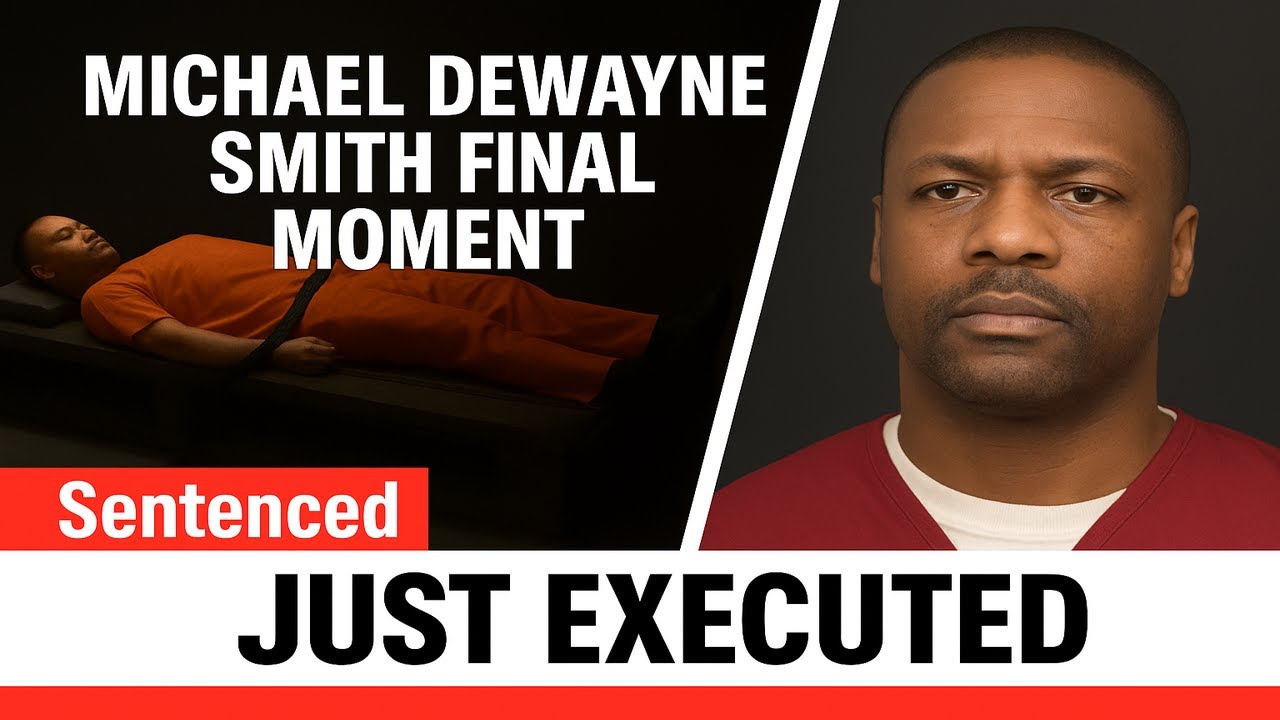
At the Oklahoma State Penitentiary in McAlester after receiving a lethal injection. He offered no final statement, leaving the families of his victims with a quiet end to a long and painful chapter.
Smith’s execution came after a whirlwind of final appeals and a clemency hearing that saw the Oklahoma Pardon and Parole Board vote 4-1 against sparing his life. The board listened to emotional testimony from the families of Janet Moore and Sarra Paluru, who described the enduring agony of losing loved ones to a senseless rampage. Smith’s attorneys argued that his traumatic childhood, addiction, and mental illness should have mitigated his punishment, but the board was not swayed.
The crimes that put Smith on death row date back to February 22, 2002, a day that began like any other in Oklahoma City but quickly descended into terror. That morning, Smith kicked down the door of a modest apartment where 40-year-old Janet Moore, a mother and anchor of her household, was at home. She never stood a chance.
Smith, seeking a man he believed was an informant, shot her dead in what investigators later described as an act of cold-blooded vengeance.
Hours later, across town at the Amart convenience store, Smith struck again. His target was 24-year-old Sarra Paluru, known to friends as Babu, an immigrant student from India working the night shift to fund his education. Smith entered with two pistols and opened fire, emptying both weapons into Paluru’s body.
Then, in a final act of brutality, he doused the young man in lighter fluid and set the store ablaze, hoping to destroy the evidence.

Paluru’s dreams of finishing his studies, building a career, and giving back to his family were extinguished in that inferno. Friends described him as soft-spoken, hardworking, and polite. Janet Moore, 40, was remembered as protective and kind, a woman who kept her family close and put others before herself.
Their lives were taken not because of anything they did, but because they crossed paths with a man consumed by gang loyalty and paranoia.
Michael Dwayne Smith was born into hardship on June 24, 1982, in Oklahoma City. His father was an alcoholic; his parents provided little structure or support. By age 7, Smith was smoking marijuana.
He soon moved to harder drugs and was sexually abused by an older woman, a trauma that left deep scars. With nowhere else to turn, he found belonging in the Oak Grove Posse, a violent street gang. By his late teens, armed robberies and shootings were routine.
The seeds of his murderous rampage were planted in 2000, when his close friend Terron Armstrong was killed during a botched robbery. Smith was enraged at how the media portrayed his friend, and paranoia festered. He became convinced that anyone who disrespected Armstrong or acted as an informant deserved punishment.
That twisted logic drove him to Janet Moore’s apartment, where he was hunting for a man named Philip Zachary, whom he believed was a snitch.

Detectives quickly connected the two killings. Witnesses reported Smith bragging about what he had done. When brought in for questioning, he initially denied everything, but eventually confessed on videotape in chilling detail.
“Snitches need to be dead,” he said. The confession left no doubt about his guilt. The case went to trial in September 2003, and the prosecution painted a picture of deliberate, cold-blooded murder fueled by anger and gang loyalty.
The defense tried to point to Smith’s long history of 𝒹𝓇𝓊𝑔 use and mental instability, arguing he was intoxicated on the day of the killings. They pleaded for his life, citing his traumatic childhood. But the jury was not convinced.
On October 14, 2003, they found Smith guilty of both murders and recommended the death penalty. The judge later imposed two death sentences, plus additional decades for burglary, robbery, and arson.
In 2004, Smith was also convicted of the 2001 killing of Otis Payne Jr. , for which he received a life sentence. By then, the pattern was clear: a young man broken by his environment had left a trail of devastation.
Appeals followed for years. In 2007, the Oklahoma Court of Criminal Appeals upheld his convictions and death sentences. Federal courts reviewed claims of mental illness and ineffective counsel, but each time the verdict stood.

As the execution date approached, Smith made a final bid for mercy. In 2024, his attorneys argued before the Pardon and Parole Board that trauma, addiction, and mental illness shaped his crimes. But the families of Janet Moore and Sarra Paluru spoke of their loss, the pain that had never faded.
The board voted 4-1 to deny clemency. Just under a month later, Smith was led into the execution chamber.
At the Oklahoma State Penitentiary, witnesses watched as the lethal drugs took effect. Smith did not speak. For the families of his victims, it was a moment of long-awaited justice.
For others, it was a grim reminder of lives destroyed—not only the innocent victims but a young man who had been broken long before he pulled the trigger. The execution ended a 22-year legal saga, but the pain it left behind lingers.
Janet Moore should have grown old with her family. Sarra Paluru should have completed his education and built a career. Instead, their stories are forever entangled with Michael Dwayne Smith, a name that will be remembered as one of Oklahoma’s most infamous death row inmates.
The questions remain: What is the real cost of justice? And can it ever bring back those we have lost?