Benjamin Donnie Ritchie, the Indiana man convicted of gunning down a police officer nearly 25 years ago, was executed by lethal injection early Tuesday morning at the Indiana State Prison in Michigan City. He was pronounced dead at 1:46 a. m.
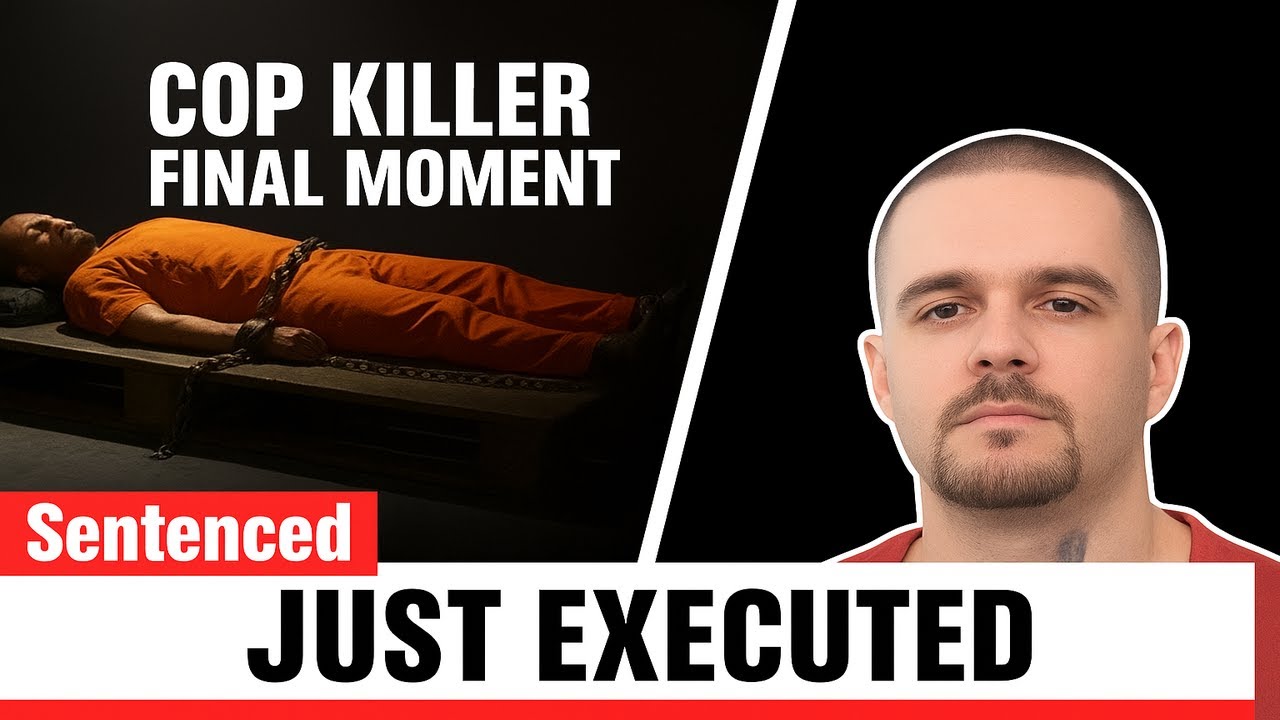
Eastern Standard Time, just hours after the U. S. Supreme Court denied a last-minute emergency stay.
The execution brings a final, contentious chapter to a case that has haunted the tight-knit community of Beech Grove and sparked fierce debate over mental health and capital punishment. Ritchie, 47, had spent more than two decades on death row after being sentenced for the murder of Officer William “Bill” Tony during a chaotic chase in September 2000.
In his final moments, Ritchie was given the opportunity to speak. He looked toward the witnesses and said softly, “I love my family, my friends, and all the support I’ve gotten. I hope they all find peace.”
Those were his last words before the drugs began to flow. The execution protocol started at approximately 1:30 a. m., with a single dose of pentobarbital administered intravenously. Witnesses described the scene as somber and quiet. Only five individuals were permitted to observe the procedure, and no media witnesses were allowed inside, according to the Associated Press.
Earlier, Ritchie had chosen his final meal. He selected the “Tour of Italy” from Olive Garden, a trio of comfort foods consisting of lasagna, fettuccine Alfredo, and chicken Parmesan. The meal was served around 7 p.m. the previous evening. The choice of a popular chain restaurant meal struck some as a small, human detail in an otherwise grim process.
For the family of Officer Tony, however, the focus remained on the long-awaited accountability. “After 25 years, we have justice,” a family spokesperson told reporters outside the prison.
The case began on the night of September 29, 2000, when Officer Bill Tony, a 31-year-old husband and father, responded to a report of a stolen van in Beech Grove. Tony was not even scheduled to work that night; he had volunteered to cover a shift for a colleague. That act of generosity set the stage for a fatal encounter.
When Tony spotted the suspect, Benjamin Donnie Ritchie, then 23, a foot chase erupted through the quiet residential streets. Neighbors heard shouts and then gunfire. An autopsy later confirmed that Tony was struck multiple times.
He died at the scene.
Ritchie was arrested within hours. Ballistics evidence tied the recovered weapon to the bullets that killed the officer, and eyewitnesses identified Ritchie as the man fleeing the stolen van. The investigation unfolded swiftly, but the legal battle that followed would stretch into decades.
At trial in 2002, prosecutors painted Ritchie as a cold-blooded killer who showed no hesitation in shooting a uniformed officer. They argued that the murder was a deliberate act of defiance against law and order. The jury agreed, convicting Ritchie of murder and recommending the death penalty.
But the defense presented a different narrative. They claimed Ritchie suffered from fetal alcohol spectrum disorder and other brain damage dating back to his early childhood. They argued he had been 𝓮𝔁𝓹𝓸𝓼𝓮𝓭 to alcohol before birth and endured a troubled upbringing, factors that impaired his judgment and capacity for rational thought.
The defense urged the jury to consider mercy, citing documented mental health struggles. Despite these arguments, the jury recommended execution, and in October 2002, a judge formally sentenced Ritchie to death.
For more than 20 years, Ritchie’s legal team filed a series of appeals, each one challenging the constitutionality of his sentence. They argued that his trial counsel had been ineffective, that evidence of intellectual disability was overlooked, and that executing someone with documented brain damage violated evolving standards of decency. Disability rights advocates and mental health organizations rallied behind the case, filing amicus briefs.
But the courts consistently upheld the conviction and the sentence. The U. S.
Supreme Court declined to hear the case multiple times.

Last week, Indiana Governor Mike Braun denied Ritchie’s request for clemency, following a recommendation from the state parole board. The governor’s office issued a statement saying the evidence of guilt was overwhelming and that the legal process had been thoroughly reviewed. That decision cleared the final hurdle for the execution.
On Monday evening, just hours before the scheduled lethal injection, the Supreme Court rejected an emergency stay request without comment. The execution proceeded as planned.
The execution itself was conducted without any visible complications. Death row inmates in Indiana are executed using a single 𝒹𝓇𝓊𝑔 protocol. The state purchased pentobarbital from a compounding pharmacy, a practice that has faced legal scrutiny in other jurisdictions.
But on Tuesday morning, the procedure went forward uneventfully. At 7:57 p. m.
Monday, Ritchie was pronounced dead. The time of death was recorded as 1:46 a. m. due to the overnight timing of the lethal injection sequence.
For the Tony family, the execution brought a measure of closure after nearly a quarter-century of waiting. Officer Bill Tony was remembered as a kind, selfless man who was deeply devoted to his wife, children, and community. He was the kind of officer who volunteered for extra shifts and was respected by colleagues and neighbors alike.
In the days following his death, tributes poured in from across Indiana. A memorial fund was established for his family. But for years, the criminal case dragged through the courts, leaving the family in a state of suspended grief.
Outside the prison gates, a small group of protesters gathered to voice their opposition to the execution. They held signs reading “Mercy for the Mentally Ill” and “No Death Penalty.” Some were advocates for criminal justice reform, others were local residents who questioned the morality of executing a man with documented brain damage.
“This is not justice, it’s revenge,” one protester said. But others argued that Ritchie’s impairment did not excuse a premeditated murder of a police officer. The debate over the death penalty in cases involving mental health issues remains deeply polarizing.
The case of Benjamin Donnie Ritchie leaves behind a complicated legacy. On one side, there is the undeniable tragedy of Officer Tony’s death, a man who gave his life serving the public. On the other, there are the persistent questions about whether the state should execute individuals whose mental capacities are compromised by conditions beyond their control.
Ritchie’s last words expressed love and hope for peace. Those words, however, did not sway the legal system or the governor. The execution proceeded as scheduled.
The state of Indiana has carried out only a handful of executions in the past decade. This was the first execution in Indiana since 2020, and the first in the state under Governor Braun’s administration. The method of lethal injection remains controversial, particularly given ongoing legal battles over 𝒹𝓇𝓊𝑔 sourcing and medical ethics.
But state officials said the execution was carried out in compliance with all applicable laws and protocols. The prison warden issued a brief statement confirming the death.
Ritchie’s legal team, in a statement released after the execution, expressed deep disappointment. “We believed that Mr. Ritchie’s documented mental impairments should have spared him the ultimate punishment.
The legal system failed to account for the full scope of his disability. We extend our condolences to all who have been affected by this tragic case.” The American Civil Liberties Union of Indiana also condemned the execution, calling it “a step backward for justice.”

But families of fallen officers said the punishment was appropriate for a man who took a life in cold blood.
Officer William Bill Tony was buried with full honors in 2000. His name is engraved on the National Law Enforcement Officers Memorial in Washington, D. C.
Each year, the Beech Grove Police Department holds a memorial service in his honor. On Tuesday morning, the department released a statement: “We thank the judicial system for ensuring that justice was served. Officer Tony gave everything for this community, and we hope his family can now finally find peace.”
The statement made no mention of the debate over Ritchie’s mental health.
The case has also reignited discussions about the death penalty in Indiana. State lawmakers have not moved to abolish capital punishment, but public support has waned in recent years. A 2023 poll showed that a majority of Indiana residents supported life without parole over execution for most first-degree murder cases.
However, the murder of a police officer remains a factor that many consider a justifying circumstance for the death penalty. The Ritchie execution may not shift public opinion, but it has laid bare the deep divisions on the issue.
Benjamin Donnie Ritchie spent his last hours inside a small cell on death row, under 24-hour surveillance. He was allowed visits from his legal team and a spiritual advisor. The final meal order was placed in the afternoon.
The Olive Garden “Tour of Italy” meal, roughly 1,500 calories, was served with a beverage of his choice. He ate only part of it, according to corrections officials. He then met with his attorney for a final conversation.
At around 10 p. m. , he was moved to the execution chamber.
The chamber is a sterile room with a gurney and a window for witnesses. Ritchie was strapped down, and a medical team inserted intravenous lines into his arms. He was allowed to make a final statement, which he did without visible emotion.
After the statement, the warden gave the signal to begin. The pentobarbital infusion took approximately five minutes. Ritchie’s eyes closed, and his breathing slowed.
A doctor pronounced death at 1:46 a. m. The body was then taken to the coroner’s office for official processing.
The execution was witnessed by representatives of the attorney general’s office, the prison, and the Tony family. The family did not make any public comments immediately after. They had requested privacy.
However, a close friend of the family said, “They finally feel like they can close this chapter. But it doesn’t bring Bill back, and nothing ever will.” The friend added that the family had lived through every appeal and every delay, and that the execution, while painful, provided a definitive end.
The debate over mental health and capital punishment is unlikely to be resolved by this case. Ritchie’s attorneys had submitted extensive medical records showing prenatal alcohol exposure, a diagnosis of fetal alcohol spectrum disorder, and neuropsychological testing that revealed significant cognitive deficits. They argued that these conditions rendered him intellectually disabled under Indiana law and ineligible for execution under the Eighth Amendment of the U.
S. Constitution. The courts rejected that argument, citing a lack of evidence that Ritchie had an IQ below 70 or significant adaptive functioning deficits.

The Supreme Court has previously ruled that executing intellectually disabled individuals is unconstitutional, but the definition of intellectual disability is left to states. Indiana law requires a showing of significant subaverage intellectual functioning and deficits in adaptive behavior. Ritchie’s legal team argued that the standard was applied too narrowly.
The state countered that Ritchie had exhibited manipulative behavior and could manage his own affairs on death row. The courts found no clear error in the trial court’s findings.
The All True Crime Network’s video transcript, which this article draws upon, provided a detailed narrative of the case, highlighting the emotional toll on both families. The transcript noted that Ritchie had been 𝓮𝔁𝓹𝓸𝓼𝓮𝓭 to alcohol before birth and experienced a turbulent childhood, factors that doctors linked to behavioral struggles. It also described Officer Tony as a selfless man who volunteered for extra shifts.
The juxtaposition of these two lives – one lost in duty, the other lost in a cycle of impairment and crime – forms the core of the story.
As dawn broke over Michigan City on Tuesday, the prison resumed its normal operations. The death row wing, now one inmate fewer, remained sealed off. Outside, reporters packed up their cameras and microphones.
The story of Benjamin Donnie Ritchie was no longer breaking news, but it would continue to be debated. For the residents of Beech Grove, the name William Tony will always be remembered. For advocates on both sides of the capital punishment debate, the Ritchie execution will serve as a landmark case that tested the boundaries of mercy and justice.
The procedure was conducted without any last-minute legal surprises. The Supreme Court’s denial of the stay came at approximately 10:30 p. m.
Monday. That decision left Ritchie’s attorneys with no further legal options. The execution team proceeded with the preparation.
The warden confirmed the identity of the inmate and read the death warrant aloud. Ritchie had no visible reaction. At the conclusion, a statement was issued by the Indiana Department of Correction: “The sentence of the court has been carried out.
We offer our condolences to the family of Officer William Tony.”
The Ritchie case will likely be cited in future legal challenges concerning mental health and the death penalty. It highlights the tension between a jury’s determination of culpability and a defendant’s neurological impairments. It also underscores the slow pace of capital punishment appeals in the United States.
From crime to execution, the process took nearly 25 years – a period that saw changes in public attitudes, shifts in legal standards, and the evolution of forensic psychology. The final chapter was written in a death chamber early Tuesday morning.
For those who witnessed the execution, the memory would be indelible. One witness, a deputy warden, later described the scene as “the most solemn duty I have ever performed.” He said Ritchie appeared calm and did not resist.
The inmate’s final words, spoken in a low voice, were recorded in the official log. “I love my family, my friends, and all the support I’ve gotten. I hope they all find peace.”
Those words, simple and human, will be part of the official record of the State of Indiana versus Benjamin Donnie Ritchie.
The execution of Benjamin Donnie Ritchie brings to a close one of Indiana’s most protracted death penalty cases. It leaves behind a community that lost a beloved officer, a family that endured a generation of waiting, and a legal system that continues to grapple with the complexities of mental illness and punishment. The outcome was predetermined by the courts, but the moral questions linger.
There is no single narrative that captures all the grief, anger, and hope that surrounded this case. Only the hard facts remain: a man is dead, a moment of justice has passed, and the debate continues.