The state of Texas executed James Broadnax on April 30, 2026, at 6:47 p. m. inside the Huntsville Unit, ending a 16-year legal journey that began with the 2008 murders of Steven Swan and Matthew Butler.
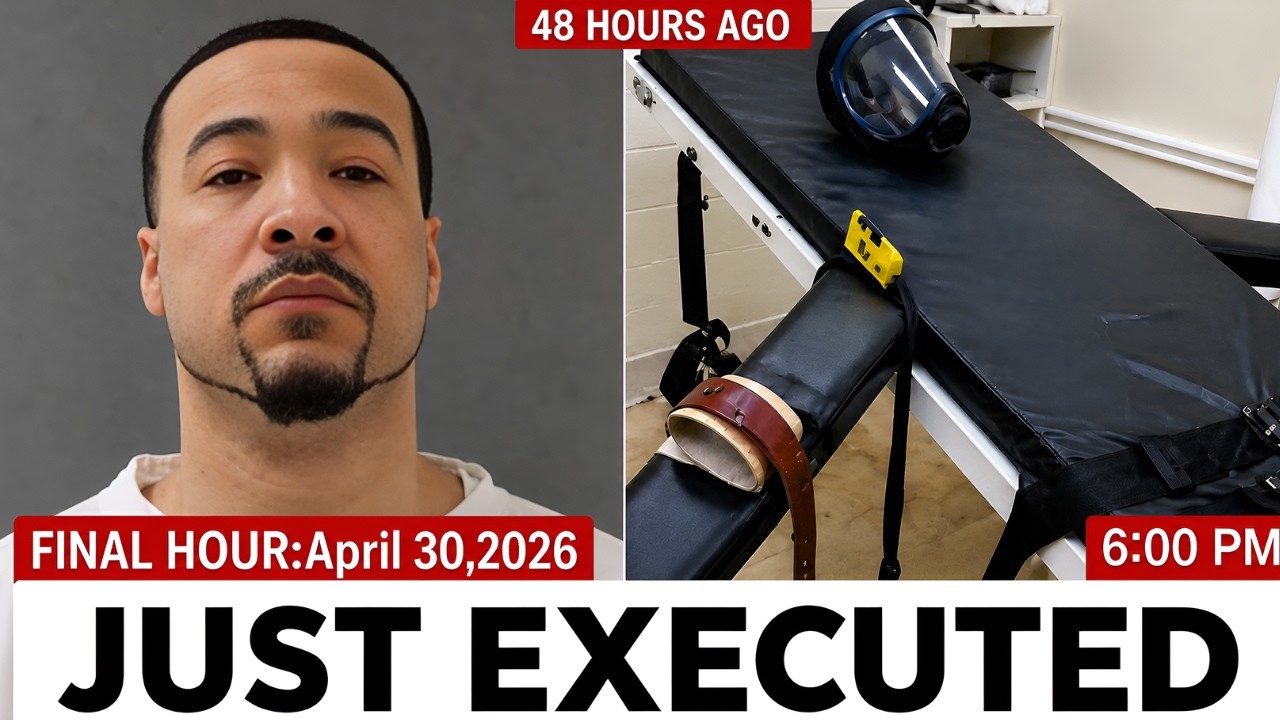
Witnesses described the chamber as heavy with silence as the lethal injection procedure started, a moment that compressed years of courtroom battles into a single irreversible act.
Broadnax, 37, had been convicted of capital murder under Texas law for his role in a robbery that turned deadly. The prosecution argued that he and his cousin Demarius Cummings planned an armed robbery near a recording studio in Garland, Texas, on May 2008, resulting in the fatal shootings of Swan and Butler, both Christian music producers.
Throughout his appeals, Broadnax maintained his innocence regarding the trigger. His defense highlighted childhood 𝓪𝓫𝓾𝓼𝓮, emotional instability at the time, and the influence of PCP-laced marijuana. They also contested the introduction of rap lyrics as evidence of violent intent, arguing racial bias tainted the jury selection.
On the day of his execution, Broadnax was served his last meal. Officials did not release the exact menu, but witnesses noted he appeared composed, as if he had accepted the inevitable. He spent his final hours writing letters and speaking with spiritual advisors, sources close to the process said.
Inside the execution chamber, the atmosphere was tense. The families of Steven Swan and Matthew Butler sat on one side of the glass, quiet and resolute. On the other side, Tiana Broadnax, believed to be his partner, cried out repeatedly, her voice breaking the silence.
Witnesses reported she declared her love and sorrow in emotional outbursts audible beyond the viewing area.
Broadnax used his last words to address the victims’ families directly. He asked for forgiveness, but also asserted his long-held position. No matter what you think of me, Texas got it wrong, he said, according to official transcripts.
Let this be the moment that sparks the revolution. His voice remained calm but carried defiance.
He then turned his attention to Tiana. My promise still stands, he said. I love you forever and a day.
Those were his final spoken words before the drugs took effect. The chamber fell into stillness. At 6:47 p.m. , a medical examiner pronounced him dead.
The execution capped a case that divided observers. Under Texas law, Broadnax was held culpable under the law of parties, which holds anyone who intentionally participates in a felony responsible for any deaths that occur. Cummings, the co-defendant, received life imprisonment.
Years later, Cummings claimed he was the shooter, but that statement did not alter Broadnax’s conviction.
Prosecutors had painted Broadnax as a willing participant in a planned armed robbery that escalated into murder. The rap lyrics attributed to him were introduced during sentencing as evidence of a violent mindset, a practice critics argue is racially biased and prejudicial. The defense countered that the lyrics were artistic expression, not a confession.
Broadnax’s final hours included a last meal that he reportedly ate without complaint. He made no dramatic statements to prison staff beyond reaffirming his belief that the system had wronged him. Spiritual advisors who visited him said he seemed at peace with his fate, though determined to use his final platform to speak against the death penalty.

The execution drew attention from advocacy groups opposed to capital punishment. Outside the Huntsville Unit, protesters held signs calling for an end to executions, citing concerns about wrongful convictions and racial disparities in the justice system. Several lawmakers have called for a review of the law of parties in Texas.
For the families of Steven Swan and Matthew Butler, the closure was long overdue. In statements released after the execution, relatives said they hoped the event would allow them to begin healing after nearly two decades of grief. They described Swan and Butler as dedicated men of faith who were taken too soon.
But for Broadnax’s supporters, the execution leaves unresolved questions. They point to Cummings’ belated claim of being the shooter and the controversial use of rap lyrics as evidence. They argue that the justice system failed to fully examine alternative theories of the case.
The legal battle leading to this moment was exhaustive. Appeals courts reviewed claims of ineffective counsel, racial bias, and insufficient evidence. The U.
S. Supreme Court declined to intervene. Governors denied clemency.
Each step narrowed the options until only the execution remained.
Broadnax’s final meal, served approximately hours before his death, was a simple request, sources said. He did not request a large or extravagant meal. He ate slowly, knowing it was his last.
Prison officials monitored him closely, following standard protocol for death row inmates.
Inside the chamber, the process took approximately 12 minutes from the start of the lethal injection to the pronouncement of death. Witnesses said Broadnax appeared to lose consciousness within seconds. His body showed no visible signs of struggle.
It was a clinical end to a case that had never been clinical.
The execution occurred amid a broader national debate about capital punishment. Texas remains one of the most active states in carrying out executions. Critics argue that the state often relies on legal doctrines that spread culpability too broadly, while proponents say the law of parties ensures accountability for all participants in violent crimes.
Broadnax’s case had become a rallying point for death penalty abolitionists. They argue that his conviction was based on circumstantial evidence and that Cummings’ later claim should have reopened the case. Legal experts note that such late claims rarely succeed under current court precedents.
In the final moments, Tiana Broadnax’s cries echoed through the viewing room. Some witnesses described the scene as heartbreaking. Others focused on the families of the victims, who watched in silence.

The division in the room mirrored the division in the case itself.
Broadnax’s last words included a direct challenge to the state of Texas. He said the execution was a mistake and called for a revolution in how justice is administered. Even in his final breaths, he refused to accept the legal narrative that had governed his life for 16 years.
The day of the execution also saw legal motions filed by his attorneys, seeking a stay based on new evidence. Those motions were denied within hours. The U.
S. Supreme Court declined to hear a last-minute appeal. By late afternoon, there were no remaining legal obstacles.
As the clock approached 6:47 p. m. , the execution team prepared the IV lines.
Broadnax was strapped to the gurney. He looked at the ceiling, then closed his eyes. He did not look at the viewing window during the procedure.
His final words were spoken before the drugs were administered.
The pronouncement of death was followed by a brief silence. Then officials began the process of removing the body. The families of the victims left the viewing room without comment.
Tiana Broadnax remained in the building for a short time, supported by others.
The execution of James Broadnax marks the end of a case that began on a May evening in 2008. Two men who dedicated their lives to Christian music lost their lives in a sudden act of violence. The man convicted of their murders was executed for that act.
But the debates over the fairness of the trial, the use of rap lyrics, and the law of parties will continue long after the chamber doors closed.
Broadnax’s final hours were spent in the death row cell, a 12-by-7-foot space that had been his home since 2010. He met with his legal team and spiritual advisors. He wrote a letter to Tiana, which was not released publicly.
He also spoke on the phone with family members, who described him as calm.
The last meal is often a subject of public curiosity, but officials in Texas do not typically disclose the full menu beforehand. Known requests by inmates in the past have included steak, fried chicken, ice cream, and other comfort foods. Broadnax’s selection, according to sources, was modest and unremarkable.
The execution chamber at the Huntsville Unit has been the site of hundreds of lethal injections since the state resumed capital punishment in the 1980s. The room is designed for clinical efficiency. The gurney, the IV equipment, the glass partition — all are part of a carefully choreographed process.

Witnesses include representatives of the media, the victims’ families, and the inmate’s representatives. Tiana Broadnax was present as a witness for the condemned. She was escorted into the room and seated on the opposite side of the glass from the execution team.
The moment Broadnax was brought into the chamber, witnesses said, the room became suffocatingly quiet. He was wearing a white prison uniform. He looked around the room briefly, his eyes scanning the faces behind the glass.
He did not smile or frown. His expression was neutral.
The execution team member responsible for administering the drugs asked if he had any final words. Broadnax leaned slightly toward the microphone and began speaking. His voice was steady but not loud.
He addressed the victims’ families first, then directed his remarks to the state, then to Tiana.
After his statement, the team began the injection protocol. A saline drip started, followed by a sedative, then a paralytic, then potassium chloride to stop the heart. The entire procedure was monitored by medical personnel.
Broadnax remained still throughout.
The death was pronounced at 6:47 p. m. Central Time.
The time was noted in official records. The room remained silent for a moment longer before the warden made the formal announcement. The witnesses were then escorted out.
For the families of Steven Swan and Matthew Butler, the end of the legal process brings a measure of finality, though their grief is permanent. For Broadnax’s family, there is loss mixed with anger. For the state of Texas, it is another execution in a long history of such events.
But the case of James Broadnax, with its disputes over evidence, the law of parties, and racial bias in jury selection, will continue to be cited by opponents of capital punishment. They will argue that his execution illustrates the flaws in a system that can move forward even when questions remain unanswered.
Broadnax’s final words — Texas got it wrong — will echo as a rallying cry for those who believe he was not the triggerman and should not have faced execution. His call for a revolution suggests that even in his last moments, he saw himself not just as a condemned man but as a symbol.
The execution of James Broadnax is over. The legal case is closed. But the moral and ethical questions it raised are far from resolved.
And as the chamber doors sealed shut, the broader conversation about justice in America continued beyond the walls of the Huntsville Unit.