The courtroom erupted in tension on the third day of Grammy-nominated singer D4vd’s preliminary hearing as a reporter was expelled, a private investigator was barred from testifying, and prosecutors laid out a chilling mosaic of evidence they say ties the pop star to the sexual 𝓪𝓫𝓾𝓼𝓮, murder and dismemberment of 14-year-old Celeste Rivas Hernandez.
The morning session opened with Judge Lisa B. Lench admonishing a journalist for violating strict rules against live transmissions from the courtroom, an incident that underscored the extraordinary secrecy measures surrounding a case that has captivated Los Angeles and the music world. The judge ordered the reporter removed for the remainder of the day’s proceedings, warning all media that any further breach would result in contempt citations.
Minutes later, another bombshell dropped. Deputy District Attorney Beth Silverman requested that private investigator Steve Fischer be excluded from the witness list, alleging he had violated grand jury secrecy rules. Fischer, who was seated in the gallery, stood silently as the judge granted the motion and he walked out of the courtroom without objection.
Fischer had been a fixture in media coverage of the case, and his exclusion from the preliminary hearing—though he is expected to testify at trial if the case moves forward—deprived the proceeding of what many believed would be a key narrative.
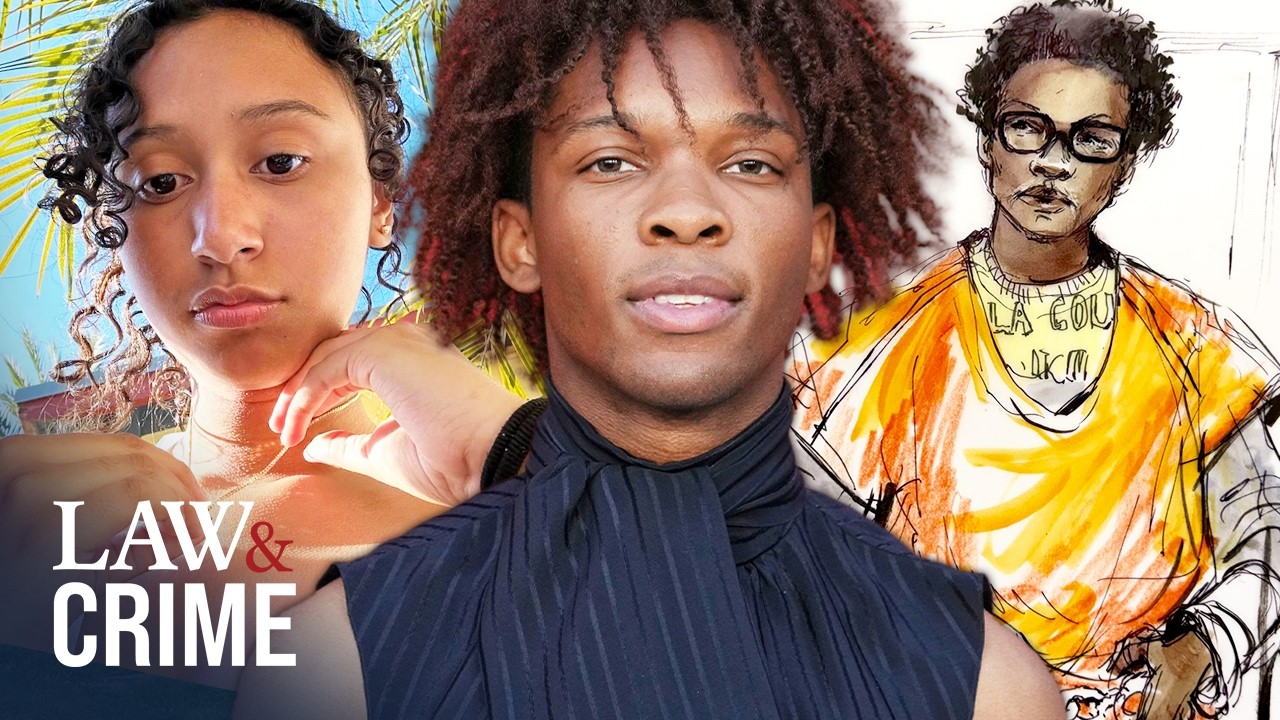
Inside the courtroom, D4vd, whose real name is David, appeared disengaged throughout the morning. Court sketch artist Mona Schaefer Edwards told reporters that the defendant seems “on another plane,” staring straight ahead with arms folded, a yellow legal notepad untouched, and a white styrofoam cup of water at his side. He showed no visible reaction as prosecutors displayed photographs of the victim’s soiled, bloodstained, and insect-infested clothing—items recovered from the same cadaver bags in which her decomposed remains were found last September in the front trunk of a Tesla registered to the singer.
The substance of the testimony focused heavily on forensic evidence. An LAPD criminalist returned to the stand for continued cross-examination by defense attorney Blair Burke. The defense tried to cast doubt on the significance of two chainsaws found in D4vd’s garage, noting that no presumptive blood test returned positive.
Burke pressed the witness on why the tools were not collected as evidence, suggesting that touch DNA testing might have revealed a different story. The criminalist countered that the chainsaws had no forensic value based on the initial screening, implying that they were not used in the dismemberment.
But prosecutors presented what they called a critical piece of the puzzle: a blue inflatable pool. A second LAPD criminalist testified that bits of blue plastic retrieved during the victim’s autopsy matched the pool found in D4vd’s garage “like a puzzle piece.” The expert described linear cuts in the pool and noted that the plastic fragments were embedded in the victim’s remains.

The inference was clear: Celeste’s body was likely dismembered inside that pool.
The victim’s family sat through the testimony, including Mercedes, Celeste’s mother, who earlier in the week had bowed her head and wept when photos of the cadaver bags were shown. Today she was frozen, her expression unreadable as the court saw images of Skechers socks, underwear, and leggings cut into pieces—clothing that matched the injuries described by the medical examiner.
Digital evidence took center stage in the late morning. An LAPD data analyst testified about the movements of D4vd’s Tesla and his iPhone on the night of April 23, 2025, and the following morning. Maps presented in court showed the vehicle traveling from the Hollywood Hills west along Sunset Boulevard, then north along the coast to Santa Barbara County.
The path of the car matched the path of the phone, the analyst said, and both lined up with the location where Celeste’s passport card was later found near Lake Cachuma off State Road 154.
The data revealed multiple trips to that area after the first road trip on April 24, the day after the alleged murder. Prosecutors noted that the Tesla got on the road heading north about an hour after the call was made from D4vd’s phone to Celeste’s number—a call that defense attorneys objected to, insisting the record specify the phone made the call, not the defendant. The implication, according to the prosecution, is that D4vd was trying to create an alibi or check whether her phone was still active while he was driving to dump evidence.

A surprising twist came when the defense, during cross-examination, introduced the existence of 𝒻𝒶𝓀𝑒 blood found in D4vd’s garage. An LAPD criminalist acknowledged that jugs and jars of 𝒻𝒶𝓀𝑒 blood—negative for real blood—were discovered among the defendant’s belongings. Defense attorney Burke suggested that the garage was used for merchandising activities, possibly for making music merchandise like T-shirts and sweatshirts stained with artificial blood.
The prosecution did not contest the 𝒻𝒶𝓀𝑒 blood but emphasized that other stains and biological evidence found elsewhere in the garage tested positive for the possible presence of blood.
The absence of direct evidence of the murder itself has become a central theme. No witness has testified to seeing the killing. No security footage has been presented.
The Amazon and Home Depot purchases for items such as burn cages, fireproof mats, chainsaws, and body bags—all made under a 𝒻𝒶𝓀𝑒 name—were not placed until after April 23. The prosecution’s case so far is largely circumstantial: the Tesla registration, the pool plastic embedded in remains, the geolocation data, the cleanup wipes, and the missing Makita chainsaw that was ordered and never found.
Legal analysts watching the proceeding note that the standard for a preliminary hearing is low—probable cause—and that the judge will almost certainly bind D4vd over for trial. But the defense is already laying groundwork for reasonable doubt. “This is not a slam dunk,” one expert said.

“They have a lot of cleanup and cover-up evidence, but the murder itself—how it happened, why it happened—remains murky.”
The prosecutor is expected to call the Los Angeles County Medical Examiner, Dr. Od Uko, perhaps as soon as today. His testimony could be pivotal, especially because LAPD obtained a court order to seal additional autopsy details last fall.
The medical examiner’s initial statement about the advanced state of decomposition and the likelihood that the body had been in the car for weeks has already fueled speculation.
The hearing is expected to continue through the rest of today and possibly into Monday. The courtroom remains under tight security, and no cameras are allowed. The only visual record comes from sketch artist Schaefer Edwards, who captured D4vd’s detached demeanor as the weight of the evidence piles up.
For the family of Celeste Rivas Hernandez, each exhibit, each photograph, each forensic test brings them closer to the truth—and forces them to relive the horror of losing a daughter who had barely begun her life.