Three months after Adam’s heart stopped mid-sentence on a Tuesday morning, I stood in my sister’s backyard holding a gift bag and a paper plate of half-melted cake, listening to her tell forty people that my dead husband had fathered her child.
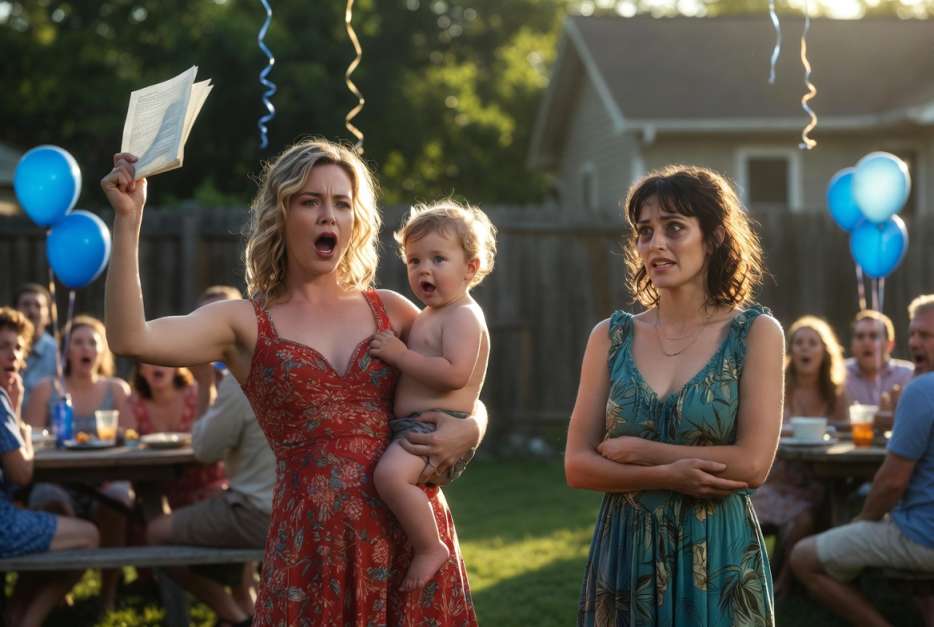
Cassandra’s voice carried over the blue balloons and the plastic cups of warm soda. “Lucas is Adam’s son,” she said, one hand resting on my nephew’s head like a claim. “He left a will. Half the Beacon Hill house belongs to his boy.”
Every head turned toward me. My parents froze. Someone dropped a fork. I felt the smile start at the corner of my mouth and had to press my lips together hard so the sound that wanted to escape wouldn’t ruin the moment.
People thought I was in shock. They were only half right.
I took the folded paper she held out. The language was stiff, the signature almost right—almost. The connecting stroke between the A and the D was wrong. Adam had signed hundreds of documents in front of me. I knew the difference between his hand and a Photoshop job.
I handed the page back, voice calm. “Thank you for showing me. This is Lucas’s day. We’ll talk later.”
Then I walked to my car, locked the doors, and laughed until the tears came. Not the pretty kind. The ugly, gasping kind that makes your ribs hurt. Because Cassandra had just played her best card in front of an audience, and she still didn’t know the one fact that made her entire story biologically impossible.
Adam and I had spent years trying for a child. Four rounds of IVF. Charts. Hope that turned to quiet drives home from clinics. The night we decided we were done, he held my hand on the porch swing and said, “You and me is still a beautiful life.” He meant it.
Two years before Lucas was even conceived, Adam developed a varicocele that needed surgery. During the procedure the urologist recommended a vasectomy to prevent recurrence. We agreed. We told no one. Not our parents. Not Cassandra. After years of invasive questions about our empty nursery, privacy had become a survival skill.
Adam had always been careful. After Cassandra’s first drunken pass at him during a dinner party—hand on his arm, soft comments about how lucky I was and how maybe he deserved someone who “really appreciated” him—he started documenting. Texts. Dates. Exact quotes. When she showed up at his office uninvited, we went to our attorney. James Wilson listened, then said the sentence that later saved me: “Better to have the file and never need it than the other way around.”
We put the medical records, the real will, the journal, and the printed texts into a safety-deposit box. Adam joked that it was our “disaster kit.” He never imagined the disaster would arrive so soon, or that it would wear my sister’s face.
The morning after the birthday party I drove straight to the bank. The manager offered quiet condolences while unlocking the vault. Alone in the small room I opened the box and found everything Adam had prepared, plus a sealed envelope with my name on it in his handwriting.
My dearest Bridget, If you’re reading this, something has happened and you’ve needed these papers. I hope it’s decades from now and Cassandra’s nonsense is just a story we laugh about. But if not—use them. Protect yourself the way I can’t anymore. I love you beyond time. —Adam
I sat there until my legs went numb. Then I called James.
He examined the forged will and called it “amateur hour.” The medical records made Lucas’s paternity impossible. James brought in Frank Delaney, a former detective who worked private cases for the firm. Three days later Frank laid the rest of the truth on the conference table.
Cassandra was seventy-five thousand dollars in debt. Medical bills from Lucas’s heart surgery. Credit cards. Personal loans. An eviction notice with two weeks left on the clock. Tyler, the actual father, had left for Seattle with a new girlfriend and was paying child support so irregularly it barely counted. And the text messages between Cassandra and her friend Jenna were pure calculation:
Adam’s death is terrible but maybe it’s finally my chance. That house is worth 800K. Half would set me and Lucas up. Dave’s good with Photoshop. Found Adam’s signature online from some charity auction. Bridget always got the good life. Time she shared.
I read those messages twice. The coldness of them sat in my stomach like ice.
James offered options. Press charges—forgery and attempted fraud carried real prison time—or handle it privately. Lucas was still the baby I had knitted blankets for and rocked through colic nights. I chose the second path, but I was done being gentle about it.
I called Cassandra and told her to come to the house the next afternoon. Alone.
She arrived in a new dress, confidence still intact. I asked permission to record. Massachusetts is a two-party state; I wanted every word clean. She agreed, thinking she still held the cards.
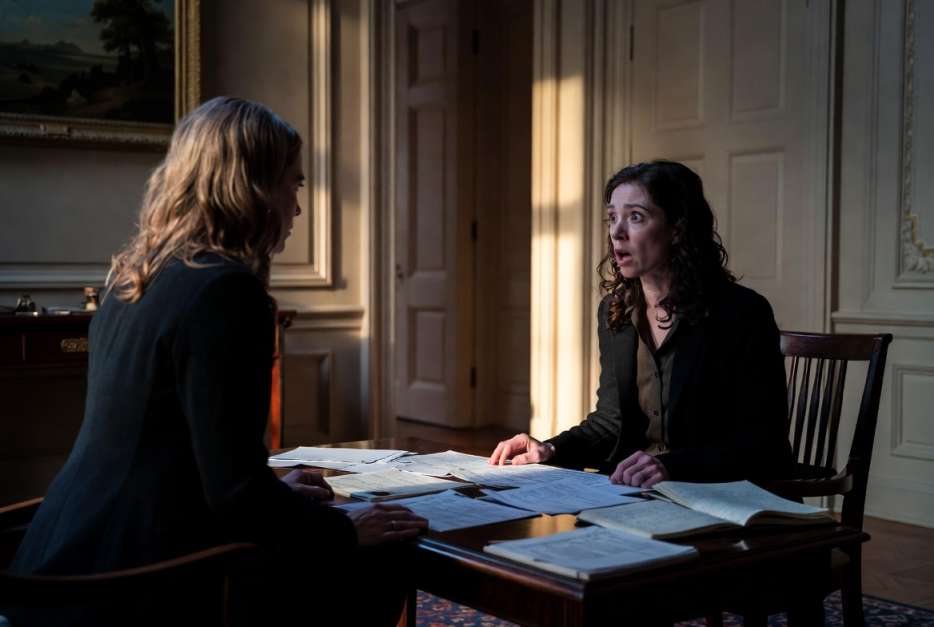
I let her tell the story first—hotel rooms, secret meetings, Adam’s supposed unhappiness. Then I started asking details only someone who had actually been with him would know. What he ordered from room service. Which side of the bed he preferred. Whether he showered before or after. Her answers grew thinner and thinner until she snapped, “Why does any of that matter? The will is clear.”
I opened the folder.
Medical records first. Dates clear. Vasectomy successful. Follow-up semen analysis zero. Biologically impossible.
Then the real will—notarized, witnessed by two partners at Adam’s firm, leaving everything to me.
Then the journal entries. Then the texts with Jenna. Then the eviction notice and the debt summary.
Cassandra’s face drained. She cried—the real kind this time, not the performance tears she used on our parents. “I didn’t know what else to do,” she said. “We’re going to be on the street. Tyler left us with nothing. The bills just keep coming.”
“So you decided to destroy Adam’s name,” I answered. “While I was still sleeping on his side of the bed.”
She had no defense left. Only the raw admission that the will was fake, the affair never happened, and Dave the graphic designer had helped her forge the signature.
I turned the recorder off. Then I offered the only deal I was willing to make.
She would tell the entire family the truth. She would sign a legal agreement never to attempt anything like this again. In exchange I would set up a trust for Lucas’s medical care and education, help her find stable housing, and stay in the boy’s life. The conditions were non-negotiable: therapy, financial counseling, steady employment. One violation and the support ended.
She stared at me like I had grown a second head. “Why would you do that?”
“Not for you,” I said. “For Lucas. And because Adam would have wanted his nephew safe, even if the mother tried to burn his reputation on the way down.”
She agreed. We scheduled the family dinner for the following Saturday.
I should have felt relief. Instead I felt the quiet certainty that the worst part was still coming—because my parents had spent thirty years making excuses for Cassandra, and they were about to learn what those excuses had cost.
Part 2
Saturday evening the dining room felt smaller than usual. My mother’s lasagna sat untouched. My father kept adjusting his glasses. Cassandra arrived without Lucas, looking like someone who had already been sentenced.
I started the recorder again and asked her to speak.
She did. Quietly. Clearly. No affair. No paternity. Forged will. Financial desperation. The whole ugly truth.
My father’s face went red. “Do you have any idea what that did to your sister? To Adam’s name?”
Cassandra didn’t look away. “I know. Bridget has the evidence. She could still press charges.”
My mother turned to me immediately. “You wouldn’t do that to your own sister. She has a child.”
Something in my chest snapped clean. “I am also your child. The one who just buried her husband and then had to defend his memory against a lie you were ready to believe. Where was the concern for me?”
The table went silent. For the first time in our lives, Cassandra didn’t jump in to defend herself. She simply said, “They’re right, Mom. You always fixed things for me. It didn’t help. It just taught me there were never real consequences.”
I laid out the agreement. Trust fund for Lucas. Therapy. Counseling. Employment. Boundaries. My parents looked stunned, then slowly nodded. My father hugged me on the way out and whispered, “Adam would be proud.” My mother hugged me too, but her eyes already mourned the perfect family picture she had spent decades pretending existed.
Cassandra paused at the door. “I really am sorry. For all of it. The competition. The jealousy. Everything.”
“I know,” I said. “Lucas deserves a mother who’s honest. That’s the only version of you I’m willing to deal with from now on.”
A year later the garden Adam planted still blooms on schedule. The daffodils he put in the ground the fall before he died came up bright and stubborn. I stand among them sometimes and talk to him the way people talk to the dead when no one else is listening.
The trust is working. Lucas’s heart is stable. He’s a cheerful toddler who calls me “Auntie B” and demands to be spun in circles until we’re both dizzy. Cassandra kept every condition of the agreement. Six months of therapy cracked something open; steady work as an office manager gave her a spine she never had before. We are not close. We are civil. That is more than I expected and exactly enough.
I started the Adam Preston Foundation for Legal Education with part of the life-insurance money. Scholarships for kids who look like the version of Adam that once showed up to law school with secondhand suits and a fire in his chest. It feels like the right kind of continuation.
Grief still visits. Some mornings the other side of the bed is too empty and the silence too loud. But the silence no longer feels like drowning. I joined a support group of twelve people who understand the particular loneliness of losing a spouse before forty. We meet every Thursday. Sometimes we laugh. Sometimes we just sit. Both are useful.
There is a man named Michael now—an ethics professor I met at a foundation fundraiser. He is careful with me. He never tries to replace Adam. He simply shows up with coffee and quiet conversation and the understanding that some loves stay permanent even when the person is gone. We are taking the long road. It feels honest.
The biggest lesson arrived in pieces, the way real lessons do. Family is not a blank check for bad behavior. Documentation is not paranoia; sometimes it is the only shield left when the people who should protect you decide to take instead. Forgiveness does not require amnesia. Boundaries are not cruelty. They are the difference between surviving and being consumed.
Adam couldn’t know the exact shape of the betrayal that would come after him. But he prepared for the possibility that the people closest to us might one day become the ones we needed protection from. That preparation reached across death and kept me standing when everything else tried to knock me down.
If you are reading this and something in your own family has turned sharp the moment the ground closed over someone you loved, hear me: protect the truth with paper and with distance. The ones who truly care will respect both. The ones who don’t were never safe to begin with.
And if this story found you at the exact moment you needed it—save it, share it with someone who might need the reminder, and keep your own disaster kit close.
You never know when the people who share your blood will decide your grief is an opportunity.