Historians and military strategists have long debated the nature of heroism, but a recently compiled retrospective of three extraordinary individuals from vastly different eras has revealed a common thread of sacrifice so profound that it challenges the very limits of human endurance. From the mist-shrouded bridges of 12th century Japan to the blood-soaked jungles of the Pacific during World War II, these warriors did not merely die; they transformed their final moments into enduring symbols of loyalty, defiance, and honor.
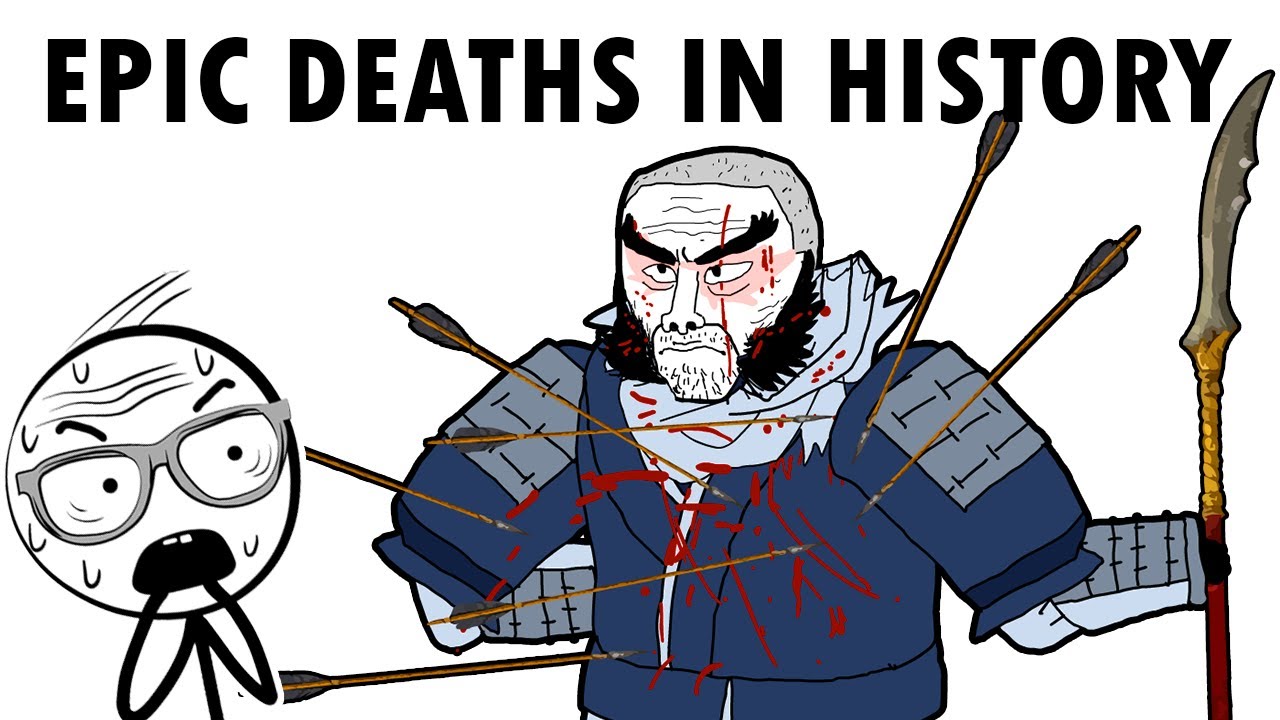
The first story emerges from the dark, winding streets of Kyoto in the year 1189, where a towering Buddhist monk named Benkei prowled like a specter seeking his final trophy. Standing an astonishing 6 feet 6 inches tall in an era when the average man barely reached 5 feet, Benkei was a sohei, a warrior monk who had grown disillusioned with what he saw as the arrogance of the samurai class. For years, he had embarked on a personal crusade to duel and defeat one thousand samurai, collecting their swords as grim souvenirs.
By that fateful night, he had amassed 999 blades, and he was hunting for the last one.
Benkei heard the soft, melodic notes of a flute drifting from near Goto Tenin Shrine. Following the sound, he discovered a small, slender samurai playing the instrument, a beautiful gilded katana at his waist. That sword would be the perfect final piece for Benkei’s collection.
He challenged the man to a duel, and to his surprise, the samurai accepted. They walked together to Gojo Bridge, weapons drawn. Confident in his size and skill, Benkei lunged forward, but the small samurai moved with supernatural speed and precision, disarming him effortlessly and leaving him defeated without even taking his life.
The samurai simply turned and walked away. Benkei, humiliated and seething, spent days stewing in anger. He could not accept that he had lost to such a slight figure.
He stalked the grounds of Kiyomizudera Temple, waiting for the samurai to reappear. When he did, Benkei challenged him again, and again he was defeated. This time, Benkei bowed in submission and offered to abandon his life as a monk to become the samurai’s retainer.
The man revealed himself to be Minamoto no Yoshitsune, a legendary warrior of the Minamoto clan, and he accepted Benkei’s oath.
The two became inseparable. They fought together in the Genpei War against the powerful Taira clan, which had murdered Yoshitsune’s father when he was just an infant. After five years of brutal conflict, the Minamoto clan emerged victorious, but the victory sowed the seeds of betrayal.
Yoshitsune’s half-brother, Yoritomo, became shogun and, consumed by jealousy and paranoia, turned against his own sibling. Yoshitsune and Benkei found themselves hunted, forced to seek refuge under the protection of a clan led by Fujiwara no Hidehira.
For a few years, they lived in relative peace, but Yoritomo’s relentless pressure and bribes eventually turned their protector against them. On June 15, 1189, at the Battle of Koromogawa, Yoshitsune and Benkei were trapped inside a castle with only a handful of retainers, surrounded by 500 of Fujiwara’s soldiers. The forces clashed, and Benkei became a demon on the battlefield, cutting down enemies who were more than a foot shorter.
But the numbers were overwhelming. Yoshitsune’s men fell one by one.
 Realizing the battle was lost, Yoshitsune turned to Benkei and told him of his plan to commit seppuku, ritual suicide, inside the castle. He needed time to perform the ceremony with dignity. Benkei understood his duty.
He walked to the bridge that was the only entrance to the castle and stood alone against the entire army. Fujiwara ordered a charge, and wave after wave of men rushed the bridge. Benkei cut them down, one after another, his naginata a blur of death.
In some accounts, he is said to have single-handedly slain 300 soldiers on that bridge. The bodies piled up before him, creating a macabre barricade.
Fujiwara’s men grew terrified. None dared to approach the giant monk, who stood stoically behind the heap of corpses, beckoning more to come. Fujiwara, seeing his soldiers falter, called for archers.
A volley of arrows struck Benkei’s chest, but he did not flinch. Another volley found its mark, embedding dozens of arrows into his body, yet he remained standing, defiant. Time passed, and both sides stared at each other across the bridge, frozen in a grotesque stalemate.
Finally, Fujiwara ordered a few men to approach. They crept forward, weapons ready, but Benkei made no move. When they reached him, they discovered the truth: Benkei was already dead.
In his final act of loyalty, he had positioned himself so that his spear supported his body, and he had shown no pain or emotion while being riddled with arrows, all to buy Yoshitsune the precious minutes needed to complete his seppuku in honor. He died standing, a silent sentinel, the greatest wingman in history.
Centuries later, on the opposite side of the world, another hero rose from political corruption and despair. In the late 16th century, Korea was a land of peace and corruption. Its military had grown weak, its generals untested, while the Japanese, fresh from a century of civil war under the unification of Toyotomi Hideyoshi, turned their eyes outward.
Hideyoshi demanded that Korea aid him in conquering China. The Korean court, considering Japan a nation of barbarians who could not even sail, refused. In 1592, hundreds of Japanese ships appeared off the coast of Busan.
Two of Korea’s top admirals panicked and sank their own ships to avoid fighting, destroying half the Korean navy in one cowardly act. The Japanese landed unopposed and began a brutal march toward Seoul.
Within three weeks, Seoul fell. Within a few more weeks, Pyongyang was taken, and Japan stood at the doorstep of China. The fall of Korea seemed inevitable.
But at that moment of utter despair, one man rose to defend his homeland: Yi Sun-sin, perhaps the greatest admiral in history. His story is one of relentless persecution and miraculous redemption. Early in his career, Yi was so skilled at leading men and winning battles that he made his jealous peers look incompetent.
A general falsely accused him of desertion, and the king believed the lie. Yi was stripped of rank, thrown into prison, and brutally tortured.
Most men would have quit. But Yi endured, was eventually released, and clawed his way back to command a small fleet. When the Japanese invaded, he did not run.
Instead, he rushed his fleet of 34 ships headlong into the enemy. Using superior tactics and the innovative panokseon ships, which were floating fortresses armed with cannons and designed to prevent boarding, Yi destroyed over 200 Japanese ships in a matter of weeks without losing a single vessel of his own. Battle after battle, outnumbered and outgunned, he sailed away victorious.
 By the end of 1592, he had sunk 350 Japanese ships.
Yi’s efforts, combined with Chinese reinforcements, drove the Japanese back to Busan. The war settled into a stalemate. But the corrupt court remembered Yi’s earlier disgrace.
One of the admirals who had sunk his own ships, Won Gyun, burned with jealousy. He whispered poison about Yi to the king every day. When peace talks failed and Hideyoshi launched a second invasion in 1597, Won Gyun and other officials framed Yi as a traitor.
For the second time, Yi was stripped of rank, thrown into prison, and tortured. He was sentenced to death, but the king relented and sent him to fight as a common soldier, a humiliation worse than death.
With Yi gone, Won Gyun took command of the Korean fleet. He was incompetent, drunken, and arrogant. He led the fleet of 200 ships into a Japanese trap, a trap that the Japanese had learned from fighting Yi.
The entire Korean navy was annihilated. Won Gyun was last seen being chopped to bits by Japanese soldiers as he tried to flee. The king, finally realizing his catastrophic error, reinstated Yi as fleet commander.
Yi took command of the pathetic remnants: just 13 ships and a few hundred demoralized men. In the Battle of Myeongnyang, outnumbered 25 to 1, Yi used masterful strategy to sink 31 of the 333 Japanese ships without losing a single one of his own. It was a miracle that bought him time to rebuild.
The following year, Toyotomi Hideyoshi fell ill and died. His last order was to withdraw the Japanese army from Korea. Yi saw his chance to finish the war.
He mounted a final offensive at the decisive Battle of Noryang. Standing on the deck of his flagship, beating a war drum with his son and nephew beside him, Yi led the charge. He personally took out ten Japanese ships.
Victory was within his grasp after seven long years. But then, a Japanese musket ball struck him in the armpit. He knew the wound was fatal.
He turned to his son and nephew and said, “The war is at its height. Wear my armor and beat my war drums. Do not announce my death.”
They carried his body below deck, and his nephew, dressed in Yi’s armor, returned to the drum and beat it with renewed fury. Yi died below deck, listening to the drum, knowing his homeland was finally free. He never lost a single battle in his entire career.
The final story brings us to the 20th century, to a dentist turned field medic who made a stand that defies belief. Captain Ben L. Salomon was drafted into the U.
 S. Army in 1940, just three years after graduating from the University of Southern California dental school. He was a model soldier, skilled with both rifle and pistol, quickly rising to the rank of captain.
In 1944, he served as the regimental dental officer of the 105th Infantry Regiment, deployed to the island of Saipan. The fighting in the Pacific was among the bloodiest of the war. Casualties were horrific.
When the regimental field surgeon was wounded, Salomon volunteered to replace him despite having no formal medical training beyond dentistry.
By July 1944, both Americans and Japanese had suffered staggering losses. The remaining Japanese troops knew there was no path to victory. They decided on a final banzai charge, a suicide mission with the sole goal of killing as many Americans as possible.
In the early morning of July 7, 1944, some 4,000 Japanese soldiers began their final assault. Salomon’s field medical tent was positioned just 50 yards behind the front foxholes. Within minutes, his tent was filled with over 30 wounded troops.
He worked frantically to tend to them, but the Japanese quickly broke through the front lines.
Salomon looked out and saw a Japanese soldier bayonetting a wounded American lying outside the tent. Enraged, he picked up a rifle from one of his patients and shot the soldier dead. Two more Japanese soldiers burst into the tent; he killed them both.
Then four more crawled in from the sides. He took out two with his rifle, one with his bayonet, and struck the fourth in the stomach with the butt of his gun, and a wounded patient finished him off. Realizing the situation was hopeless, Salomon ordered his medics to evacuate all the wounded men.
He would stay behind to cover their retreat.
Salomon grabbed a rifle and joined the front lines. He saw four men manning a machine gun falling under enemy fire, so he rushed to the gun and manned it himself, firing burst after burst into the charging Japanese. He continued to fight from that position, reloading and repositioning, even as bullets tore through his body.
Days later, when American forces recovered the area, they found Salomon’s body slumped over the machine gun, with 98 dead Japanese soldiers piled in front of him. His body was ravaged with 76 bullet holes and countless bayonet wounds, 24 of which he may have suffered before actually dying. The blood trail showed he had repositioned the machine gun multiple times while mortally wounded.
Despite saving countless lives that day, Salomon was initially denied the Medal of Honor because of a Geneva Convention rule prohibiting medical officers from bearing arms. He remained a footnote in history for 58 years, until 2002, when President George W. Bush finally awarded him the Medal of Honor posthumously.
His story, along with those of Benkei and Yi Sun-sin, serves as a timeless testament to the extraordinary capacity of the human spirit to transcend mortality. These men did not just die; they chose how they would be remembered, and in their final, defiant moments, they changed the course of history.