The state of Florida is preparing to execute the oldest death row inmate in its modern history, Dominick Anthony Occhicone, an 80-year-old man who has spent nearly four decades on death row for a double murder committed in 1986. His execution is scheduled for July 28, 2026, by lethal injection, a date that will make him the second person over the age of 80 executed in the United States since capital punishment was reinstated. The case has ignited a fierce debate over justice, time, and the human cost of a system that has taken nearly 40 years to reach its final act.
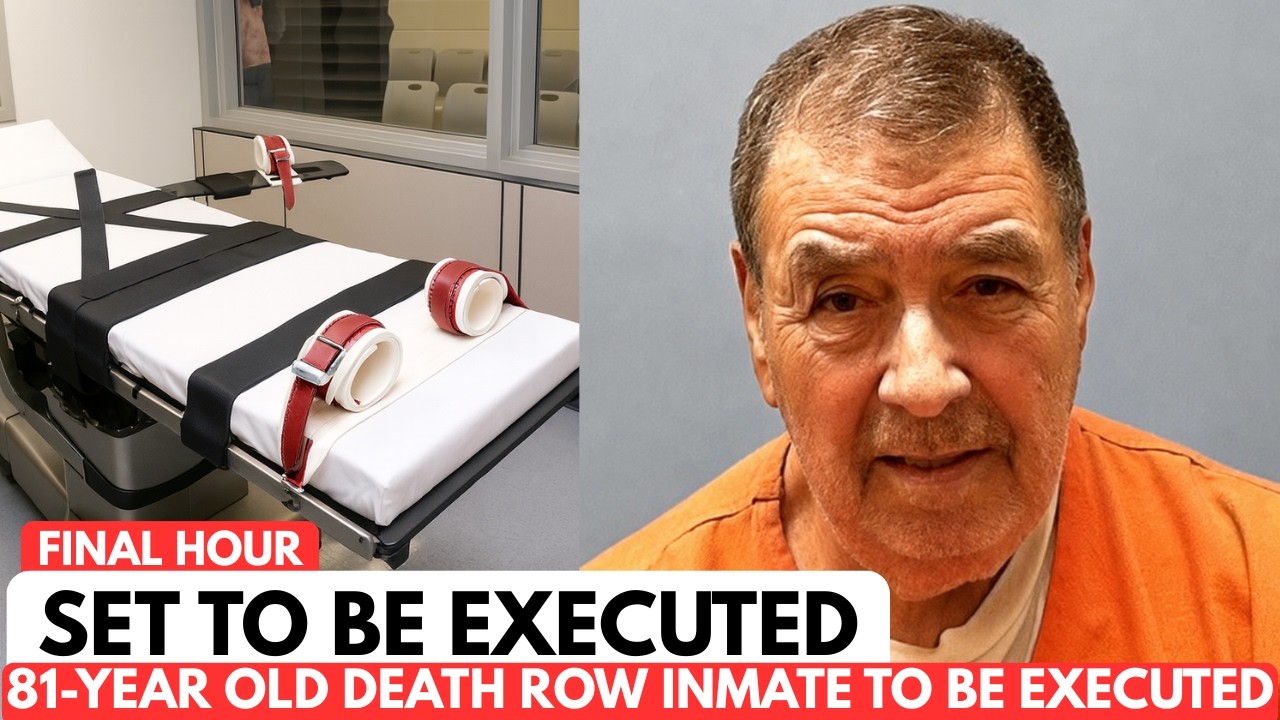
Occhicone’s crime was a brutal escalation of a personal dispute. On June 10, 1986, he knocked on the sliding glass door of a home in Holiday, Florida, seeking to speak with his former fiancée, Anita Gerardi. She had ended their engagement, and her parents, Raymond and Martha Artzner, had never approved of the relationship.
When Anita refused to let him in, he left but returned minutes later, having cut the phone lines and armed himself with a gun.
Raymond Artzner stepped outside with a broomstick, a desperate and futile gesture of defiance. Occhicone shot him in the chest, then forced his way through a locked door. Inside, Martha Artzner was shot four times.
Anita and her young daughter fled through the back. A dying Raymond managed to utter a single word to a deputy: Dom. That name, spoken with his last breath, became the cornerstone of the case.
Occhicone was arrested near railroad tracks using a scent dog.
The jury trial in September 1987 resulted in a guilty verdict on two counts of first-degree murder. But the sentencing phase revealed a deeply divided jury: for the murder of Raymond Artzner, the jury recommended life in prison. For Martha, the vote was seven to five in favor of death.
Seven jurors wanted him dead. Five did not. That two-vote margin, under Florida law at the time, allowed the judge to impose a death sentence.
Today, Florida requires at least eight jurors to recommend death. Occhicone would not be sentenced to death under current rules.
The legal system then swallowed nearly 40 years. Occhicone’s appeals crisscrossed state and federal courts, all ultimately unsuccessful. He grew old in a cell at Florida State Prison.
 By 2026, he suffers from kidney and prostate problems, requires help bathing, and his hands shake. His attorneys argue he is physically incapable of understanding his impending death, but the legal bar for a competency exemption is impossibly high: he would have to prove he does not understand why he is being executed. Advanced age alone does not qualify.
On June 26, 2026, Governor Ron DeSantis signed Occhicone’s death warrant. It was the 12th such warrant the governor had signed that year, and it came just one day after Florida executed Dusty Ray Spencer, a 74-year-old who had become the state’s oldest executed inmate since 1976. The pattern is unmistakable: Spencer on June 25, Dennis Soccer on July 14, and now Occhicone on July 28, with another inmate, James Duckett, also scheduled that same day.
Three of the state’s oldest death row inmates, executed back to back to back, each older than the last.
Occhicone’s legal team filed for a stay on two grounds. The first was age and physical decline, but that argument carried little weight in court. The second was more unusual: Florida’s lethal injection protocol uses a sedative called etomidate, a 𝒹𝓇𝓊𝑔 that is now in nationwide shortage.
Hospitals rely on it for emergency sedation in operating rooms and ICUs. The attorneys argued the state should not use scarce, life-saving medication to execute an elderly, infirm man while medical facilities face a shortage. The Florida Court of Appeals denied the request without comment.
No Florida governor has granted clemency to a death row inmate since 1976. Five decades of executions, zero commutations. The governor who signs the death warrant is also the only official with the power to stop it.
There is no independent clemency board. Occhicone’s fate lies entirely in the hands of the same office that set his execution date. That reality, combined with the recent string of elderly executions, has drawn scrutiny from human rights advocates and legal scholars who question whether the state is systematically clearing its oldest death row inmates.

The execution protocol itself is clinical and methodical. In the final days, Occhicone will be moved to a death watch cell adjacent to the execution chamber. He will be allowed final visits, a last meal, and time with a spiritual adviser if he chooses.
Given his documented mobility issues, corrections officers may need to assist him with showering and walking to the gurney. On the day, two intravenous lines will be set into his arms. He will be strapped across his chest, waist, and limbs.
The warden will read the death warrant aloud. He may make a final statement.
Then the three-𝒹𝓇𝓊𝑔 sequence begins: etomidate to induce unconsciousness, rocuronium bromide to paralyze all voluntary muscles including the diaphragm, and potassium chloride to stop the heart. A physician monitors the process. Death is typically confirmed within 10 to 20 minutes.
Florida is the only state using etomidate for executions, having switched after 𝒹𝓇𝓊𝑔 manufacturers stopped supplying midazolam. The reliability of etomidate in ensuring full unconsciousness before paralysis has been challenged repeatedly, but Florida courts have consistently upheld the protocol.
The broader context of this execution cannot be ignored. The same jury that heard the evidence split 7-5. Under Florida’s current law, that vote would not be enough to sentence anyone to death.
The state itself has deemed the standard that sent Occhicone to death row as insufficient for future cases. Yet he remains under a death warrant signed decades later, his body failing, while the legal system that convicted him has evolved past the very rule that condemned him.
The victims’ families have waited nearly 40 years. Some have died themselves. Raymond and Martha Artzner never saw their daughter and granddaughter grow old.
Anita Gerardi, now in her 60s, has lived with the trauma of that morning for her entire adult life. In public statements, law enforcement officials have said that Occhicone’s age is not a mitigating factor. One prosecutor noted that he was not too old or too frail when he killed two people in cold blood, adding that if the issue is that he is too old now, perhaps the real issue is that it took too long to execute him.

That sentiment captures the tension at the heart of this case. Does time erase the debt? Or does the delay itself become a form of cruelty that undermines the justice the state claims to serve?
Occhicone’s attorneys have argued that executing a man with such profound physical decline, who requires help to shower, who shakes uncontrollably, who has outlived most of the people who testified at his trial, amounts to a punishment that no longer fits the crime or the person. But the courts have not agreed.
The legal filings are exhausted. The final appeals are running out. July 28, 2026, is now just days away.
The execution chamber at Florida State Prison stands ready. The gurney, the IV lines, the 𝒹𝓇𝓊𝑔 vials from a supply that hospitals desperately need, are all prepared. Dominick Anthony Occhicone will be wheeled in or walked in with assistance, his hands shaking, his eyes perhaps scanning the witnesses, perhaps fixed on a point beyond them.
He may speak, or he may remain silent. Then the drugs will flow.
This is not a story about whether the death penalty is right or wrong. It is about a specific man, a specific crime, and a specific system that took 39 years to move from a divided jury to a final injection. It is about a state that has executed its oldest inmates in rapid succession, pushing the boundaries of what the Eighth Amendment might consider cruel and unusual.
It is about a 𝒹𝓇𝓊𝑔 shortage that highlights the uncomfortable intersection of medical ethics and state killing. And it is about a question that no court has fully answered: what justice is served when the person being executed is no longer the same person who committed the crime, not morally, but physically, after decades of imprisonment.
The clock is ticking. The law is clear. The warrant is signed.
On July 28, Florida will attempt to end the life of an 80-year-old man who has been waiting to die since 1987. Whether that constitutes justice or merely the final chapter of a long and troubled process is a question that will linger long after the last injection is administered. The state says it is fulfilling a debt.
The man on death row says nothing now, his voice lost in the machinery of the law. The witnesses will watch. The world will read the wire reports.
And another name will be added to the list of Florida’s executed, the oldest of them all.