In a case that has captivated the nation for decades, Tony Von Caruthers is set to face execution on May 21, 2026, at 10:00 AM at Riverbend Maximum Security Institution in Nashville, Tennessee. The circumstances surrounding his conviction for the brutal murders of three individuals in 1996 continue to spark heated debate and controversy.
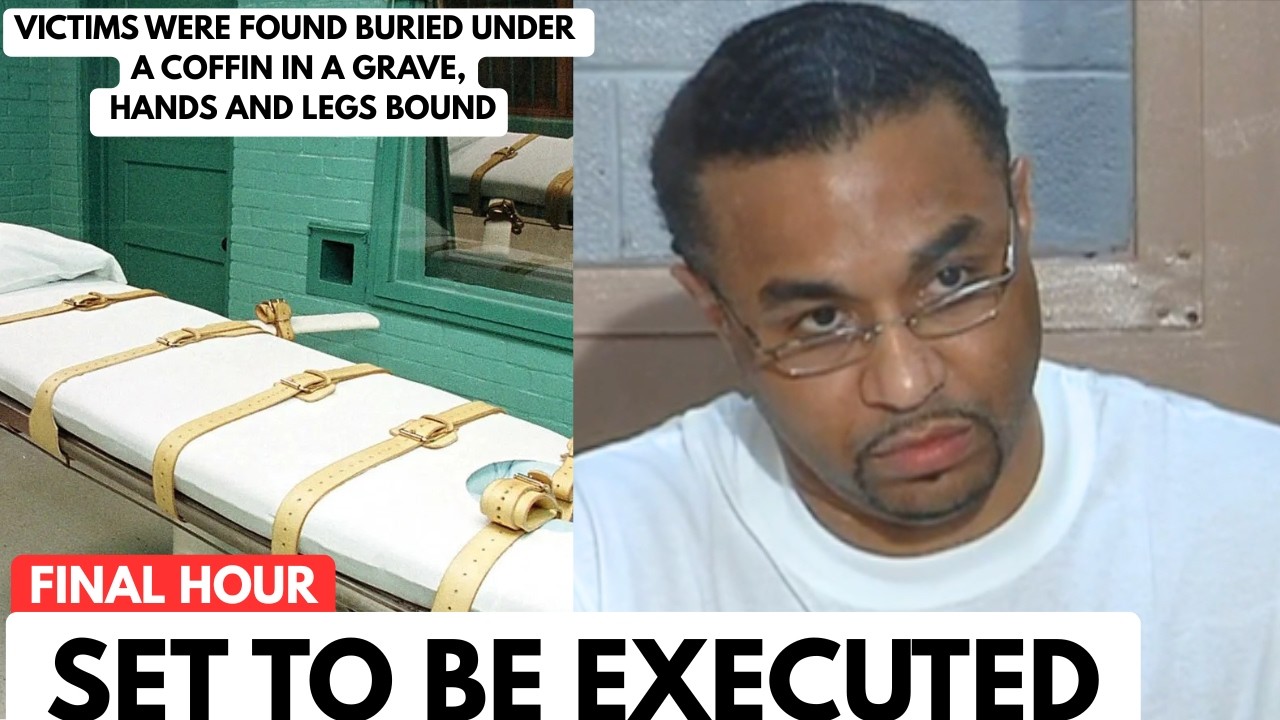
Caruthers, who has spent 30 years on death row, maintains his innocence, asserting that he will be exonerated. The case has drawn attention not just for its gruesome details but also for the myriad of unanswered questions that have emerged over the years. On one side, the state insists that justice was served when a jury convicted Caruthers of the murders, while on the other, defense attorneys and civil rights advocates argue that critical evidence was overlooked and that the trial was fundamentally flawed.
The tragic story began in February 1994, when three people—21-year-old Marcelos Anderson, his mother Delois Anderson, and 17-year-old Frederick Tucker—vanished from Memphis. A week later, their bodies were discovered buried beneath an existing casket in Rose Hill Cemetery. Autopsies revealed that all three victims were alive when they were buried, a finding that would become a focal point of the prosecution’s case.
Investigators theorized that Caruthers, allegedly seeking to eliminate competition in the 𝒹𝓇𝓊𝑔 trade, conspired with two brothers, James and Jonathan Montgomery, to kidnap Anderson. Witnesses reportedly saw the victims with the Montgomerys on the day they disappeared. However, the case took a dark turn when Jonathan Montgomery was found dead in his jail cell before his trial could begin, leaving Caruthers and James Montgomery to face the charges.

During the 1996 trial, Caruthers represented himself after a series of court-appointed attorneys were dismissed. His defense team later argued that his mental health issues compromised his ability to mount an effective defense. The prosecution’s case relied heavily on witness testimony and the assertion that Caruthers orchestrated the murders, but the defense claimed that the evidence was circumstantial and unreliable.
As the years passed, various legal challenges arose, including a 2000 ruling that determined Caruthers and Montgomery should not have been tried together. Montgomery eventually accepted a plea deal and was released, while Caruthers remained on death row. In 2010, Montgomery reportedly stated that Caruthers was not involved in the crimes, a claim that has been pivotal in Caruthers’ ongoing legal battles.

The case has been fraught with contentious issues, including untested DNA evidence found at the crime scene and fingerprints that did not match either Caruthers or Montgomery. The defense has argued that these factors point to an unidentified perpetrator, while the state maintains that the absence of a match does not absolve Caruthers of guilt.
As the execution date approaches, Caruthers’ attorneys are fighting to prevent the execution on the grounds of his mental illness, claiming he suffers from schizoaffective disorder and cannot comprehend the reality of his situation. A Memphis judge ruled him competent to be executed, but that decision is currently under appeal.

In the days leading up to the scheduled execution, multiple legal motions are in play, including a clemency petition submitted to Governor Bill Lee. Advocacy groups have rallied support, with calls for intervention growing louder as the date draws near. The state has consistently defended the conviction, asserting that the legal process has been thorough and just.
As the clock ticks down to May 21, the question remains: in a justice system designed to prioritize the innocent, how certain must we be before carrying out the ultimate punishment?