The elevator doors sighed shut behind Eleanor Hayes, sealing away her daughter’s confused stare and the sudden pallor on Vincent’s face. The car descended with a soft mechanical hum, carrying her seventy-year-old body down twelve floors of polished steel and mirrored walls. In the reflection, she looked smaller than she remembered—silver hair pulled into a practical knot, shoulders straight despite the ache that never quite left her spine. But her eyes… her eyes were alive in a way they hadn’t been since Arthur’s last breath.
She allowed herself one small, private smile as the lobby lights washed over her. Did you check the paperwork carefully?
The question would eat at them tonight. Good.

Outside, the October wind cut through her wool coat like a reminder that winter was coming for everyone. Maple Street was twenty minutes by cab, but it might as well have been another lifetime. She pulled her scarf tighter and stepped into the gray afternoon, the city’s noise rising around her—honking horns, distant sirens, the chatter of lives that hadn’t just been sold out from under them.
She had nowhere to sleep tonight. And yet, for the first time in months, Eleanor felt the ground steady beneath her feet.
Back in the apartment, Jessica’s voice cracked the silence. “What did she mean, Vincent? What paperwork?”
He didn’t answer right away. His arms were still crossed, but the posture had changed—defensive now, shoulders hunched like a man bracing for a blow he couldn’t see coming. The expensive watch on his wrist—bought with the first trickle of house money—caught the light as he rubbed his jaw.
“She’s bluffing,” he muttered. “Old lady’s losing it. Coleman said the power of attorney was ironclad.”
Jessica paced to the window, her manicured nails tapping the glass. At thirty-eight she still looked like the girl who once begged for bedtime stories in that very house on Maple Street. But the softness was gone, replaced by the sharp edges Vincent had helped sharpen. “You promised me this would fix everything. The debt, the creditors calling at 3 a.m., the way you looked at me like I was your last lifeline…”
“I know what I promised.” His tone sharpened, but there was fear underneath. Eleanor had seen that same flicker in Arthur’s eyes the night he admitted the chest pain had been building for weeks. Men like Vincent hated when the mask slipped.
Eleanor’s cab rolled past familiar landmarks—the bakery where she and Arthur used to split Sunday danishes, the park where Jessica learned to ride a bike with training wheels that Arthur had painted red himself. The driver glanced at her in the rearview. “You okay, ma’am? Look like you seen a ghost.”
“Something like that,” she said quietly. “But I’m still here.”
Mr. Coleman’s office smelled of old paper and fresh coffee. The lawyer had aged since their last meeting—more liver spots on his hands, deeper lines around eyes that had witnessed too many family betrayals. He slid a thick folder across the desk.
“You were right to come straight here, Eleanor. The sale went through, but our quiet filings… they’re holding. The trust you and Arthur set up years ago, the one Jessica never knew existed because we buried it under estate planning for ‘just in case.’ It creates a life estate interest that survives the power of attorney. They sold a house they didn’t fully own.”
Eleanor’s fingers traced the edge of the folder. The paper felt like armor. “How long until they realize?”
“Days. Maybe a week if they’re sloppy. Vincent’s bank is already sniffing around the transferred funds. Once the title company catches the discrepancy…” He leaned back, studying her. “Most people in your position would be screaming for blood. You’re smiling again.”
She met his gaze. “I’m not most people anymore.”
That night, she stayed at a modest motel on the edge of town—the kind with thin walls and flickering neon. No suitcase, just the clothes on her back and a small leather journal Arthur had given her on their thirtieth anniversary. Inside the front cover, in his blocky handwriting: For the stories we’ll tell someday.
She wrote until her hand cramped.
They think they broke me. They don’t know I’ve been broken before and learned how to set my own bones.
The next morning, her phone rang. Jessica. Eleanor let it go to voicemail, then listened on speaker while she sipped terrible motel coffee.
“Mom, this isn’t funny. The bank called Vincent. Something about a lien or a trust? Call me back. We can fix this as a family.”
Family. The word tasted like rust.
Eleanor dressed carefully. She had one advantage they’d never understand: forty years of watching, listening, remembering. She knew where Vincent hid his second phone. She knew Jessica’s passwords were still their old dog’s name. And she knew the one thing her daughter feared more than anything—being seen as the villain in her own story.
By noon, she was sitting in the back booth of the diner across from Jessica’s favorite yoga studio. The bell above the door jingled as her daughter rushed in, hair still damp from class, eyes wild.
“You can’t just disappear like that,” Jessica hissed, sliding into the seat. “People are asking questions. Vincent’s under so much pressure—”
Eleanor studied the woman across from her. This was not the child who used to crawl into bed after nightmares, smelling of strawberry shampoo. This was someone who had calculated the value of her mother’s grief.
“I know about the Europe trip,” Eleanor said softly. “The one that was never real. The one designed to get me out of the house while you two worked your angles.”
Jessica’s mouth opened, closed. For a second, the mask cracked. “It wasn’t supposed to be like this. Vincent said the debt was temporary. He said you’d understand after we got back on our feet. The house was too big for you alone anyway.”
The words landed like stones in still water.
Eleanor leaned forward. The diner’s fluorescent lights buzzed overhead, casting harsh shadows. Outside, leaves skittered across the parking lot in a sudden gust.
“Here’s what’s going to happen,” she said, voice steady as the foundation Arthur had helped pour. “You’re going to convince your husband to put the house back into my name. Quietly. No police, no public mess. Or I will spend every remaining day I have making sure the world knows exactly how you thanked the woman who gave you life.”
Jessica laughed, but it was brittle. “You’re seventy. What are you going to do? Sue us? You signed everything.”
“I signed what you showed me. I kept what you never thought to look for.” Eleanor slid a single photocopied page across the table. It was the cover sheet of the life estate trust, dated years before Vincent ever entered their lives. Arthur’s signature bold at the bottom.
The color drained from Jessica’s face again. “Mom… please. We’re drowning.”
For the first time, Eleanor felt the old pull—the instinct to comfort, to fix, to mother. She pushed it down. Love without boundaries had cost her everything once.
“Then learn to swim,” she whispered.
The days that followed blurred into a chess game played in shadows. Vincent showed up at the motel one evening, all bluster and threats, until Eleanor calmly reminded him of the “accounting irregularities” at his old job—details she’d quietly gathered through Maria’s network of neighborhood gossips and a few well-placed calls.
He left without slamming the door. Progress.
Meanwhile, Eleanor walked Maple Street at dusk. The new owners—a young couple with a toddler—had already planted chrysanthemums by the porch. The sight should have gutted her. Instead, it fueled something colder and clearer.
She met them under the pretense of being a concerned former neighbor. The wife invited her in for tea. The house smelled different now—new paint, unfamiliar candles—but the bones were the same. Arthur’s kitchen cabinets. The spot in the hallway where Jessica had drawn on the wall with crayon and cried when they painted over it.
In the living room, Eleanor’s fingers brushed the mantel where Arthur’s urn had once sat. Empty now, like so much else.
That night, alone again, the grief hit her like a wave. She curled on the motel bed and let herself cry for the man who had carried her over the threshold, for the daughter who no longer existed, for the version of herself that had trusted too easily. The tears weren’t weakness. They were fuel.
Two weeks later, the turning point came in Coleman’s office again. Vincent and Jessica were there too—summoned under the guise of “mediation.” The air was thick with tension and the faint scent of Vincent’s expensive cologne.
The lawyer laid out the terms. Reversion of the property. Repayment schedule for the misused funds. A quiet settlement that would leave Vincent’s remaining debts exposed if he fought.
Jessica looked at her mother across the polished table, eyes glistening. “I never wanted you to be homeless. I just… I chose him. Over and over.”
Eleanor reached across the table—not to comfort, but to place a single key in her daughter’s palm. The original house key, worn smooth by decades.
“This was never about the house,” Eleanor said. Her voice didn’t waver. “It was about whether you still knew how to be my daughter.”
Vincent started to speak. Eleanor cut him off with a look that had silenced louder men.
“Shark eyes,” she said simply. “Arthur saw you clearly from the first night. I should have trusted him.”
Chapter Two: The Weight of Empty Rooms
Rain hammered the motel roof like impatient fingers demanding entry. Eleanor sat on the edge of the sagging mattress, the single key still warm from her palm where she’d clutched it after handing its twin to Jessica. Outside, the neon sign buzzed and flickered—Vacancy in stuttering blue—casting fractured light across the threadbare carpet. The room smelled of stale cigarettes and pine cleaner that couldn’t quite mask the mildew. Seventy years old, and here she was, measuring her life by what fit in a plastic grocery bag from the front desk.
She stood slowly, knees protesting, and crossed to the mirror above the dresser. The woman staring back had Arthur’s old flannel shirt draped over her shoulders like a ghost. She hadn’t packed it for the fake Europe trip; Maria had brought it over the day after the sale closed, along with a tin of shortbread cookies and a hug that lasted too long.
“You always were tougher than you looked,” Maria had whispered. Eleanor hadn’t cried then. She wouldn’t start now.
Her phone vibrated on the nightstand. Unknown number. She let it ring into silence, then played the voicemail on speaker while she filled the kettle from the bathroom tap.
“Eleanor, it’s Vincent. We need to talk. Like adults. This trust thing… it’s a misunderstanding. Jessica’s a mess. Come to the apartment tomorrow. We’ll figure this out.” A pause, the sound of ice clinking in a glass. “Don’t make this uglier than it has to be.”
The kettle clicked off. Steam rose in lazy curls, blurring the mirror. Eleanor poured water over a cheap tea bag and watched the color bleed out like an old wound reopening. Ugly. That was Vincent’s word for anything that refused to stay buried. She remembered the first time he’d used it—leaning against her kitchen counter during one of those early visits, eyes sliding over her wedding photos. “Old houses get ugly if you don’t update them, Eleanor. Time to let go.”
She had laughed then. Now the memory tasted like ash.
The next morning broke gray and unforgiving. Eleanor took a bus to Maple Street instead of a cab. She wanted the time, the rhythm of wheels on wet pavement, the way strangers avoided her eyes. At the corner two blocks from her old home, she stepped off and stood beneath the dripping maple that had shaded Jessica’s childhood lemonade stand. The bark was rough under her palm, familiar as Arthur’s callused hands.
The young couple—Mark and Lena, she’d learned—were loading the toddler into a minivan when she approached. Lena spotted her first, offering a hesitant wave. The house behind them looked brighter in the daylight, fresh white trim against the red door Eleanor had painted herself one sweltering summer.
“Mrs. Hayes,” Lena said, juggling car keys and a sippy cup. “We weren’t expecting you back so soon. Is everything… okay?”
Mark hovered by the driver’s side, polite but wary. The kind of man who probably checked credit scores before friendships. Eleanor smiled the way she used to at church potlucks—warm on the surface, steel underneath.
“I was hoping to pick up a few things I left in the attic,” she said. “If it’s not too much trouble. Sentimental items. Photos, mostly.”
They exchanged a glance. The toddler fussed in the car seat. Lena nodded. “Of course. We haven’t touched much up there yet. The realtor mentioned the previous owners had some storage. Come on in.”
The front door swung open with the same familiar creak. Eleanor’s chest tightened. The air inside carried new scents—baby powder, fresh coffee, the faint chemical tang of new carpet—but underneath it all lingered the ghost of Arthur’s pipe tobacco and her own lavender sachets. The hallway walls had been repainted a soft beige. Jessica’s crayon marks were long gone, buried under layers of someone else’s fresh start.
Up the narrow attic stairs, dust motes danced in the thin light from a single bulb. Eleanor knelt by the old cedar chest, fingers tracing the brass latch Arthur had fixed a dozen times. Inside: a stack of photo albums, a bundle of letters tied with faded ribbon, and at the bottom, the small lockbox she’d hidden there the week before the fake trip.
She slipped the lockbox into her tote bag while Mark’s footsteps creaked on the stairs below. “Find what you needed?”
“More than I expected,” she murmured.
Back outside, the rain had eased to a drizzle. Lena touched her arm gently. “If there’s anything else… we know this must be hard. Moving on at any age, but especially—”
Eleanor met the younger woman’s eyes. Kind eyes. The kind that hadn’t yet been taught the price of blind trust. “Moving on is a choice,” she said. “Sometimes you choose to stay right where you are and make the world move around you.”
She left them on the porch, the key to the old life heavy in her coat pocket.
That afternoon, in a quiet corner of the public library, Eleanor opened the lockbox. Inside: copies of every document Coleman had prepared, a flash drive with scanned records, and the letter Arthur had written the month before his heart attack. She hadn’t read it in years. Didn’t dare.
My Eleanor,
If you’re reading this, I’m gone and something’s gone wrong with the house. You always said I worried too much. Maybe I did. But I saw the way that Vincent looks at things that aren’t his. Protect what we built. Not for the walls or the roof—for the life we poured into them. For Jessica, even if she forgets. And mostly for you. You were never just my wife. You were the strongest part of me.
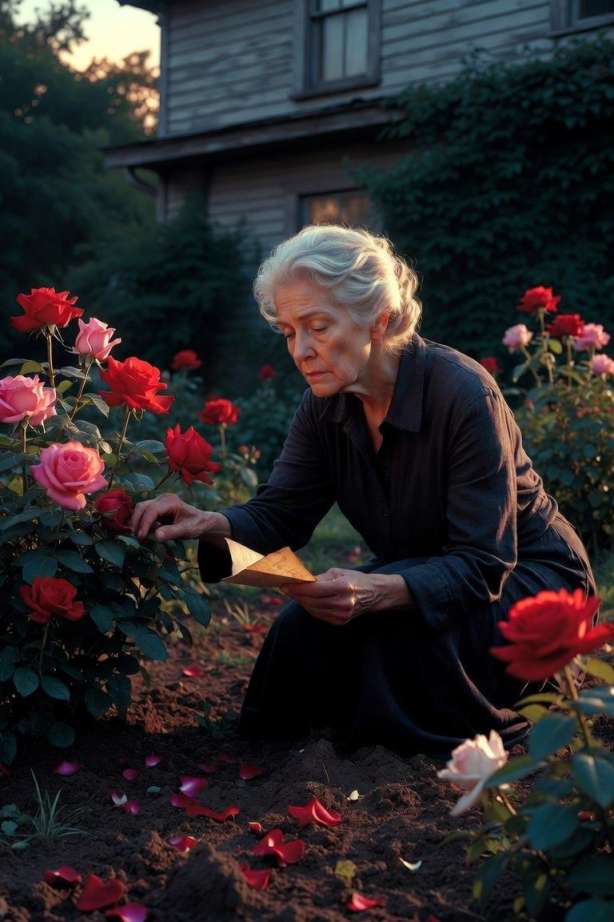
Come find me in the garden when it’s over. I’ll be waiting under the roses.
Yours, always—Arthur
Tears blurred the ink. Eleanor pressed the letter to her chest, breathing in the faint trace of paper that had once lived in their home. The library clock ticked steadily. Outside the tall windows, people hurried past with umbrellas and briefcases, lives intersecting without touching. She was one of them now. Invisible until she chose not to be.
Her phone buzzed again. Jessica this time.
“Mom, we’re at the apartment. Vincent wants to talk. Please. I… I found some of your old things in storage. The quilt you made me when I was little. I thought you might want it back.”
The quilt. Blue and yellow stars, stitched with hands that had rocked Jessica through fevers and first heartbreaks. Eleanor closed her eyes. The pull was there—visceral, ancient. Come home. Fix this. Be the mother.
Instead, she texted back: Keep the quilt. Some things can’t be returned once given away.
Then she dialed Coleman.
“Set the meeting for tomorrow,” she said. “Their apartment. I want to see the place they bought with my life.”
Night fell early. Eleanor stood across the street from Jessica and Vincent’s building, the same one where she’d been declared “homeless.” Lights glowed in their unit on the twelfth floor. Shadows moved behind the curtains—Jessica pacing, Vincent’s silhouette sharp against the glass, phone to his ear.
She didn’t go up. Not yet.
Instead, she walked three blocks to a small Italian place Arthur had loved. The owner, old Mr. Rossi, recognized her immediately. No questions, just a table in the back and a plate of gnocchi that tasted like forgiveness. As she ate, she watched the street. A woman about her age sat alone at the counter, nursing a glass of wine, shoulders curved inward the way Eleanor’s had been for months after the funeral.
Their eyes met. A small nod passed between them—the silent language of women who had carried too much, too long.
Eleanor paid and left a generous tip. On her way out, she paused by the woman. “It gets better,” she said quietly. “Not easier. Better.”
The woman’s surprised smile followed her into the street.
Back at the motel, Eleanor spread the documents across the thin bedspread. The Emotional Engine inside her chest shifted gears—from grief to something sharper. Resolve. She rehearsed the next conversation in her mind, picturing Vincent’s shark eyes narrowing, Jessica’s flicker of doubt.
Then her phone rang once more. This time, no number. Just a text from an unknown sender.
We know what you’re doing. Stop now, or the house won’t be the only thing you lose.
Eleanor stared at the screen, pulse quickening. The rain had started again, drumming against the window like a warning. She deleted the message, but the words lingered, cold as the empty rooms on Maple Street.
Who else had Vincent dragged into this?
Chapter Three: Shadows in the Glass
The threatening text glowed on Eleanor’s phone like a fresh bruise. She sat motionless on the motel bed, rain lashing the window in sheets that blurred the parking lot lights into streaks of sodium orange. Her thumb hovered over the delete button, but she saved the message instead—screen-captured, timestamped, forwarded to Coleman with a single line: Evidence.
Seventy years had taught her that fear was just another room in the house you built for yourself. She refused to live there anymore.
She dressed in the same wool coat, pinned her silver hair with the cameo brooch Arthur had given her on their fortieth. In the mirror, her reflection looked carved from quiet stone—cheekbones sharp under tired skin, eyes the color of winter sky. No tremor in her hands as she slipped the flash drive into her inner pocket. Armor came in many forms.
The cab ride to the apartment building felt longer than twelve floors should allow. Streetlights slid across her lap like passing memories. She remembered bundling five-year-old Jessica into this same coat during a blizzard, Arthur’s laugh booming as he cleared snow from the car. “Our girls against the world,” he’d said. How quickly that world had shrunk to two sharks circling one old woman.
The doorman recognized her from the day of the sale. His nod was sympathetic, almost apologetic, as he buzzed her up. Twelfth floor. The elevator hummed the same indifferent tune.
Jessica opened the door before Eleanor could knock. Her daughter’s face was pale, makeup hastily applied, eyes red-rimmed in a way that reminded Eleanor of the nights Jessica had cried over lost friendships or failed tests. Vincent stood behind her in the open-plan living room, arms crossed again—his default armor. The apartment smelled of takeout Thai and expensive candle wax. Floor-to-ceiling windows reflected the three of them like players on a stage no one wanted to leave.
“Mom,” Jessica started, voice cracking. “That text wasn’t from us. Vincent swears—”
“Save it.” Eleanor stepped inside without waiting for invitation. Her shoes left faint damp prints on the gleaming hardwood. She scanned the space slowly: sleek gray sofa, abstract art that said nothing, a single photo on the side table—of Jessica and Vincent on their wedding day. No picture of her. No picture of Arthur.
She placed her tote bag on the kitchen island with deliberate care. “You wanted to talk like adults. So let’s talk about what you sold. Not just the house. The trust. The letter from your father. The fact that you forged my continued consent after I left for Paris.”
Vincent’s laugh was short, ugly. “Forged? That’s a serious accusation from a woman living in a motel.” He moved closer, shark eyes narrowing. Up close, she saw the cracks—sweat at his hairline, the way his expensive shirt strained across shoulders that carried more debt than muscle. “We have friends, Eleanor. People who don’t appreciate old ladies playing games with other people’s money.”
The threat hung between them, heavier than the rain outside.
Eleanor didn’t flinch. Instead, she pulled the flash drive from her pocket and set it next to a half-empty wine glass. “This contains everything. Scans. Timelines. The ‘accounting irregularities’ at your last firm, Vincent. The creditors you’ve been dodging. Even the calls you made to the title company pretending to be me.” She turned to Jessica. “And you, sweetheart. The power of attorney papers you had me sign while I was still raw from losing your father. Did you really think I wouldn’t notice the dates?”
Jessica’s hand flew to her mouth. For a heartbeat, the girl from Maple Street flickered behind the polished exterior—the one who used to fall asleep to Eleanor singing off-key lullabies. “I was scared. The debt was swallowing us. Vincent said it was just paperwork. That you’d never have to know until it was fixed.”
“Fixed.” Eleanor’s voice softened, but not with mercy. She walked to the window, gazing out at the glittering city grid. Lights blurred in the rain like distant stars. “You fixed it by erasing me. Tell me, when you changed the locks, did it feel like victory? Or did the house feel heavier without me in it?”
Silence stretched, broken only by the low hum of the refrigerator. Vincent’s phone buzzed on the counter. He ignored it, but his jaw tightened.
Eleanor continued, painting the scene with memory’s brush. “Arthur built the back porch with his own hands. Remember how you helped him hammer nails, Jessica? You were eight. He let you wear his tool belt. Said you had his stubborn streak.” Her gaze drifted to Vincent. “He called you shark eyes that night. I defended you. Told him love makes people blind. Turns out he was the one who saw clearly.”
Vincent stepped forward, voice low and venomous. “Enough with the nostalgia. Transfer the trust back, Eleanor. Or I make one call and your precious little life unravels. Medical records. That fall you took last year. Questions about competence.”
The threat landed. Eleanor felt it in her chest—a cold spike. But she smiled the same way she had in the doorway days ago. The smile that had first unnerved them.
“Do it,” she said. “And every creditor you owe gets the full file. Every ‘friend’ you mentioned learns exactly whose money bailed you out. I have nothing left to lose, Vincent. You made sure of that. But you… you still have a wife who might choose differently if she sees the man behind the mask.”
Jessica looked between them, torn. Her fingers twisted the hem of her sweater—the same nervous habit from childhood. “Mom, please. We can sell it again. Split it fairly. I never wanted you homeless. I just wanted… us to be okay.”
The word us cracked something deep in Eleanor. Not enough to break her. Enough to bleed.
She reached into the tote and pulled out the quilt. Blue and yellow stars, slightly faded, edges frayed from years of love. She draped it over Jessica’s shoulders the way she had when her daughter was small and feverish.
“This is yours,” Eleanor whispered. “Keep it. But the house stays with the trust. You have until Friday to start the paperwork. Or I walk into that title company myself with Coleman and every reporter who owes me a favor from the old neighborhood watch days.”
Vincent’s phone buzzed again—insistent. He snatched it up, turning away. His face went ashen as he listened. “What do you mean the accounts are frozen?” he hissed into the device.
Eleanor watched the color drain from his face for the second time in days. Satisfaction bloomed, quiet and fierce. Coleman had moved faster than expected.
Jessica stepped closer, clutching the quilt. Tears slipped down her cheeks. “I’m sorry. For the house. For everything. But he’s my husband. I can’t just—”
The elevator dinged faintly in the hall. Footsteps. Multiple.
Vincent lowered the phone, eyes wild. “You brought cops? Over family?”
Eleanor shook her head. “No. But someone else knows. And they’re not here to help you.”
The knock on the door was sharp. Three times. Through the peephole, Jessica’s voice trembled. “Who is it?”
A muffled reply. Male. Unfamiliar.
Eleanor’s pulse quickened. The unknown text. The frozen accounts. Pieces shifting too fast on the board.
Vincent yanked the door open.
A man in a dark coat stood there, rain dripping from his collar. Mid-forties, hard eyes, a folder in his hand. Behind him, another figure lingered in shadow.
“Vincent Hale?” the man said. “We’re from the fraud division. We have questions about the transfer from Eleanor Hayes’ property. And about some irregularities in your previous employment.”
Vincent staggered back a step. Jessica clutched the quilt tighter, staring at her mother with something between horror and dawning realization.
Eleanor met her daughter’s gaze across the room. The city lights painted them both in cold fluorescence.
“You started this,” Eleanor said softly, voice carrying the weight of forty years of love and loss. “Now the house decides who it belongs to.”
But as the investigators stepped inside, her phone vibrated once more in her pocket. Another unknown number. A single line on the screen that turned her blood to ice:
Arthur wasn’t the only one who kept secrets. Ask Jessica about Paris.
Chapter Four: The Paris Echo
The investigators moved like men who had seen too many shattered living rooms. Dark coats shedding rain onto the polished floor, voices low and procedural as they asked Vincent to step aside. Eleanor remained by the window, the city’s glittering indifference at her back, while Jessica clutched the star quilt like a shield. The blue and yellow fabric looked painfully out of place against the apartment’s sleek gray palette.
“Mrs. Hayes,” the lead investigator said, nodding toward her. “We’ll need a statement. But not here. Not tonight.”
Vincent’s protests rose—sharp, indignant, laced with the panic of a man watching his carefully constructed life tilt. “This is harassment. My mother-in-law is confused. Elderly. She signed everything willingly.”
Jessica said nothing. Her eyes kept drifting to Eleanor, searching for the mother who used to bandage scraped knees and chase away monsters under the bed. The monsters had grown up and moved in with them.
Eleanor slipped her phone back into her coat pocket, the new text burning against her ribs. Paris. The trip that was never real. The lure that had pulled her away while the house was stripped from beneath her. What else had her daughter hidden in the City of Light?
The meeting dissolved into fragments. Vincent was escorted downstairs for further questioning. Jessica lingered, folding and unfolding the quilt’s corner until the fabric threatened to tear.
“Mom,” she whispered when they were finally alone, the apartment door clicking shut like a judge’s gavel. “Paris was supposed to be real. I booked the tickets. I swear. But Vincent… he said we needed the money sooner. He changed the plans. I didn’t know he’d move so fast on the house.”
Eleanor studied her daughter’s face—the fine lines starting to appear at the corners of her eyes, the way her shoulders curved inward as if expecting a blow. Seventy years had taught her to see the child still trapped inside the adult. But seeing wasn’t forgiving.
“Sit down,” Eleanor said. Not a request.
They sat at the kitchen island, the flash drive between them like an unexploded shell. Outside, the rain had eased into a steady patter, drumming against the glass in uneven rhythm. Eleanor’s voice stayed quiet, cinematic in its restraint.
“Tell me about Paris. Not the brochure version. The truth.”
Jessica’s hands trembled as she poured two glasses of water. One spilled. She didn’t wipe it up. “We were there for three days—Vincent and I—before I flew back early. He said he had meetings. Business. I believed him. But when I got home… the house was already listed. He told me it was the only way. That you’d understand once the debt was gone. That you were lonely in that big empty place anyway.”
The words landed like stones in still water. Eleanor felt each ripple in her chest. She reached across the island and took her daughter’s hand—not gently, but firmly, the way she once held it crossing busy streets.
“I was lonely because your father died in my arms, Jessica. In the kitchen he built. Drinking coffee. Whispering my name like a prayer.” Her voice didn’t break. It sharpened. “And you sold the last place I could still hear him.”
Tears slipped down Jessica’s cheeks. “I know. God, I know. But there’s more. The text you got… about secrets.” She swallowed hard. “In Paris, Vincent met someone. Not business. A woman from his old firm. The one tied to the irregularities. She gave him documents. Proof that could bury him if it came out. Or save him, if he used them right. I found emails. He was using the house money to pay her off too. Silence money.”
The apartment seemed to shrink. The city lights outside blurred into a smear of accusation. Eleanor’s mind raced—flashes of Arthur’s letter, the trust papers, the way Vincent’s shark eyes had always slid past her as if she were already gone.
“And you?” Eleanor asked. “What did you do with that knowledge, daughter?”
Jessica looked away. “I confronted him. He said it was over. That Paris was the end of it. But now… with the investigators here… I think she’s the one who sent you that text. To protect herself. Or to pull him back under.”
Silence stretched between them, heavy with forty years of birthdays and bedtime stories and quiet betrayals. Eleanor stood, legs steady despite the ache. She walked to the side table and picked up the single wedding photo. Young Jessica, radiant. Vincent, confident. No room left for a mother in the frame.
“You still love him,” Eleanor said. It wasn’t a question.
“I love who I thought he was.” Jessica’s voice was small. “But I love you too. I just… I chose wrong. Every time.”
The admission hung there, fragile as the quilt still draped over Jessica’s shoulders. Eleanor felt the old pull again—the mother’s instinct to gather her broken child close. Instead, she set the photo down.
“Love isn’t choosing once. It’s choosing every damn day. Even when it hurts.” She gathered her tote bag. “The investigators will want more from me tomorrow. Tell Vincent the clock is still ticking. Friday. Or everything burns.”
At the door, Jessica caught her arm. “Mom… the Paris woman. Her name is Claire. She has copies of everything. If she’s coming after us—”
Eleanor paused, one hand on the doorframe. The hallway light cast long shadows down the corridor, turning ordinary doors into portals to unknown endings.
“Then we’ll meet her in the light,” she said. “No more hiding.”
The motel felt smaller that night, the walls closing in with the weight of new truths. Eleanor sat at the wobbly desk, Arthur’s letter spread before her under the cheap lamp. Rain tapped the window like impatient fingers. She wrote in her journal until her hand ached:
Paris wasn’t the beginning. It was the mirror. Everything I refused to see reflected back at me. But mirrors can be shattered. And from the pieces, we build something stronger.
Her phone stayed silent for hours. Then, near midnight, it lit up again.
A new message. No number.
Claire sends her regards. The house was never yours alone. Ask your husband about the second mortgage. The one he took out before he died. Ask Jessica why she never told you.
Eleanor’s breath caught. The room tilted. Arthur? A second mortgage? The foundation they had sworn was paid off, solid as their vows.
She stood too quickly, knocking the journal to the floor. Pages scattered like fallen leaves on Maple Street. Outside, headlights swept across the parking lot. A car door slammed.
Footsteps approached her motel room door.
Three sharp knocks.
“Eleanor Hayes?” A woman’s voice, smooth as Parisian silk. “We need to talk about your family’s secrets. All of them.”
Chapter Five: Mortgages of the Heart
The motel door rattled under three more knocks. Eleanor stood frozen in the narrow room, Arthur’s scattered journal pages at her feet like fallen accusations. Rain drummed harder against the window now, a relentless staccato that matched the pulse in her temples. Seventy years old, and the past refused to stay buried. It had learned to knock.
She crossed to the door without turning on the overhead light. The peephole distorted the woman outside into a warped silhouette—sharp cheekbones, dark hair pulled back severely, a trench coat glistening with rain. Claire. The name tasted like cheap wine and worse decisions.
Eleanor opened the door a crack, chain still latched. Cold air and the scent of wet asphalt rushed in.
“Mrs. Hayes,” the woman said, voice carrying the faint lilt of someone who had practiced American English in boardrooms and hotel bars. “Claire Moreau. I believe you’ve heard my name tonight. May I come in? This isn’t a conversation for the hallway.”
Eleanor studied her. Mid-forties, perhaps. Eyes that had calculated risk and reward across continents. No visible weapon, but weapons came in many currencies. She unlatched the chain.
Claire stepped inside, bringing the night with her. Water dripped from her coat onto the thin carpet. She glanced around the modest room—the sagging bed, the kettle, the scattered pages—and something almost like pity flickered across her face before vanishing.
“You deserve better than this,” Claire said, gesturing vaguely. “A woman who built a life with her hands shouldn’t end up measuring it by motel towels.”
Eleanor didn’t offer her a seat. She remained standing, arms loose at her sides the way Arthur used to stand before a difficult job. “You didn’t fly from Paris to offer me real estate advice. Speak your piece, then leave.”
Claire set her leather satchel on the dresser. From it, she drew a single folder, weathered at the edges. “Your husband was a good man. Loyal, in his way. But construction work has thin margins. Medical bills before the end. He took out a second mortgage on Maple Street two years before he died. Quietly. He didn’t want to worry you.”
The words landed like a hammer on old bone. Eleanor felt the room tilt again. She gripped the back of the desk chair, knuckles whitening. Arthur’s face swam before her—his gentle smile over morning coffee, the way he’d rub his chest absentmindedly those last months, claiming it was just heartburn from her cooking.
“I don’t believe you,” she said, but her voice wavered for the first time.
Claire opened the folder. Photocopies. Signatures. Dates that aligned too perfectly with Arthur’s quiet withdrawals, his insistence that everything was fine. “Vincent found these during his own digging. He used them as leverage—against me, against the firm irregularities I helped cover. Your daughter knew pieces of it. Enough to stay silent when the sale happened. She thought protecting you from the full truth was kindness.”
Eleanor sank into the chair. The journal pages crinkled under her shoes. Paris. The second mortgage. A husband who had carried her over the threshold and then mortgaged their forever without a word. The betrayal burned hotter because it came wrapped in love.
“Why tell me now?” she asked, voice low.
Claire leaned against the dresser, arms crossed. “Because Vincent is cornered. He’s threatening to drag me into the fraud investigation. I want him gone. Quietly. The house money can disappear into the right accounts. You get your property back. I get my life back. Everyone walks away with fewer scars.”
The offer hung in the damp air, tempting as a warm bed after a long winter. Eleanor thought of Jessica clutching the quilt, of the young couple planting chrysanthemums on her porch, of Arthur whispering her name with his last breath.
“No,” she said.
Claire’s eyebrows rose. “No?”
“I won’t trade one set of lies for another. The house isn’t for sale. Not to Vincent. Not to you. Not to the ghosts.” Eleanor stood again, steadier now. She gathered Arthur’s letter from the floor and held it like a talisman. “Tell me the rest. What did my daughter do in Paris that she’s still hiding?”
Claire hesitated—the first crack in her polished armor. Outside, a car door slammed in the parking lot. Headlights swept across the curtains.
“She met me,” Claire said finally. “Not Vincent. Jessica. She came looking for proof against him. Instead, she found comfort. One night. One mistake. She cried afterward about betraying her marriage… and about failing you. Again.”
The revelation struck deeper than any mortgage. Eleanor’s breath left her in a slow, painful exhale. The daughter who had sold her home had also sold pieces of her soul in a foreign city. The rain outside seemed to roar.
A sharp knock interrupted them—this time on the motel door again. Urgent. Jessica’s voice, muffled and frantic.
“Mom? Mom, open up! Vincent made bail. He’s coming here. He knows about Claire—”
Claire’s face hardened. She snatched the folder. “This conversation never happened. Fix your family, Mrs. Hayes. Before it fixes you.”
She slipped out the back window—motel rooms always had their exits—leaving the scent of rain and expensive perfume.
Eleanor opened the front door. Jessica tumbled inside, soaked, eyes wild, the star quilt clutched under one arm like a child’s security blanket. “He’s spiraling. The investigators froze more accounts. He said if he goes down, we all do. The mortgage papers… Dad’s signature… I should have told you. I thought I could make it right.”
Mother and daughter stood inches apart in the cramped room. Eleanor reached out, brushing a wet strand of hair from Jessica’s face. The gesture was tender, automatic. But her eyes held steel.
“Making it right starts with truth,” she said. “All of it. Sit down. We’re ending this tonight—one way or another.”
As Jessica collapsed onto the bed, sobbing quietly into the quilt, Eleanor’s phone lit up on the desk. Vincent’s number. A voicemail already waiting.
She played it on speaker, Arthur’s letter still in her hand.
“Eleanor,” Vincent’s voice slurred with rage and fear. “You think you’re winning? I have copies of everything. Including the letter your precious Arthur left—the one admitting the mortgage. One call to the new owners and they’ll fight the trust. And if that doesn’t work… accidents happen to old women alone in motels.”
The line went dead.
Jessica looked up, terror in her eyes. “Mom…”
Outside, tires crunched on wet gravel. Headlights flooded the room through the thin curtains. A car door slammed. Footsteps approached. Heavy. Deliberate.
Eleanor picked up her phone, dialed Coleman, and then—calm as the eye of the storm—picked up the heavy brass lamp from the nightstand. Its cord dangled like a weapon.
The knocking started. Loud. Angry.
This time, she didn’t ask who it was.
Chapter Six: The Lamp and the Storm
The knocking turned to pounding, each blow vibrating through the thin motel door like a heartbeat gone wrong. Eleanor gripped the brass lamp in both hands, its cord trailing behind her like a fuse. The base was heavy—solid enough to crack bone or illusion, whichever broke first. Jessica rose from the bed, quilt slipping to the floor in a puddle of faded stars, her face a mask of raw panic.
“Mom, don’t,” she whispered, but her feet carried her closer anyway, one hand hovering near the chain lock as if she could still bar the world out.
Outside, Vincent’s voice cut through the rain. “Open the damn door, Eleanor! I know Claire’s been here. I know what she told you!”
Eleanor met her daughter’s eyes. In that fractured second, years collapsed: the little girl who once hid under covers from thunder, now standing in the path of a far louder storm. Eleanor nodded once—stay behind me—and unlocked the door.
Vincent burst in like floodwater, coat soaked, hair plastered to his skull, eyes wild with the terror of a man who had finally lost control of the narrative. Rainwater streamed off him onto the carpet. He spotted the lamp in Eleanor’s hands and laughed, a jagged sound that died quickly when he saw Jessica.
“You told her everything?” he snarled at his wife. “After everything I did to protect us?”
“Protect?” Jessica’s voice rose, cracking. “You used my father’s death. You used me. Paris wasn’t just your mistake—it was ours. And now you’re threatening my mother?”
Eleanor didn’t lower the lamp. She stepped forward, forcing Vincent back toward the doorway. The room felt too small for the weight of three shattered lives. The bedside clock ticked mercilessly. 1:17 a.m. Outside, the neon Vacancy sign flickered, casting erratic blue across their faces.
“You came here to scare an old woman,” Eleanor said, voice steady as the foundation Arthur had poured. “But I’ve buried my husband in the kitchen where he died. I’ve watched my only child sell the roof over my head and smile while doing it. There’s nothing left in me that frightens easily.”
Vincent’s gaze darted to the scattered journal pages, to Claire’s forgotten folder on the dresser, to Jessica’s tear-streaked face. His shoulders slumped for a moment—the shark deflating into something almost human. “The second mortgage… Arthur came to me six months before he passed. Asked for help keeping it from you. Medical stuff. Pride. I helped him hide it. Thought I was doing the family a favor.”
The revelation landed softly, almost gently, twisting deeper than any shout. Eleanor felt Arthur’s absence like a fresh wound. He had carried that weight alone, protecting her until the end. And Vincent had turned that love into leverage.
“Liar,” Jessica breathed, but doubt flickered in her eyes.
Eleanor lowered the lamp an inch. Not in surrender. In calculation. “Even if that’s true,” she said, “it doesn’t excuse what came after. The power of attorney. The trip that was never real. The locks changed while I was still in the air. You didn’t just take the house, Vincent. You tried to erase me from my own story.”
Thunder rolled outside, distant but building. Vincent took another step back, hands raised. “I was drowning. The debt… the firm… Claire had me by the throat. I panicked. But we can still fix this. Sell the house properly. Split it. Start over.”
Jessica moved then. She picked up Arthur’s letter from the floor and held it out to her husband. Her hand shook. “Read it. Dad’s words. Not yours. He told Mom to protect what they built. Not for the walls. For us.”
Vincent’s eyes scanned the page. His face crumpled—the mask finally shattering. For the first time, Eleanor saw the boy he might have been before ambition turned sharp. Regret, raw and ugly, flickered there.
“I loved her,” he said quietly, looking at Jessica. “Still do. But love doesn’t pay creditors.”
Eleanor set the lamp down on the desk with a deliberate thud. The sound echoed like a gavel. “Love also doesn’t sell your mother-in-law into homelessness and threaten her life in a motel. Coleman has the investigators. The trust holds. But I’m giving you one last chance—the chance Arthur would have wanted for his daughter’s sake.”
She outlined the terms in the half-light: Full reversion of the house. Repayment plan for the misused funds. Vincent’s quiet resignation from any claim. Therapy. Distance. Truth.
Jessica listened, clutching the letter now. Tears fell freely. “I’ll sign whatever it takes, Mom. I’ll leave if I have to. Just… don’t make me choose in public. Not like this.”
Vincent’s phone buzzed in his pocket. He ignored it at first, then glanced down. His face went deathly pale. “Claire,” he muttered. “She’s at the apartment. She’s turning over everything to the investigators. We’re done.”
Headlights swept the parking lot again. Different this time—multiple vehicles. Doors slammed. Authoritative voices cut through the rain. Coleman’s calm baritone rose above them, directing.
The cavalry had arrived.
Vincent looked at Eleanor one last time. Not with anger now, but with the exhausted defeat of a man who had finally seen his own reflection. “You win, old lady. But winning this… it might cost you her.” He nodded toward Jessica.
Then he stepped outside into the waiting arms of the night and the law.
Eleanor and Jessica stood alone in the aftermath. The room smelled of rain, spilled secrets, and cooling adrenaline. Jessica sank onto the bed, pulling the quilt around her shoulders like a child seeking shelter.
“I was so lost after Dad died,” she whispered. “You were grieving in that big house, and I felt… invisible. Vincent saw me. Then he used me. Paris was the night I realized I was disappearing too.”
Eleanor sat beside her. Slowly, carefully, she wrapped one arm around her daughter’s trembling frame. Not full forgiveness. Not yet. But the beginning of a bridge across forty years of quiet distance.
“The house was never just bricks and memories,” Eleanor said, her voice thick. “It was the place where I could still be your mother. Even when you stopped needing one. Or thought you didn’t.”
They stayed like that until the rain softened to a whisper. Coleman knocked gently, updating them in hushed tones: accounts secured, charges pending, the young couple on Maple Street would be contacted for mediation.
But as Jessica finally dozed against her shoulder, Eleanor’s phone lit up one final time that night. A message from an unknown number—Claire’s, she suspected.
Arthur’s mortgage was only the first secret. Check the garden roses. The ones he planted the year Jessica turned five. Dig under the third bush from the left. You deserve the whole truth before you rebuild.
Eleanor stared at the screen, heart pounding with a new, quieter dread. The roses. Arthur’s pride and joy. The spot where he always said he’d wait for her.
What else had her husband buried to protect the family he loved?