In a haunting final chapter, Benjamin Donny Ritchie’s last hours unfolded in stark silence, marked by a blend of anxiety and reflection. As he lay in his cell at Indiana State Prison, the weight of 25 years on death row loomed heavily, with every second inching closer to an irreversible fate.
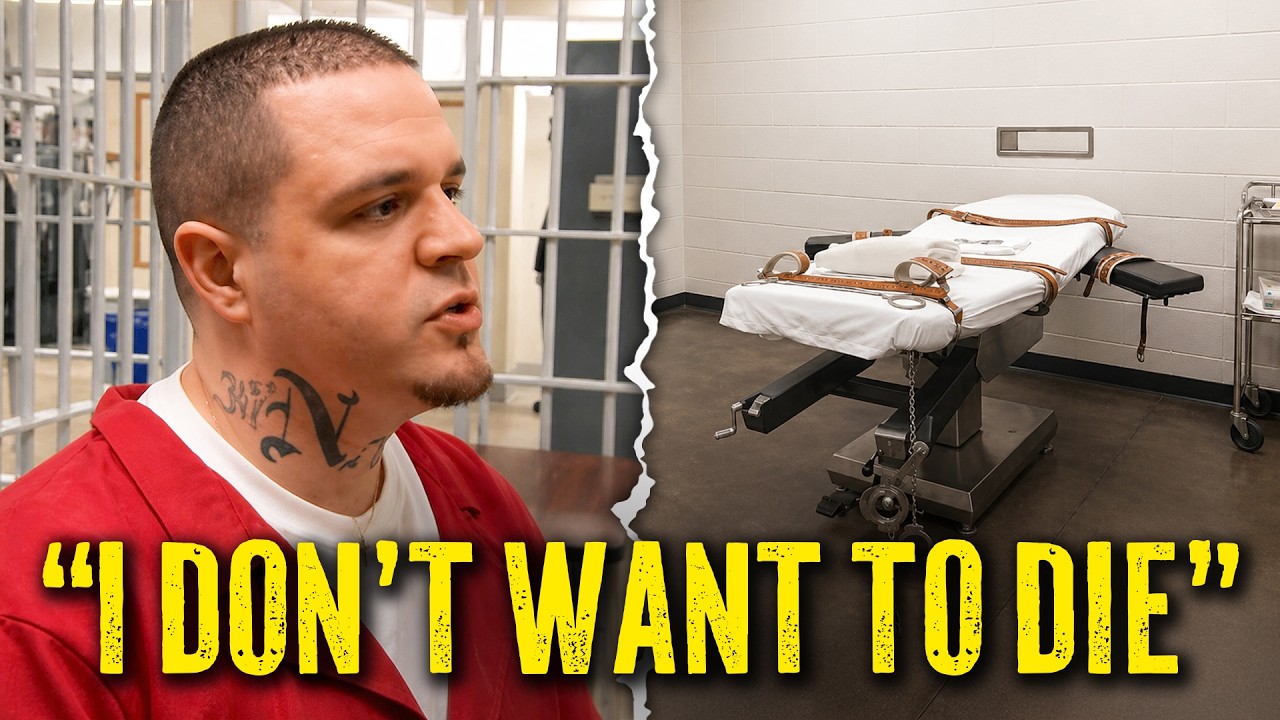
Ritchie’s journey had been a long and tumultuous one. Just weeks before, the Indiana Supreme Court had denied his last chance for reprieve, leaving his legal team scrambling for one final petition to the U.S. Supreme Court. Despite arguments highlighting his severe cognitive impairments from fetal alcohol spectrum disorders, the majority of justices maintained that nothing could alter his sentence. The clock was ticking, and Ritchie was still in the same cell, but everything had changed.
As he awaited his fate, memories flooded back—his life defined not just by the crime, but by the strange connections formed behind bars, including a relationship sparked by a documentary. Plans of escape had been mere fantasies, overshadowed by the reality of his impending execution. The atmosphere shifted when the execution team arrived, adhering strictly to protocol as they placed him in full restraints and led him away from the general population.

In the death watch cell, Ritchie’s emotional state was meticulously documented. His attorneys, Steve Schult and Mark Koselke, were relentless in their pursuit of a stay, arguing that executing someone with such profound impairments was cruel and unconstitutional. As the hours passed, Ritchie received visits from approved supporters and a spiritual advisor, who had been by his side advocating for clemency.
In a poignant moment, Ritchie reflected on his past, acknowledging the stark transformation from the 20-year-old who had laughed during his trial in 2002. He expressed deep remorse, particularly for the widow of Officer William Bill Toney, whose life was forever altered by Ritchie’s actions on that fateful day in September 2000. The gravity of his past weighed heavily on him as he prepared for what lay ahead.

As the clock approached the final hour, Ritchie opted for a last meal from Olive Garden, savoring a Tour of Italy. Meanwhile, the execution team conducted their final checks, the air thick with tension. When the U.S. Supreme Court denied the last-minute stay, Ritchie reportedly felt a profound sense of despair. He had only wished for a chance at life, to make amends in some way.

As night fell, the families of both Ritchie and Officer Toney gathered outside the prison, their emotions palpable. While supporters of the execution raised blue glow sticks in remembrance of Toney, opponents held a vigil, emphasizing the complexities of the death penalty.
Once inside the execution chamber, Ritchie was strapped to a gurney, surrounded by witnesses and a medical team. When asked for a final statement, he expressed love for his family and friends, hoping they would find peace. However, as the lethal injection began, the scene took an unsettling turn. Witnesses reported that Ritchie’s body reacted violently, contradicting the intended calm of the procedure.
Minutes later, at 12:46 a.m., Ritchie was pronounced dead. The warden described the execution as orderly, while his legal team characterized it as violent. This stark contrast raises profound questions: Can a person truly change over the years, or does the shadow of past actions forever linger? What do you think?