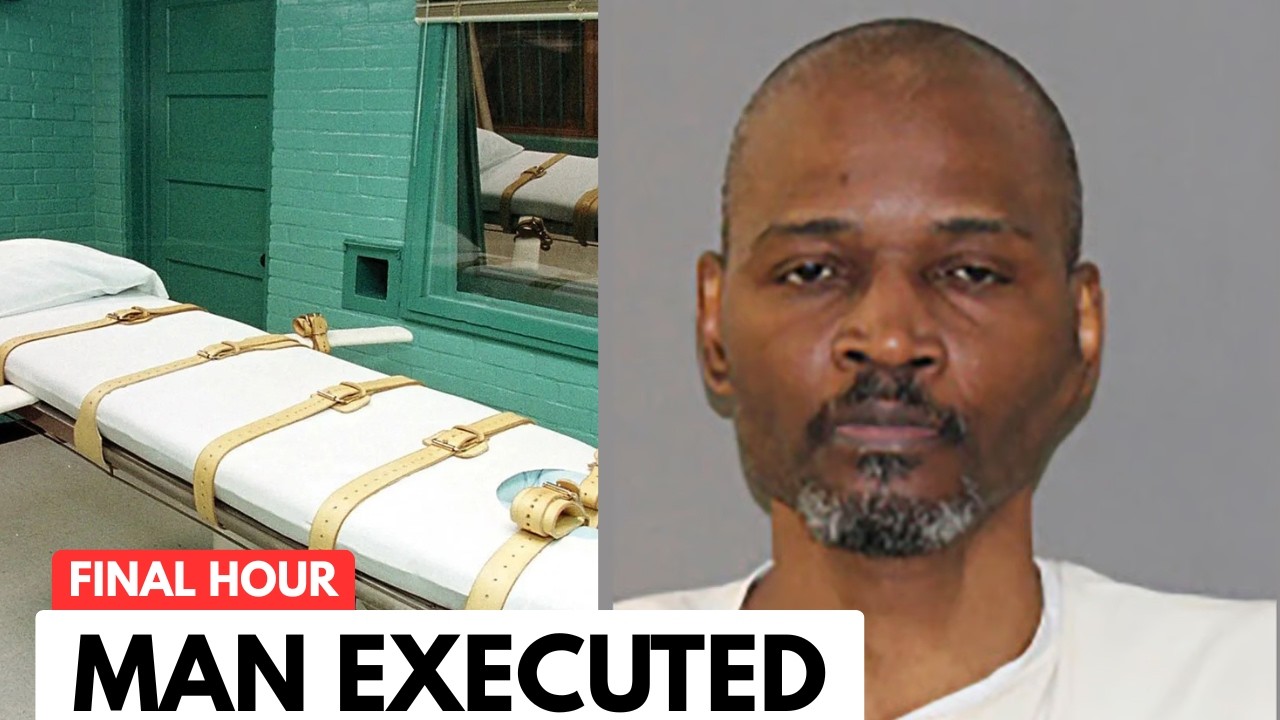
Texas executed Arthur Lee Burton on the evening of August 7th, 2024, ending a 26-year saga tied to the brutal murder of Houston mother Nancy Adelman. Burton, 54, died by lethal injection at Huntsville State Penitentiary, marking a grim chapter in one of Texas’s most prolonged capital cases.
 The night of July 29th, 1997, began like any other for Nancy Adelman, a 48-year-old playwright and mother of three. She stepped out for a routine jog and vanished. Her disappearance sparked a fervent search that soon revealed the horror—Nancy’s body was found strangled in nearby woods, her shoelace used as the weapon.
Arthur Lee Burton emerged as the prime suspect after a witness identified a man on a bicycle near Nancy’s home that night. Brought in for questioning, Burton initially denied involvement but soon confessed, describing a violent encounter that ended in Nancy’s tragic death. His confession formed the prosecution’s cornerstone.
Burton’s life before that night painted a complex picture. Raised amid hardship in Houston, he had a troubled past filled with petty crime and 𝒹𝓇𝓊𝑔 involvement. Yet acquaintances portrayed him as a hardworking father and husband striving to overcome his difficult upbringing, a duality that underscored his legal battles.
The trial began in June 1998, revealing the grim details of the case. Prosecutors showcased Burton’s confession and evidence of a violent struggle. The defense condemned the confession as coerced through 𝓪𝓫𝓾𝓼𝓮, introducing doubt that would fuel appeals for more than two decades.
Despite defense efforts, the jury found Burton guilty of capital murder and sentenced him to death. The first sentence was vacated on procedural grounds in 2001 but reinstated after a second sentencing hearing in 2002. Appeals cascaded through state and federal courts but consistently upheld the conviction and sentence.
A pivotal point arose with Burton’s claim of intellectual disability, a factor that might have shielded him from execution. His attorneys presented expert evaluations and testimony suggesting mild intellectual impairment, invoking Supreme Court precedents aiming to protect vulnerable individuals from capital punishment.
 Texas courts, however, rejected these claims, questioning the severity of Burton’s disability based on his prison conduct and intellectual activity. The defense’s last-ditch efforts to halt the execution, including alleging racial bias in death penalty applications in Harris County, were also denied by the courts.
On August 7th, 2024, the execution proceeded amid heightened scrutiny. Burton’s final moment was marked by a brief statement expressing remorse and addressing Nancy Adelman’s family with an apology, signaling the closing act of a journey divided by grief, justice, and relentless legal battle.
Nancy Adelman’s family witnessed the somber end after nearly 27 years, a wait spanning lifetimes. Her murder remains a chilling reminder of loss and the complexities of the criminal justice system—a system that saw Burton’s case move through every legal avenue before concluding in the lethal chamber.
The execution drew swift and polarized reactions nationwide. Criminal justice advocates criticized the handling of Burton’s intellectual disability claim, arguing the legal safeguards for such defendants were inadequately applied. Supporters of the sentence emphasized the jury’s verdict and exhaustive judicial review confirming guilt beyond doubt.
Burton’s execution marked the third in Texas for 2024 and the 11th nationwide, underscoring Texas’s continued role as the leading facilitator of capital punishment. The case also coincided with another execution in Utah, a rare occurrence highlighting ongoing debates over the death penalty’s place in modern America.
Over 26 years, Burton’s story—spanning confession, contestation, and decades of appeals—illuminated the tension between law, human rights, and the death penalty. His final words, both an apology and a farewell, leave a haunting echo in a case that reverberated far beyond Houston’s borders.

Now, the public record holds the full account of Arthur Lee Burton and the brutal murder of Nancy Adelman: a tragedy rooted in violence, shadowed by legal struggle, and sealed by execution. The shadows of that summer night endure, as do the questions that capital punishment continues to raise.
As Texas carries out its third execution of the year, voices on all sides await what comes next in the nation’s ongoing reckoning with justice and morality. For Nancy Adelman’s family and those watching closely, the end of Burton’s legal saga signals closure, albeit one marked by enduring pain.
The Nancy Adelman case stands as a stark illustration of how a single crime can shape lives and legal precedents for generations. Arthur Lee Burton’s journey from a troubled youth to death row inmate reflects the profound challenges faced by the American criminal justice system in balancing punishment and protection.
On that warm Houston evening nearly three decades ago, a routine jog turned fatal. Today, justice—long delayed and fiercely contested—finds its conclusion, offering a sobering moment for all touched by this harrowing chapter of Texas history. The story of Arthur Lee Burton is now firmly etched in the annals of capital punishment.
With this execution, the conversation about the death penalty, intellectual disability, and systemic bias in capital cases gains renewed urgency. The debates ignited by the case remain as vital as ever, signaling a nation divided over the meaning and application of ultimate justice.
 Arthur Lee Burton leaves behind a fractured legacy bound to the memory of Nancy Adelman, a woman whose life and death propelled one of Texas’s most scrutinized and lengthy capital murder cases. The state’s decision reverberates as both a conclusion and a catalyst for ongoing dialogue on crime and punishment.
As the sun set on August 7th in Huntsville, the lethal injection marked an end not only for Burton but for a chapter of relentless legal conflict and personal tragedy. The execution chamber’s silence contrasts sharply with the decades of voices raised over this case’s many contested elements.
In the days following, public and legal scrutiny will persist, as advocates on all sides dissect the final rulings and their implications. This case embodies the profound challenges of death penalty jurisprudence and the deeply human stories entwined with its application in America.
The execution of Arthur Lee Burton concludes a long, multifaceted saga of crime, confession, and relentless legal struggle. While justice has been served in the eyes of the state, the reverberations of this case continue to fuel impassioned debate within the broader discourse on capital punishment.
Texas’s resolution of the Nancy Adelman murder case through Arthur Lee Burton’s execution represents a watershed moment in the state’s criminal justice history. It underscores enduring questions about fairness, disability, race, and the ultimate price exacted by the death penalty in America today.
The Nancy Adelman case is etched into history as a somber reminder of loss, endurance, and the relentless complexities of American justice. The final chapter closed on August 7th leaves a lasting imprint — a narrative of tragedy, accountability, and society’s ongoing struggle to reconcile punishment with humanity.