As the sun dipped below the horizon in Huntsville, Texas, Michael James Perry faced the final hours of his life. At just 28 years old, he was about to become one of the youngest individuals ever executed in the state, a tragic end to a life marked by chaos and violence.
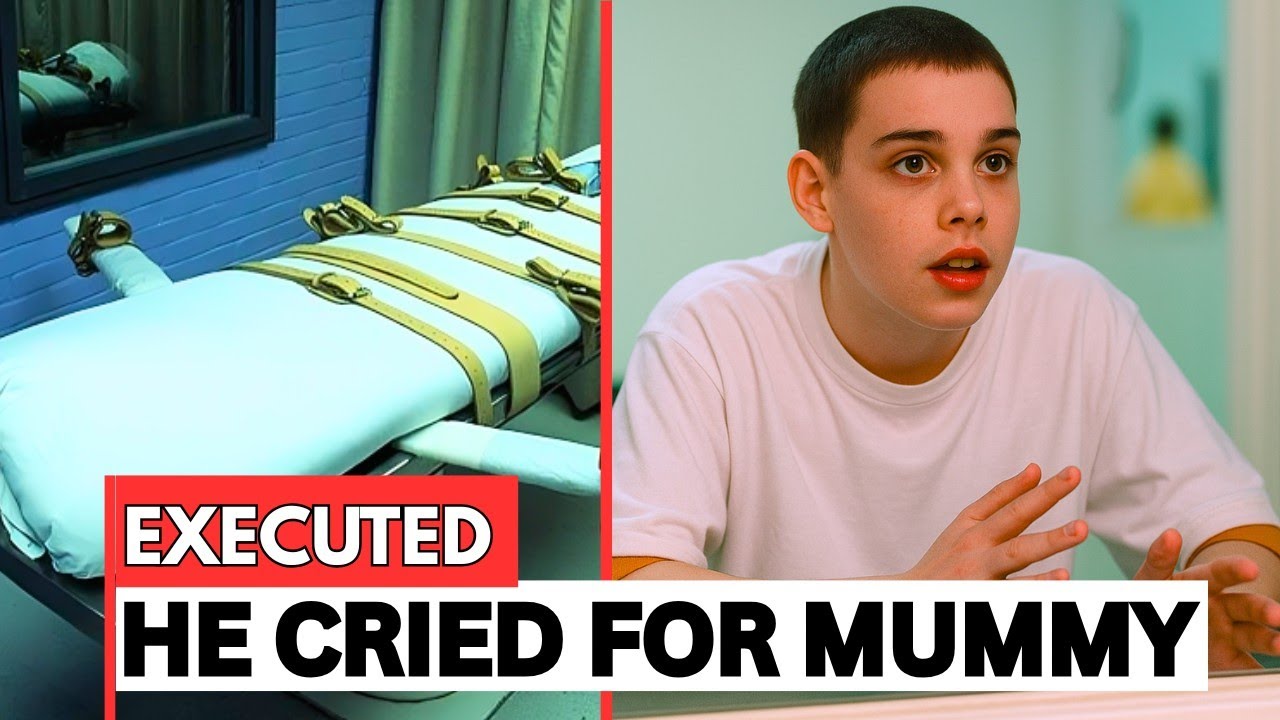
Perry had been sentenced to death for a brutal triple homicide that shocked even the most seasoned detectives. Years earlier, during his trial, he exhibited a striking indifference, smirking and laughing in the presence of grieving families. He maintained his innocence, claiming he was framed and that he had never pulled the trigger. Yet, as the clock ticked down to his execution, he found himself with no more appeals left to file, his name firmly etched in the execution schedule.
What does a man in Perry’s position contemplate in his final hours? When the sound of keys rattling could signal his imminent fate, how does one process the arrival of their last meal? And what thoughts linger when the warden leans in to ask, “Do you have any final words?”
This is not merely a tale of crime and punishment; it’s a story of a young man whose troubled upbringing led him down a dark path. Michael James Perry was born in 1982 in Texas, given up by his biological parents before he could walk. Adopted by a loving couple, he seemed to have a chance at a better life, but early signs of trouble emerged. By kindergarten, teachers noted his inability to sit still and his explosive reactions to correction.

Despite his adoptive parents’ best efforts—therapy, medication, and specialized schooling—nothing seemed to work. As he grew older, his behavior spiraled out of control. By the time he turned 19, he was couch surfing, using drugs, and drifting through life, eventually forming a dangerous bond with a friend named Jason Burrett.
On October 24, 2001, Perry and Burrett hatched a desperate plan to steal a car from Sandra Stoler, a woman who had once shown Perry kindness. The night turned deadly when Perry, armed with a shotgun, shot Stoler twice after gaining entry to her home. As the night unfolded, they ambushed her son, Adam, and his friend Jeremy, silencing them to eliminate witnesses.
The heinous nature of the crime shocked the community, and Perry’s trial became a media spectacle. He displayed little remorse, often smirking at the graphic evidence presented. While Burrett admitted to his role in the murders, he placed the blame squarely on Perry, claiming he orchestrated the entire plan.

In February 2003, after just two hours of deliberation, a jury found Perry guilty of capital murder, sentencing him to death. His life on death row began at the Palunky unit in Livingston, Texas. Here, he faced the isolating reality of a 6×10 foot cell, spending 23 hours a day in solitary confinement.
Years passed, and Perry’s appeals were repeatedly denied. He began to write letters, some filled with expressions of faith and repentance. In 2010, filmmaker Werner Herzog interviewed him for a documentary, where Perry reiterated his innocence, claiming he had been wronged by the system.

As his execution date approached, Perry’s days grew quieter. On July 1, 2010, he awoke in his death watch cell for the last time. The day unfolded with a routine that felt surreal. He received his final meal, a lavish spread he barely touched, and had a poignant last visit with his mother, who left in tears.
At 6 p.m., he was led to the execution chamber. Strapped to the gurney, he faced the warden, who asked if he had any final words. With a trembling voice, he expressed his feelings about the situation and conveyed love to his family.
As the lethal drugs flowed into his veins, Michael James Perry’s life came to a quiet end. The execution marked the 14th in Texas that year, but for those affected by his actions, it was far more than a statistic. The legacy of pain left behind by the murders and the execution lingered on, raising questions about justice and the complexities of the human experience.
In a world where lives can change in an instant, what does it mean to truly find redemption?