Margaret Ellis had spent forty-three years learning the exact weight of silence in her own home. Tonight, that silence was shattered by the low growl of an overpacked SUV idling in the driveway like it had every right to be there.
She stood at the upstairs window, the lace curtain brushing her wrist like a warning. Sixty-eight years old, silver threading through the dark waves she still wore pinned at the nape, she watched her son Julian climb out first. His shoulders carried the same defeated slope they’d had at sixteen when he’d totaled her first car. Behind him, Brooke unfolded from the passenger seat in expensive yoga pants and a scowl that could curdle milk. The two children—Lila, seven, and little Theo, four—spilled out like startled puppies, already whining about the heat.
No knock. No call.
Just the heavy thunk of the rear hatch and the metallic clatter of luggage hitting brick pavers she had pressure-washed herself last month.
By the time Margaret reached the bottom of the stairs, the front door was already swinging open. Brooke stepped inside as if crossing a threshold she owned, designer tote swinging from one shoulder, phone already in hand.
“Julian, get the cooler before the ice melts,” she said, not even glancing at her mother-in-law. Her voice carried the bright, brittle confidence of someone who had never once paid a mortgage in this zip code.
Margaret’s bare feet stayed rooted on the heart-pine floor. The house smelled of lemon polish and night-blooming jasmine through the open windows. Now it already carried the faint chemical tang of Brooke’s perfume and the sour note of fast-food bags.
“Mom,” Julian managed, rubbing the back of his neck. His eyes flicked everywhere except hers. “Things got… complicated in Atlanta. We just need a couple weeks. Tops.”
Brooke laughed—short, sharp, like a blade testing its edge. “A couple weeks? Babe, be real. The lease fell through. We’re here until we figure it out. Margaret’s got all this space. She’s probably lonely anyway.”
The words landed like spit on polished silver.
Margaret felt the old familiar ache bloom behind her ribs, but she didn’t let it reach her face. She had buried a husband who drank himself to death, raised a son who still believed the world owed him softness, and kept this house standing through hurricanes and recessions. She knew how to carry weight without showing it.
Instead of answering, she turned toward the kitchen. The children were already dragging their sticky fingers along the wainscoting she had restored by hand.
By morning, the invasion was complete.
Cereal boxes formed a colorful barricade on the marble island. A cartoon played too loud on the television she rarely turned on. Pizza grease had already soaked through a cardboard box onto her antique sideboard. Brooke stood at the coffee maker in a silk robe that cost more than Margaret’s monthly utilities, scrolling her phone while issuing instructions as if Margaret were household staff.
“Margaret, can you grab the kids’ plates? The blue ones. And maybe watch them while I run to Target? Julian’s exhausted from the drive.”
Margaret’s hand tightened on the edge of the counter until the granite bit into her palm. She said nothing. She simply observed the way Brooke’s eyes slid over the family photographs on the wall—the ones of Margaret and her late husband Daniel on their twenty-fifth anniversary, the ones of Julian’s childhood before he learned to expect rescue.
Later, when Margaret politely declined to rearrange her entire schedule for unscheduled babysitting, Brooke’s laugh turned ugly.
“Oh my God, you’re really going to be like that? We’re family. This is what families do. You should be thrilled we’re here instead of some soulless apartment. Look around—this big empty house was dying for life.”
The cruelty wasn’t in the volume. It was in the absolute certainty that Margaret’s peace was negotiable. That her loneliness was a flaw to be fixed by other people’s chaos.
Julian stood in the doorway like a man watching two trains approach on the same track, saying nothing.
That night, Margaret sat on the edge of her bed in the dark. The house creaked under unfamiliar footsteps upstairs. She listened to Theo’s muffled crying and Brooke’s impatient shushing. She catalogued every item that belonged to her: the gas card in her name, the phone plan she subsidized because “family helps family,” the utilities, the groceries, the Wi-Fi password she had never once refused.
She did not cry. Tears were for women who still believed explanation could fix entitlement.
Instead, she opened the small leather notebook Daniel had given her on their tenth anniversary. She began writing in her neat, schoolteacher script.
Item One: Change all automatic payments to require my physical presence or explicit approval. Item Two: Gas card. Item Three: Phone lines. Item Four: The truth.
Three days later, she packed a single suitcase while the house was loud with cartoons and arguments. She left no note. Just the quiet click of the front door and the engine of her sensible sedan turning over.
They thought she had gone to the coast for a dramatic weekend. A sulk. A tantrum.
Until Julian’s card declined at the gas station.
Until Brooke’s phone lost service mid-rant.
Until the Wi-Fi password magically changed and the refrigerator began beeping because the grocery delivery account had been suspended.
Panic moved through the house like a living thing.
Upstairs, Brooke’s voice rose to a pitch Margaret had never heard in forty years of knowing her. “She can’t do this! This is emotional blackmail! Call her! Tell her the kids need their grandmother!”
Julian sat on the bottom step, head in his hands, staring at the dead screen of his phone. For the first time in years, the house felt too big again—but this time the emptiness had teeth.
Margaret stood barefoot on the wooden porch of a rented beach cottage two hours away. The Atlantic wind tugged at her silver hair. Salt stung her eyes, but she didn’t blink it away. In her hand was the leather notebook, now half-filled with decisions made in the kind of silence that reshapes bloodlines.
She had not abandoned her son.
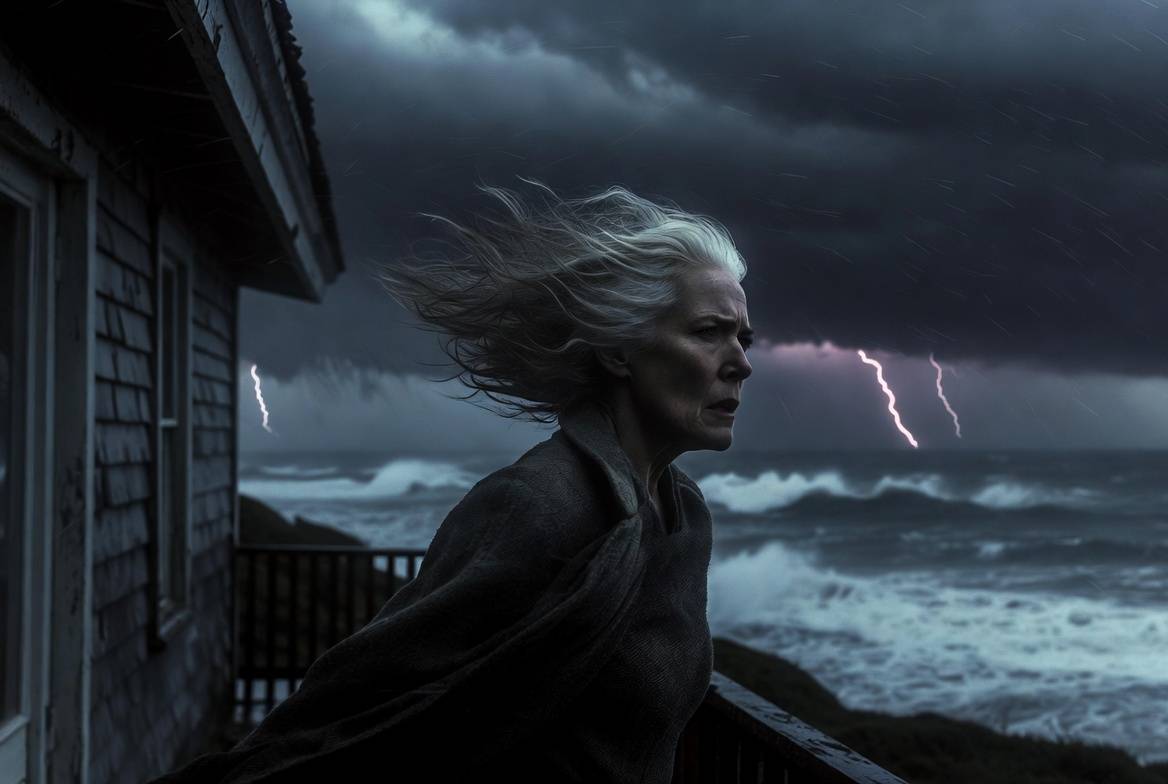
She had simply resigned from the position of unpaid life support for adults who had mistaken her love for an all-you-can-eat buffet.
Back in Charleston, the children were asking where Grandma was.
Brooke was discovering how quickly designer luggage feels heavy when you have nowhere to take it.
And Julian—sweet, weak, conflicted Julian—was about to learn the difference between a mother’s forgiveness and her dignity.
The lesson had only just begun.
The beach cottage sat low and weathered on stilts, its gray shingles silvered by decades of salt spray. Margaret stepped onto the porch at dawn, the Atlantic stretching out like a sheet of hammered steel under a bruised sky. Wind whipped her linen shirt against her body, carrying the clean, sharp scent of brine and distant rain. For the first time in years, her shoulders did not carry the invisible weight of other people’s expectations.
She set her leather notebook on the small wrought-iron table and opened it. The pages fluttered like nervous wings. Inside were the careful lists she had made in the dark hours before leaving: account numbers, passwords, the name of the lawyer she had quietly consulted two years ago when Julian’s financial troubles first began bleeding into her peace.
Her phone—still on, still hers—vibrated on the table. Julian’s name lit the screen. She let it ring until it stopped. Then she picked it up and changed the voicemail greeting with calm, deliberate words.
“This is Margaret Ellis. I am taking time for myself. Do not come looking. The house is locked. The accounts are secured. Figure it out.”
She pressed save. The click sounded final, like the closing of a heavy book.
Two hours north, in the once-peaceful Charleston home, chaos had taken root and bloomed overnight.
Brooke paced the kitchen in yesterday’s silk robe, now stained with Theo’s spilled juice. Her hair, usually blown out to glossy perfection, hung in lank strands. “She’s punishing us, Julian. This is classic narcissistic control. Your mother has always been passive-aggressive. Now she’s weaponizing money because we dared to need help.”
Julian sat at the island, staring into a mug of cold coffee. The children were glued to cartoons in the living room, their voices a high, grating soundtrack to his unraveling. He had tried the gas station twice. Both cards declined with cheerful beeps that felt like slaps. The phone service had cut mid-call to his boss—explaining why he would be late again.
“She’s never done anything like this,” he muttered. His voice cracked on the last word. He remembered his mother’s face the night his father died: dry-eyed, steady, holding the family together while he fell apart at seventeen. She had always been the rock. Rocks did not simply walk away.
Brooke stopped pacing long enough to jab a finger toward him. “Well, she’s doing it now. And it’s your job to fix it. Call her again. Tell her the kids are crying for her. Tell her you’re sorry we didn’t call first. Guilt always worked on her before.”
The words landed heavy in Julian’s chest. Guilt. He had leaned on that word his entire adult life—first for college loans she co-signed, then for the down payment on the house they could not afford, then for the “temporary” help when his startup dreams collapsed. Each time, his mother had opened her checkbook and her home without a word of reproach.
Upstairs, Lila’s small voice drifted down. “Daddy, when is Grandma coming back? My tummy hurts.”
Julian closed his eyes. The sound of his daughter’s uncertainty carved something raw inside him. He was thirty-nine years old, a father, a husband, and still waiting for someone else to make the hard choices.
Meanwhile, at the coast, Margaret walked the hard-packed sand where the tide had pulled back. Her bare feet left clean prints that the next wave would erase. She thought of Daniel—how he used to say her quiet strength scared him more than any shouting match. He had been right. Shouting burned hot and fast. Silence could reshape entire landscapes.
She had made her first call that morning. The lawyer, an old friend from church, had been efficient. The gas cards were frozen. The phone plan transferred to prepaid status under her control. The utility accounts now required dual approval. Nothing illegal. Nothing cruel. Simply the boundaries she should have drawn years ago.
Her phone buzzed again—Brooke this time. Margaret stared at the screen until the call ended. Then she opened her messages and typed a single line to her son.
Julian, I love you. But love is not a one-way street with no speed limit. Come find me when you remember how to stand on your own feet. Until then, the house is yours to maintain. The bills are now yours to pay.
She hit send, turned her phone off, and walked farther down the beach. Gulls wheeled overhead, crying into the wind. For the first time in decades, the only demands she heard were her own.
Back in Charleston, Brooke read the message over Julian’s shoulder. Her face twisted. “She’s losing it. We need to drive down there. Confront her. Bring the kids—she can’t ignore them in person.”
Julian hesitated. His mother’s words sat like stones in his gut. Stand on your own feet. When was the last time he had tried? The startup failure, the layoff, the mountain of debt—they all blurred together into a single narrative: life was hard, and Mom would help. Always.
Theo toddled into the kitchen, dragging a blanket that smelled of Margaret’s lavender detergent. “Gamma?” he asked, eyes wide and trusting.
Something in Julian shifted then—a small, painful crack in the foundation of who he thought he was. Son. Husband. Father. Coward.
He looked at Brooke, really looked, and saw not the polished woman he had married, but the calculating gaze that had dismissed his mother’s entire life in a single laugh.
“I think,” he said slowly, voice rough, “we should start figuring out how to pay the electric bill before they shut it off.”
Brooke’s eyes flashed with something ugly. “You’re choosing her over your own family? After everything?”
The question hung in the air like smoke after a gunshot.
At the cottage, Margaret stood at the water’s edge as the first raindrops hit her face. She did not know what would come next—only that the woman who had spent decades explaining herself was gone. In her place stood someone new. Someone dangerous in her clarity.
And somewhere between the salt air and the storm rolling in, she felt the first stirrings of a freedom so sharp it almost hurt.
Rain lashed the cottage windows in silver sheets, drumming a relentless rhythm on the tin roof. Margaret sat at the small kitchen table with a cup of strong black tea, the steam curling up like ghosts from her past. The notebook lay open beside her, pages now damp at the edges from the humidity seeping through the screens. She had not slept. Instead, she had written through the night—names, dates, the quiet sacrifices no one had ever thanked her for.
Outside, the Atlantic churned gray and angry, waves crashing against the pilings with a sound like distant thunder. She thought of the night Daniel died, how the hospital lights had been too bright, too clinical, and how Julian had stood in the corner, eighteen and already looking for someone to blame. She had held her husband’s cold hand and whispered promises to the empty air: I will keep our boy safe. I will keep this family whole.
Promises, she realized now, that had slowly become chains.
Her phone remained off, but she could imagine the messages piling up. The house in Charleston would be humid with resentment and fear. She pictured the dirty dishes stacking like accusations in the sink she had scrubbed for decades.
Forty miles away, the storm had reached the city too. Water pooled in the brick streets of Margaret’s neighborhood, turning the gas lamps into hazy halos. Inside the house, the power flickered once, then held—barely.
Brooke slammed the refrigerator door, the sound echoing through rooms that suddenly felt too large and too empty. “The milk is going bad. The kids are hungry. And your mother is playing games while we’re stuck here like refugees.”
Julian stood by the front window, watching rain streak down the glass. His reflection stared back—tired eyes, unshaven jaw, the face of a man who had spent his life running on other people’s fuel. Lila and Theo huddled on the couch under a blanket, whispering about when Grandma would bring pancakes with the smiley-face blueberries.
“I called the utility company,” he said quietly. “They need her signature to restore the joint account. Or full payment in her name only.”
Brooke whirled on him, her designer robe now replaced by yoga pants and a sweatshirt that cost as much as a week’s groceries. “Then drive down there! Take the kids. She’ll cave the second she sees their faces. Mothers always do.”
Julian’s hands clenched at his sides. “She’s not just any mother, Brooke. She buried Dad alone while I was off at college pretending everything was fine. She paid for my mistakes without ever throwing them in my face. And we showed up at her door like we owned the place.”
The words tasted bitter, but they were true. He remembered the way his mother had looked at him that first night—steady, measuring, already calculating the cost of their invasion. Not anger. Something worse: disappointment so deep it had no bottom.
Brooke stepped closer, her voice dropping to that silky tone she used when she needed something. “Baby, we’re a team. This is temporary. Once my influencer contracts pick up again and your next venture lands, we’ll pay her back. With interest. But right now? She’s being selfish. This big house, all paid off, and she can’t share it for a few months?”
Selfish. The word landed like a stone in still water. Julian felt the ripples spread through every memory he had of his mother driving him to soccer practice after double shifts, skipping her own doctor appointments so he could have new cleats, smiling through holidays while quietly covering the credit card bills he maxed out.
Upstairs, a toilet flushed. Theo had left the light on again. The small waste added to the mountain already crushing them.
“I’ll go,” Julian said finally. “Alone. You stay with the kids.”
Brooke’s eyes narrowed, but she nodded. As he grabbed his keys, she called after him, “Tell her we love her. Tell her family means we stick together—no matter what.”
The door closed behind him with a soft click that felt louder than it should.
Margaret was on the beach again when the rain eased to a drizzle. Her raincoat hood framed a face carved by years of holding everything together. The sand sucked at her boots as she walked the tideline, collecting small shells the way she once collected her son’s drawings.
Her mind drifted to the hidden scars no one saw: the nights she had cried alone after Daniel’s funeral, the way loneliness had settled into her bones like coastal fog, the slow erosion of her own dreams—travel, painting classes, the garden she had always wanted but never quite finished because someone always needed her first.
She stopped at a driftwood log and sat, the wood weathered smooth and gray. Her phone, now turned back on out of reluctant necessity, buzzed with Julian’s location ping. He was coming.
Good.
Let him come.
Let him see the woman she had become when no one was watching.
Back at the cottage, she prepared nothing special. No welcome mat. No fresh coffee. Just the truth, waiting like an open door on a stormy night.
When Julian’s SUV pulled up an hour later, tires crunching on wet shells, Margaret stood on the porch with her arms crossed loosely. The rain had stopped, but the air still carried its electric charge.
Julian climbed out, rain still dripping from his hair. He looked smaller than she remembered, shoulders hunched against more than the weather.
“Mom,” he started, voice thick. “The kids… Brooke… we’re drowning here. I know we screwed up. We should have called. We should have asked. But we’re family. Doesn’t that count for something?”
Margaret studied him—the same boy who once fell off his bike and expected her to kiss the scrape away, now a man still waiting for rescue. The wind tugged at her hood, revealing the silver at her temples like a crown earned in silence.
“Family counts, Julian,” she said, her voice steady as the tide. “But family is not a license to take until there’s nothing left. I raised you to stand tall. Not to lean so hard the other person breaks.”
She stepped down one porch step, eyes never leaving his. “The accounts are in my control now. The house is yours to keep clean and running—if you choose to stay. But the free ride ends today. You want my help? Show me you remember how to help yourself first.”
Julian’s face crumpled. For a moment, the little boy flickered behind the man’s eyes. “I don’t know if I can.”
The confession hung between them, raw and trembling.
Then his phone rang—Brooke. Margaret watched his hand hesitate over the screen, caught between the woman who had given him life and the one who had learned to take without giving back.
In that heartbeat, the storm clouds parted just enough for a sliver of sunlight to cut across the beach. Margaret felt it on her face like a promise.
Whatever choice her son made next would change the shape of all their lives.
And she was finally ready to live with the consequences—whatever they cost.
The sliver of sunlight vanished as quickly as it had appeared. Clouds swallowed it whole, and the rain returned in a sudden, slanting curtain that turned the beach into a blur of gray and white. Julian stood on the wet steps of the cottage porch, phone still ringing in his hand like a live wire. Brooke’s name pulsed on the screen—insistent, demanding, familiar.
Margaret did not move from her spot. Water beaded on her raincoat and slid down in tiny rivers. She watched her son the way a captain watches a storm approaching land: calculating, unflinching.
“Answer it,” she said quietly.
Julian’s thumb hovered, then pressed accept. Brooke’s voice spilled out, sharp enough to cut through the rain.
“Did you find her? Is she coming back? The kids won’t stop asking and the power just flickered again—”
“Brooke,” Julian cut in, his voice low and strained. “I’m here. She’s… listening.”
A beat of silence. Then Brooke’s tone shifted into the honeyed version Margaret had heard a hundred times over family dinners—the one that masked steel.
“Margaret, honey. We’re so sorry. Truly. The kids miss you terribly. Theo cried himself to sleep last night asking for your stories. Come home. We’ll do better. I’ll cook. Julian will handle the bills. We’re family.”
The words were perfect. Scripted. Empty.
Margaret stepped forward until only the thin veil of rain separated her from her son. She extended her hand. Julian hesitated, then placed the phone in her palm like a man surrendering a weapon.
“Brooke,” Margaret said into the speaker, her voice carrying the low, steady cadence of tides that had seen every kind of wreck. “I buried a husband in this city. I raised a son who still believes the world ends where his comfort does. I have given until my hands are raw and my dreams are dust. Do not speak to me of family while you treat my home like a hotel and my life like an inconvenience.”
She ended the call without waiting for a reply. The phone went dark in her hand.
Julian stared at her as if seeing her for the first time. Rain plastered his hair to his forehead. “Mom… I didn’t know it was this bad. I thought… you always seemed okay with it.”
Margaret let out a sound that was not quite a laugh—short, edged with decades of swallowed pain. She turned and walked inside the cottage, leaving the door open. Julian followed, dripping on the old pine floors.
The interior was simple: whitewashed walls, a faded quilt on the sofa, a single photograph on the mantel of her and Daniel on their honeymoon, young and laughing into a future that would demand everything from her. She poured two mugs of tea without asking if he wanted any. The steam rose between them like a question neither had dared voice before.
“You thought I was okay with it,” she echoed, setting his mug down harder than necessary. The ceramic clinked like a period at the end of a long sentence. “Because I never screamed. Because I never kept score out loud. I smiled through your father’s drinking, through your late nights, through every time you and Brooke looked at me like the bank that never closes. That was not strength, Julian. That was survival. And I am done surviving on my knees.”
She sat across from him. Up close, the lines around her eyes were deeper than he remembered. The quiet widow who gardened and read mystery novels had claws he had never noticed.
Julian’s hands shook around the mug. “What do you want me to do? Leave Brooke? Abandon my kids? I can’t just—”
“No one is asking you to abandon them,” Margaret said. Her eyes held his, unflinching. “I am asking you to become a man who carries his own weight so he can carry theirs properly. The house is there. Clean it. Pay what you can. Or leave. But do not come back to me until you have chosen which kind of son you want to be.”
Thunder rolled outside, shaking the cottage windows. Julian’s face twisted—shame, anger, fear, and something fragile flickering beneath it all. Hope, maybe. Or the memory of the mother who once taught him how to tie his shoes and promised the world was big enough for his dreams.
“I have a job interview next week,” he said suddenly, the words spilling out like a confession. “A real one. Not another startup fantasy. But… we’re behind on everything. If the power goes off—”
“Then you will figure it out in the dark,” Margaret replied. Her voice softened by a fraction, the first crack in her armor. “The way I did when your father lost his job the year you turned ten. The way I did after he died and the insurance barely covered the funeral. I did not raise a coward, Julian.”
The words struck deeper than any shout could have. Julian set the mug down and buried his face in his hands. His shoulders shook—not with sobs, but with the effort of holding back a lifetime of unearned ease crumbling around him.
Outside, the rain began to ease again. Margaret stood and walked to the window, watching the Atlantic slowly reveal itself once more. In the distance, a lone pelican fought the wind, wings cutting through the gray with stubborn grace.
She felt the old scar in her chest pull tight—the one that had formed the day she realized her love had become an excuse for everyone else’s weakness. Today, she had begun to cut it loose.
Julian lifted his head. His eyes were red, but clearer. “I’ll go back. I’ll talk to Brooke. We’ll start fixing what we broke. But Mom… don’t shut us out completely. Please.”
Margaret turned from the window. The light caught the silver in her hair like a halo earned in battle.
“That depends on what kind of man walks through my door next time.”
Julian stood. For a long moment, father and son stared at each other across the small room—no, mother and son, the oldest story in the world, rewritten in salt and rain.
He left without another word.
As his taillights disappeared down the shell road, Margaret’s phone lit up with a text from an unknown number—one of Brooke’s burner accounts, no doubt.
You think this makes you strong? Wait until the kids start hating you for this.
Margaret deleted it without replying. Then she opened her notebook and added one more line beneath the lists:
They will test every boundary. Hold.
The storm had passed, but the real one was only gathering on the horizon.
The Charleston house felt like a museum of stolen time. Late afternoon light slanted through the tall windows, catching dust motes that danced above the clutter Brooke had no intention of touching. Julian stood in the doorway for a long moment after returning from the coast, rain still darkening his shoulders, the taste of salt and shame thick in his throat.
The children rushed him first. Theo wrapped small arms around his leg, face buried in his damp jeans. “Gamma come home now?”
Lila hung back, seven years old and already learning how to read the cracks in adult voices. Her eyes—Margaret’s eyes, Julian realized with a fresh stab—were wary. “She’s mad at us, isn’t she?”
Brooke appeared from the kitchen, wiping her hands on a dish towel she had never used before. Her smile was tight, painted on for the children but cracking at the edges. “Well? Did the queen grant us an audience?”
Julian closed the door behind him. The click sounded louder than usual. “She’s not coming back yet. And she’s serious about the accounts. We have to start paying our way or… figure something else out.”
Brooke’s laugh was brittle glass. “Figure something else out? This is your mother’s guilt trip, Julian. She’s lonely, bored, and punishing us for finally needing her. Classic. Hand me your phone—I’ll call her myself.”
She reached for it. Julian pulled it back, a small rebellion that surprised even him. “No. I saw her face, Brooke. This isn’t a tantrum. She’s done carrying us.”
The air in the room thickened. Theo started crying again, soft and bewildered. Lila slipped upstairs without a word, her footsteps light on the stairs Margaret had once carried her up when she had nightmares.
Brooke stepped closer, lowering her voice to that intimate register that had always worked before. “You’re really going to let her do this? Split our family apart? After everything I gave up to be with you—my career, my freedom. We’re supposed to be a team.”
The manipulation landed, but it no longer sank as deep. Julian could still hear his mother’s voice on the porch, steady as the tide: I did not raise a coward.
“I’m going to clean the kitchen,” he said instead. “Then I’m calling about that job. You can help or not. But the power bill is due in three days.”
Brooke stared at him as if he had grown a second head. For the first time, real fear flickered behind the anger in her eyes.
At the coast, Margaret woke before dawn the next morning. The air smelled of wet pine and distant marsh. She made coffee in the small kitchen, then laced up her walking shoes and headed down the beach path as the sky bled from black to pearl.
Her body moved with new purpose. Each step on the hard sand pushed back against years of stillness. She thought about the garden she had abandoned in Charleston—the roses that needed pruning, the herbs gone wild. She thought about the painting easel still folded in the attic, covered in dust thicker than regret.
Her phone stayed mostly silent now. One message from Julian late last night: I cleaned the kitchen. Kids miss you. I’m trying.
She had replied with three words only: Trying is not enough.
But she had added a photo—an old one from her own phone, of Julian at ten years old, grinning with a missing front tooth and a fish he had caught on his first solo trip with his father. A reminder, not a weapon.
She stopped at a weathered bench overlooking the water and sat. The ocean stretched endless, indifferent to human storms. For the first time, she allowed herself to feel the full weight of what she had set in motion. Not just anger at Brooke. Not just exhaustion with Julian. But grief—for the woman she might have been if she had drawn these lines sooner. The scar in her chest ached, but it was healing around the edges, raw and new.
A woman about her age walked past with a golden retriever, nodding politely. Margaret nodded back. Small connections, long denied. The possibility of a life that was hers alone.
Back in the house, night fell heavy. Brooke had spent the day on her phone, posting carefully cropped photos of the “beautiful Charleston family getaway” to her social channels, hashtags glowing like false hope. But the comments were sparse. The engagement had dried up along with their accounts.
Julian sat at the dining table with a notepad, listing expenses the way his mother once had. The numbers did not lie. They were drowning.
Upstairs, Lila’s voice drifted down through the cracked door. She was reading to Theo from one of Margaret’s old books—the ones with the handwritten notes in the margins. “Grandma says the moon watches over brave kids…”
The sound broke something in Julian. He stood and walked to the hallway mirror. The man staring back looked exhausted but present. For the first time in years, he looked like he might be starting to stand.
His phone buzzed. Not Brooke. Not his mother.
A Charleston number. The job interview—moved up. Tomorrow morning.
He answered with a voice steadier than he felt. When he hung up, Brooke was watching him from the kitchen doorway, arms crossed.
“You’re really doing this,” she said. It was not a question. “Choosing her rules.”
“I’m choosing my kids not to grow up thinking love means taking until nothing’s left,” Julian replied. The words tasted clean.
Brooke’s face hardened into something colder than anger. “Fine. But if the power goes out and the kids get scared in the dark, remember who forced this.”
She turned away, but not before Julian caught the flash of calculation in her eyes. She was already planning her next move.
Margaret returned to the cottage as evening painted the sky in bruised purples and golds. She lit a candle on the table and opened her notebook again. The lists were growing—practical, unemotional. But at the bottom of a new page, she wrote something different:
I am not lonely anymore. I am free.
She closed the book and stepped onto the porch. The ocean whispered its ancient secrets. Somewhere in the gathering dark, decisions were being made that would ripple back to her door.
Then her phone rang—Julian’s number. She answered this time.
His voice came through, tired but alive with something new. “Mom. The interview is tomorrow. I’m going to fight for this. But Brooke… she’s talking about leaving with the kids if things don’t improve. Taking them back to Atlanta. I don’t know if I can stop her.”
Margaret’s grip tightened on the railing. The wind whipped her hair. The children—her blood—caught in the crossfire.
The real war had just found its battlefield.
Dawn broke over Charleston like a reluctant promise. Julian stood in front of the bathroom mirror in the same suit he had worn to his wedding, now a little tight across the shoulders from years of quiet defeat. The tie felt like a noose, but he knotted it anyway. Downstairs, the house was unnaturally quiet. Brooke had taken the children to the park “to give him space,” but he knew better. Her suitcase was half-packed in the guest room closet.
He grabbed his keys and paused at the door. On the hall table lay a single sheet of Margaret’s old stationery—the one with the faint monogram. He had found it while cleaning. In his mother’s precise handwriting: You were born to stand tall. Start today.
He folded it into his pocket like armor.
The interview was at a small maritime logistics firm near the harbor. The interviewer, a weathered man in his fifties named Captain Reyes, asked hard questions about reliability, about showing up when things got messy. Julian answered honestly for the first time in years—about his failures, about the wake-up call that had finally come. When he left an hour later, he carried a tentative offer letter in his briefcase. Not much. But enough to buy groceries and keep the lights on for another month.
He drove home with something dangerous flickering in his chest: hope.
Brooke was waiting on the porch when he pulled up, children buckled into the SUV already loaded with bags. Her eyes were red but her jaw was set.
“We’re leaving, Julian. Atlanta has friends. Opportunities. I won’t watch you crawl after your mother’s approval while our kids suffer.”
Lila’s face pressed against the car window, small and frightened. Theo clutched his stuffed bear, the one Margaret had sewn for him last Christmas.
Julian’s heart slammed against his ribs. “You’re not taking them. Not like this.”
Brooke stepped down, voice low and venomous. “Watch me. You think your mother’s little power play scares me? I’ve documented everything—how unstable this environment is, how your mother abandoned us. Judges love that story.”
The threat hung in the humid air. Julian looked at his children and saw his own childhood reflected back—the uncertainty, the fear of losing the ground beneath your feet. He stepped forward, hand on the car door.
“No. You can leave if you want. But the kids stay with me. We’re fixing this here.”
For a moment, Brooke’s mask shattered completely. The entitlement cracked, revealing the fear underneath—of losing control, of facing consequences, of no longer being the center of someone else’s universe. She laughed once, sharp and ugly, then climbed into the driver’s seat.
“You’ll regret this. All of you.”
The SUV pulled away. Julian stood frozen in the driveway as his children’s faces disappeared around the corner. The silence that followed was deafening.
At the coast, Margaret felt the shift before the call came. She had spent the morning repotting herbs on the cottage porch, dirt under her nails for the first time in years, when her phone rang. Julian’s voice was hoarse, broken.
“She took them, Mom. Or she’s trying to. I stopped her from leaving with them but… she’s gone to a hotel. Threatening custody. I don’t know what to do.”
Margaret closed her eyes. The ocean roared in the background, indifferent to human heartbreak. This was the cost she had feared—the innocent caught between warring adults. Her grandchildren.
“I’m coming,” she said simply.
She packed in ten minutes. The drive back to Charleston blurred past in a haze of palmettos and storm clouds. When she pulled into her own driveway hours later, the house looked wounded. Julian sat on the front steps, head in his hands.
Margaret got out of the car. No embrace. No tears. She simply sat beside him on the cool brick.
“I stopped her at the end of the street,” he whispered. “The kids are inside. Scared. Brooke’s at a hotel downtown, calling lawyers. I have a job offer. It’s not enough yet, but it’s something. I told her I’m done leaning. Done expecting rescue.”
Margaret looked at her son. Really looked. The boy was still there, but the man was fighting to surface.
“Good,” she said. “Now you fight for them the right way. Not with my money. With your backbone.”
She stood and walked inside. The house smelled wrong—too much takeout, too little love. Lila and Theo ran to her instantly, burying themselves in her arms. Their small bodies trembled with relief.
“Gamma, don’t leave again,” Theo whispered.
Margaret held them close, breathing in their shampoo and fear. “I’m here now. But we all have to learn new rules.”
Later that evening, as the children slept upstairs in their familiar beds, a knock sounded at the door. Julian answered it. Brooke stood on the porch, mascara streaked, pride in tatters.
“I want to talk,” she said. “All of us.”
Margaret appeared behind her son, shoulders straight, eyes clear. The three of them faced each other in the doorway—the widow who had finally drawn her line, the son learning to stand, and the daughter-in-law who had mistaken kindness for weakness.
The storm inside the house was far from over.
But for the first time, the ground beneath their feet felt like it might hold.
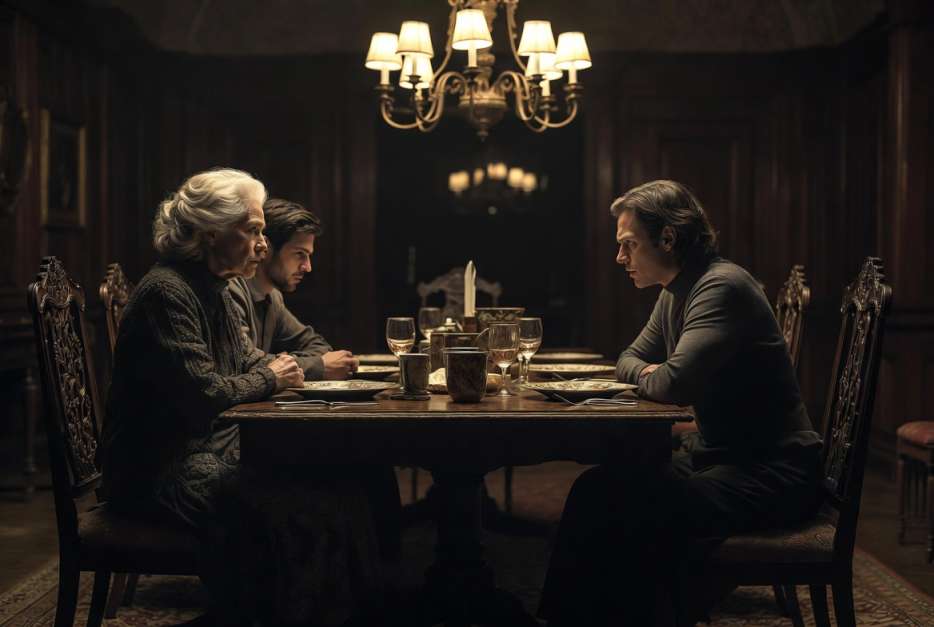
The dining room chandelier cast long shadows across the table Margaret had inherited from her grandmother. Four chairs. Three adults. One empty space where the children had been gently sent to watch a movie upstairs with strict instructions not to come down. The air smelled of coffee gone cold and the faint trace of Brooke’s expensive perfume, now sour with tension.
Margaret sat at the head of the table—her table—in a simple cream sweater, silver hair pinned neatly. She had not raised her voice once. She did not need to. Her silence had already spoken volumes.
Julian sat to her right, shoulders squared in a way she had not seen since he was a boy determined to make the baseball team. Brooke sat opposite, legs crossed tightly, fingers drumming once before she caught herself and stilled them.
“I’m not here to fight,” Brooke began, but her tone betrayed her. It carried the same bright command she had used the morning she had walked in uninvited. “I just want what’s best for the children.”
Margaret’s gaze did not waver. “Then start by telling the truth. Why did you come here without asking? Why treat my home like a resort and my peace like something you could borrow indefinitely?”
Brooke’s eyes flicked to Julian, searching for the old ally who always softened. He remained quiet, watching his mother.
“Because we were desperate,” Brooke said finally. “Julian’s ventures kept failing. My sponsorships dried up. The landlord was threatening eviction. I thought… family helps family. You always helped before.”
“Helped,” Margaret echoed. The word tasted like rust. She reached into the drawer of the sideboard and pulled out the leather notebook. Not the one from the coast—the older one, filled with years of quiet accounting. She opened it to a page marked with a red ribbon and slid it across the table.
Column after column. Dates. Amounts. Loans that became gifts. Groceries. Utilities. Car repairs. College. Wedding. “Temporary” rent. Every entry written in her careful hand, never once thrown in their faces.
Brooke scanned the numbers. Her face paled.
Julian’s eyes widened. “Mom… I had no idea it was this much.”
“You weren’t supposed to,” Margaret said softly. “Because love kept score in secret so you wouldn’t have to. But love is not bottomless. Not when it costs me my dignity and my future.”
The room grew so quiet they could hear the wall clock ticking in the hallway—the same clock that had measured every long night Margaret had spent alone after Daniel died.
Brooke’s shoulders slumped. For the first time, the polished exterior cracked completely. “I was scared. I pushed because I didn’t know how else to survive. I mocked you because… because seeing you so complete without us made me feel small.”
The admission hung there, raw and unexpected.
Julian reached across the table, not for Brooke’s hand, but to close the notebook gently. “I’m taking the job. Full time. I’ll pay what I can every month. We’ll find a smaller place nearby. The kids need stability. They need their grandmother—not as a servant, but as family.”
He looked at Margaret, eyes shining with something like pride. “And I need to become the man you tried to raise.”
Margaret felt the scar in her chest loosen further. Not healed. Not yet. But no longer bleeding.
She turned to Brooke. “I will not fund your life. But I will help with the children when it is planned and respectful. Babysitting, not servitude. Visits, not invasion. If you can live with those terms, the door stays open. If not…” She let the silence finish the sentence.
Brooke stared at the notebook for a long moment. Then, slowly, she nodded. “I don’t have a choice, do I?”
“You always had one,” Margaret replied. “You just preferred the easier path. Until the path disappeared.”
Later, after Brooke had left to collect her thoughts at the hotel, Julian lingered in the kitchen. He helped his mother wash the coffee mugs—the first time in years he had done so without being asked.
“The kids are asking if we can stay a little longer while we sort things,” he said carefully.
Margaret dried her hands on a dish towel. “One month. With rules. You cook twice a week. You handle all cleaning. Brooke stays only if she contributes. And every Sunday, we have dinner together—no phones, no demands. Real family.”
Julian smiled then—a small, genuine thing that reached his eyes. “Yes, ma’am.”
As he headed upstairs to check on the sleeping children, Margaret stepped onto the back porch. The Charleston night was thick with jasmine and the distant call of cicadas. She breathed deeply, feeling the house settle around her once more—not as a battlefield, but as a home she had reclaimed.
Her phone buzzed. A message from an unknown number—no, from the woman with the golden retriever she had met on the beach.
Saw you left the cottage early. Hope everything’s alright. Coffee sometime when you’re back?
Margaret smiled into the darkness. A small new beginning.
But as she turned to go inside, Julian’s voice drifted down from upstairs, tense on a phone call.
“…yes, I understand the custody lawyer. But she’s their mother. We can work this out without court…”
Margaret paused, hand on the doorframe. The fight was far from over. Brooke’s pride would not die quietly. Julian’s resolve would be tested again and again.
She looked out at her garden, the roses waiting to be pruned.
Some wars ended with surrender. Others required careful, daily tending.
This one, she suspected, would demand both.
To be contineu…