The ballroom of the Mayflower Hotel smelled of polished brass, aged bourbon, and the faint metallic edge of starched uniforms. Crystal chandeliers dripped soft gold light across two hundred shoulders heavy with rank. Smooth jazz floated like smoke—Miles Davis, probably—while laughter rose and fell in careful waves. Everyone here knew the rules: power dressed as elegance.
I stood near the marble pillar, thirty feet from the bar, my Army Blue Mess uniform fitting like a second skin. The Silver Star on my chest caught the light just enough to remind me it was real. Not a decoration. A scar I carried in silence.
Across the room, Eleanor Hargrove’s voice sliced through the music like a scalpel gone wrong.
“She doesn’t belong here!”
Her manicured fingers dug into the sleeve of a young Military Police corporal, her diamond tennis bracelet flashing like a warning. “That woman is a fraud! A clinic nurse playing dress-up with bought medals. It’s stolen valor—arrest her!”
The words landed like mortar rounds. Conversations died. Heads turned. The jazz faltered for half a beat before the band recovered, too professional to stop.
I didn’t flinch. I’d stood in worse places—Kandahar dust choking my lungs, the ground shaking while I cut into a soldier’s chest with nothing but a headlamp and prayer. An entitled mother-in-law in pearls was just another kind of shrapnel.
Mark, my husband, stood rigid beside me. His hand brushed mine once, then withdrew. Seven years of marriage, and he still carried that inherited flinch whenever his mother sharpened her claws. Tonight, the claws were out in public.
The corporal started across the floor. Every step echoed. Uniforms parted like water. Eleanor followed half a pace behind, chin high, victory already painted on her face. She’d spent years calling me “the nurse” with that particular curl of the lip—like the word itself tasted sour. Tonight she wanted witnesses.
When the corporal reached me, his young face was all protocol. “Ma’am, I need to verify your credentials. There’s been an accusation.”
“Of course, Corporal.” My voice stayed level. I reached inside my jacket, fingers brushing the ribbon bar, and handed him my ID card. No hesitation. No fear. Only the quiet knowledge that some truths don’t need defending—they simply exist.
Eleanor stopped three feet away, perfume thick as her certainty. “This will be quick,” she announced to no one and everyone. “Then security can escort her out.”
The corporal slid the card into the scanner. A soft beep. Green light flooded the small screen.
His posture changed first. Shoulders squared. Breath caught. He read again, as if the words might rearrange themselves. A Staff Sergeant leaning in from the side went statue-still.
Then the corporal’s voice cracked the room like a command:
“ATTENTION ON DECK!”
Chairs scraped. Bodies rose in a single wave. Colonels. Generals. Surgeons who had commanded field hospitals. Men and women who had sent others into hell and brought some back. Three hundred and two uniforms snapped to rigid attention—for me.
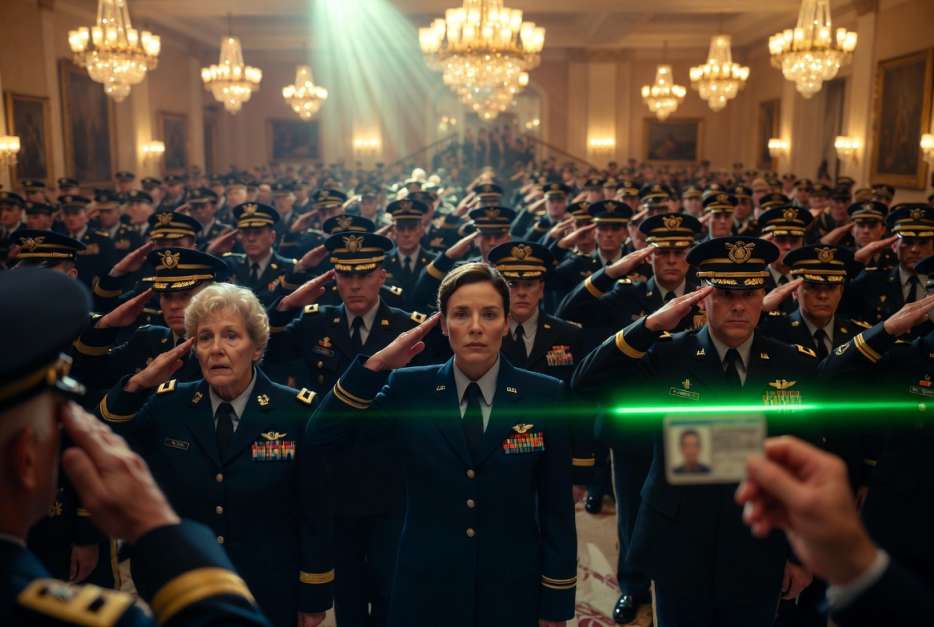
The silence that followed was heavier than any explosion I’d ever heard.
Eleanor’s smile froze mid-triumph. Her mouth opened, closed. Color drained from her perfectly powdered cheeks.
The corporal turned back to me, three precise paces away. He saluted—crisp, but I saw the tremor in his wrist. “Ma’am… credentials verified. Rank: Colonel, Medical Corps. Special Operations Command attachment.”
The ripple moved outward. A two-star general near the podium tightened his jaw. A Navy captain shifted his weight, suddenly straighter.
The corporal continued, voice carrying. “Primary designation: Surgical Specialist, Combat Trauma Response Unit. Clearance: Black-tier.”
Black-tier. The word settled like lead in still water. People here understood what it meant: operations that didn’t exist on paper. Decisions made in the dark so the rest of the world could keep its lights on.
Eleanor took one stumbling step backward. Her heel wobbled. “That’s… impossible. She’s just—”
The corporal wasn’t done. “Decorations confirmed: Silver Star for actions in Helmand Province. Distinguished Service Cross. Legion of Merit. Multiple classified commendations.”
Now the room truly broke. Whispers. Sharp inhalations. Recognition in eyes that had seen too much.
A general—silver-haired, three stars on his shoulders—stepped forward. The corporal moved aside instantly. The general stopped in front of me and raised his salute. Not showy. Not for the crowd. For the weight behind my name.
“Colonel,” he said quietly.
I returned it. Steady. The way you do when rank is just the surface and the real conversation happens underneath.
Behind him, salutes multiplied like dominoes falling in reverse. Not out of obligation. Out of understanding.
Eleanor stood alone in the wreckage of her certainty. Her carefully curated world—country club gossip, charity galas, the quiet superiority she wielded like a gavel—crumbled in real time. Seven years of subtle sabotage, of “darling, are you sure you’re not out of your depth?” and “Mark could have done so much better,” all of it exposed under these lights.
I finally turned to her. Not with anger. Not with triumph. Just the same calm I used in the OR when death hovered close enough to feel its breath.
“Yes,” I said softly. “I am a nurse. Among other things.”
My voice carried without effort. “I’m the one they call when keeping someone alive isn’t supposed to be possible.”
Mark exhaled beside me—a sound like years of held breath finally released. His eyes met mine, and for the first time in a long while, I saw something clean in them. Pride. Regret. Love, maybe, trying to find its way back through the static his mother had always generated.
The general spoke again, low enough for only a few to hear, but the room was so silent it might as well have been broadcast. “We’ve met before, Colonel Voss. Bagram, 2019. You pulled three of my men back from the edge when the books said they were already gone.”
I remembered. Blood on my gloves. The smell of burning fuel. A young sergeant who’d lost both legs but refused to lose his fight. “They were good soldiers, sir.”
The general nodded once. Then, to the room: “Carry on.”
But no one moved right away. The attention held a moment longer—respect given freely to someone who had never asked for the spotlight.
Eleanor tried one last time. “Mark,” she whispered, voice cracking, “say something. This is ridiculous—”
Mark looked at his mother. Really looked. The boy who once craved her approval had aged in the last five minutes. “Mom,” he said, voice low and final, “stop.”
She stared at him like he’d slapped her. Then at me. The smugness was gone. Only confusion remained—the terrifying realization that the woman she’d dismissed as beneath her had carried burdens Eleanor’s polished life could never comprehend.
I didn’t gloat. There was no need. The truth had done its work.
Later, when the music resumed and conversations tentatively restarted, Mark touched my elbow. “Elena… I should have—”
“Not here,” I said gently. We’d have that conversation. Not tonight. Tonight was for the weight I’d carried alone finally being seen.
As we moved through the crowd, officers nodded with quiet deference. One older colonel paused, eyes on my ribbon bar. “Hell of a night, Colonel Voss.”
I offered a small smile. “Just another night, sir.”
But it wasn’t. Not really.
Because somewhere in the back of the room, Eleanor sat alone at a table, staring into an untouched glass of champagne. Her world had tilted on its axis, and the ground beneath her was no longer solid.
She had come to humiliate a nurse.
She had exposed a ghost the military kept hidden for a reason.
And in the process, she had lost something far more valuable than face.
She had lost the illusion that she was ever in control.
The drive home was quiet at first. Washington D.C. lights streaked past the windows of our car like tracer rounds in slow motion. Mark gripped the wheel tighter than necessary.
“I didn’t know,” he said finally. “Not the full extent. You never—”
“I couldn’t.” My voice was soft in the dark cabin. “Some things stay classified even after you leave the OR. Especially the parts that still wake you up at night.”
He glanced over. The streetlights caught the silver at his temples—the ones that had appeared gradually over years of watching me disappear into deployments he couldn’t ask about. “The Silver Star… the surgery under fire. That was real.”
“All of it.”
Silence stretched between us, not uncomfortable for once. Just heavy with seven years of things unsaid.
“I let her…” He swallowed. “I let her talk about you like that. For years.”
“You were caught between us.” I reached over, laid my hand on his arm. “But tonight you chose.”
He nodded once, eyes on the road. “Yeah. I did.”
Back at our townhouse in Arlington, I hung my uniform carefully. The ribbons gleamed under the closet light. Each one carried ghosts: the boy from Texas who coded twice on my table, the Afghan interpreter who whispered thanks as I closed his wounds, the moments when my hands shook afterward in the shower so no one would see.
Eleanor would recover. People like her always did—reframe the narrative, play the victim, find new targets. But something had fractured tonight that glue couldn’t fix.
Mark came up behind me, wrapped his arms around my waist. “Colonel Voss,” he murmured against my hair, a hint of wonder in his voice. “My wife.”
I leaned back into him. “Still just Elena when the uniform comes off.”
But we both knew that wasn’t entirely true anymore. The woman who stood in that ballroom had been seen. Fully. And in that seeing, something in both of us had shifted.
Outside, D.C. kept its secrets. Inside, for the first time in years, our home felt a little less like a battlefield.
And somewhere across town, Eleanor Hargrove was probably already rewriting the story in her head.
She could try.
Some truths refuse to be rewritten.
The townhouse in Arlington smelled of fresh coffee and the faint trace of gun oil from Mark’s old service pistol he still cleaned on Sundays. Dawn crept through the blinds in pale strips, painting the hardwood floor like evidence at a crime scene. I stood at the kitchen island in an old Army PT shirt, stirring sugar into my mug with more force than necessary. Sleep had been a stranger again last night—not because of the gala, but because the gala had cracked open doors I usually kept welded shut.
Mark shuffled in, hair disheveled, eyes carrying the night’s wreckage. He stopped in the doorway, watching me. Seven years, and he still looked at me sometimes like I was a map he couldn’t quite read.
“You were quiet on the drive home,” he said.
I set the spoon down. “Old habit. Debriefs happen when the bleeding stops.”
He crossed the room, poured his own cup, but didn’t drink. “Elena… the Distinguished Service Cross. I looked it up last night. The citation was redacted, but what wasn’t—” His voice caught. “You operated for fourteen hours straight. Under mortar fire. They said you saved a whole squad that should’ve died.”
I stared into the black liquid. The steam rose like dust clouds over Helmand. “They don’t give those for perfect outcomes, Mark. They give them when you refuse to accept the inevitable.”
Helmand Province, 2019.
The ground had shaken so hard my teeth rattled. Dust sifted from the ceiling of the makeshift OR like gray snow. Outside, the crack of rifles mixed with the scream of incoming mortars. A young sergeant—barely twenty-two, Texas drawl still thick even through the pain—lay open on the table. Both legs gone below the knee. Shrapnel in his chest. His blood pressure was crashing, and the generator kept flickering like it wanted to quit too.
“Colonel Voss!” A medic’s voice, raw. “We’re losing him!”
My hands didn’t shake. Not then. I worked by headlamp and instinct, suturing what I could, clamping what I couldn’t. “You’re not dying today, soldier,” I told him, voice steady even as the building trembled. “Your mom’s waiting on that letter. Keep breathing for me.”
He’d made it. Barely. Three others hadn’t. That night, in the shower trailer, I let the water run cold until my fingers went numb. No one saw. No one ever did.
Back in Arlington, Mark reached across the island and covered my hand with his. His palm was warm. Civilian warm. “Why didn’t you tell me?”
“Because telling you would’ve made you carry it.” I met his eyes. “You already carried enough of your mother’s expectations. I wasn’t going to add my ghosts to the load.”
The doorbell rang before he could answer. Sharp. Insistent.
Eleanor.
She didn’t wait for an invitation. The door opened and she swept in like she still owned the narrative—tailored cream suit, pearls, hair lacquered into submission. But her eyes were red-rimmed. The armor had cracks.
“Mark,” she started, voice pitched for sympathy. “I was humiliated last night. That woman—” She gestured at me without looking. “She made me look like a fool in front of people who matter.”
Mark straightened. “Mom. Stop.”
For the first time, Eleanor seemed to actually see me. Not the nurse she’d imagined. Not the daughter-in-law who never quite measured up. The Colonel. The woman who had stood at attention while generals saluted.
She took a half-step back. “This is absurd. You expect me to believe you were some secret super-surgeon? You’ve been stitching up Mark’s family at Thanksgiving dinners like a glorified GP.”
I didn’t raise my voice. I didn’t need to. “I’ve stitched up men while their hearts stopped twice on the table. While the enemy tried to make sure none of us walked out. You don’t get to define me by the parts of my life that were convenient for your story, Eleanor.”
Her mouth opened, then closed. The entitled certainty flickered. Underneath, something raw surfaced—fear, maybe. Or the terrifying realization that her world was smaller than she’d believed.
“I was protecting my son,” she whispered.
“From what?” Mark stepped between us, voice low but firm. “From a woman who’s saved more lives than most people in that room ever will? From someone who chose me even when I didn’t deserve it?”
Eleanor’s gaze darted between us. For a moment, the society mask slipped completely. She looked… old. Tired. Human. “You’ve always been too soft, Mark. I wanted better for you.”
“Better?” He laughed once, bitter. “You wanted control. Last night you tried to have my wife arrested. In public. Because she didn’t fit your picture.”
I watched her process it. The way her shoulders curved just slightly. The way her manicured nails dug into her own palm. She believed she’d been right—right up until the scanner turned green. That kind of certainty doesn’t die easy. It bleeds out slow.
“I need time,” she said finally. Not an apology. Not yet. Just a retreat. She turned toward the door, then paused. “Elena… if even half of what they said is true…”
“It’s all true,” I said quietly. “But I don’t need you to believe it. I lived it.”
The door clicked shut behind her. The silence that followed felt different. Cleaner.
Mark pulled me into his arms. No words at first. Just the steady beat of his heart against mine. I let myself lean in—something I rarely allowed. In the field, vulnerability got people killed. Here, maybe it could save something.
“I’m sorry,” he murmured into my hair. “For every dinner where I stayed quiet. For every time I let her diminish you.”
I closed my eyes. “We both carried things alone. Maybe now we don’t have to.”
But even as I said it, an old instinct prickled. The phone in my pocket had buzzed twice during the gala— a secure line. Messages I hadn’t checked yet. Black-tier clearance didn’t sleep.
Later that afternoon, while Mark was in his study catching up on briefs, I stepped into the backyard. The air smelled of cut grass and distant rain. I pulled out the encrypted phone.
One message from a familiar callsign: Ghost-Actual.
Colonel Voss. Wheels up in 72 hours if you’re green. New extraction protocol. High-value asset with complications. They’re asking for the best. That’s still you.
I stared at the screen until the letters blurred. Another deployment. Another chance to hold someone else’s life in blood-slick hands while the world tried to end around us.
Mark appeared at the back door. “Everything okay?”
I slipped the phone away. “Just work.”
He studied my face—the way he used to before he understood there were parts of me he’d never fully reach. “If you have to go…”
“I always come back,” I said. But we both knew it wasn’t a promise. It was a hope.
Inside, the house felt warmer. Fragile, but healing. Eleanor’s shadow still lingered, but it was smaller now. Diminished by truth.
Yet as I watched Mark move through the kitchen, humming an old song, I felt the pull. The OR. The dust. The weight of decisions no one else could make.
Some ghosts don’t stay quiet for long.
Rain lashed the windows of the townhouse like distant artillery. I stood in the bedroom, folding field uniforms with the same precision I once used to pack trauma kits. The encrypted phone lay dark on the dresser now, but its message burned behind my eyes. Seventy-two hours. Another flight into the gray zone where politics ended and scalpels began.
Mark leaned against the doorframe, arms crossed, watching me. The lines around his eyes had deepened since the gala two nights ago. “They’re calling you back.”
It wasn’t a question. He’d learned to read the shift in my shoulders, the way my hands moved on autopilot.
“High-value asset,” I said quietly. “Complicated extraction. They want hands that don’t shake when the lights go out.”
He crossed the room in three strides and pulled me against him. No hesitation this time. His chin rested on top of my head, and for a moment the rain outside was the only sound. “I used to hate how little you could tell me. Now I hate that I never asked hard enough.”
I breathed him in—aftershave, coffee, the steady civilian heartbeat that had grounded me for seven years. “Ask now.”
He pulled back just enough to look at me. “What happened in Helmand? The real version. Not the redacted one.”
The night the sky fell.
Dust clogged every breath. The forward operating base had taken three direct hits, and the aid station was a slaughterhouse of screams and beeping monitors. I had a sergeant on the table—Texas kid, same one from before, back for his third rotation. His chest was a mess of shrapnel and regret.
“Colonel, we’ve got incoming wounded!” a medic shouted over the roar.
I didn’t look up. My fingers worked inside the wound, clamping a bleeder while the building shook again. Mortar fragments pinged off the tin roof like deadly hail. The sergeant’s eyes locked on mine, wide with terror. “Doc… tell my mom I tried.”
“You’ll tell her yourself.” My voice cut through the chaos, calm as the eye of a storm I had no right to claim. Blood soaked my sleeves to the elbows. The generator died for twelve eternal seconds. In the dark, I kept working by feel and prayer.
When the lights flickered back, the sergeant was still breathing. Barely. Three others weren’t. I walked out at dawn carrying the weight of every name I couldn’t save. In the latrine, I vomited until nothing remained but bile and the metallic taste of failure.
That was the night they pinned the Distinguished Service Cross on me. I smiled for the photos. Inside, I was still kneeling in the dark.
Mark listened without interrupting. When I finished, his eyes glistened. “Jesus, Elena. All this time… I thought your deployments were hard, but I pictured paperwork and long shifts. Not… that.”
I touched his cheek. “That’s why I married you. You saw the nurse who came home. Not the butcher who kept people alive.”
A knock at the front door shattered the moment. Sharp. Familiar.
Eleanor.
This time she didn’t barge in. She stood on the porch in the pouring rain, no umbrella, mascara already running. Her designer coat clung to her like a defeated flag.
“I need to speak with you,” she said when I opened the door. Not to Mark. To me. “Alone.”
Mark started to protest, but I touched his arm. “It’s okay.”
We sat in the living room—Eleanor on the edge of the leather sofa, me across from her in the armchair I usually reserved for reading case files. Rain drummed the roof like impatient fingers.
“I’ve spent two days calling people,” she began, voice stripped of its usual polish. “Old friends. Husbands of friends. They all say the same thing. Colonel Elena Voss. Special Operations. The kind of doctor they fly in when everyone else has given up.” She laughed once, hollow. “I thought you were playing dress-up.”
I stayed silent. Let her fill the space.
“I was cruel,” she continued. Her hands twisted in her lap. “Not just at the gala. For years. I saw a woman who didn’t come from our world and assumed you wanted to take mine. Mark was supposed to marry someone who understood the country club circuit. Someone… safe.”
“Safe,” I repeated softly. “Like the world you live in, where the worst thing that happens is bad seating at a fundraiser?”
Her shoulders trembled. “I was wrong. Terribly wrong. But I don’t know how to fix this. My son barely speaks to me. And you… you look at me like I’m another wound you have to close.”
For the first time, I saw her clearly. Not the monster. Not the caricature. Just a woman who had built walls out of fear and called them standards. A mother who loved her son in the only language she knew—control.
“I don’t need you to fix it, Eleanor,” I said. “I need you to see me. All of me. The nurse. The Colonel. The woman who loves your son enough to come home every time, even when part of me stays in the sand.”
She nodded slowly. Tears mixed with rain on her cheeks. “I want to try. If you’ll let me.”
The words hung between us—fragile as fresh sutures. I believed her. For now.
But as she left, hugging Mark awkwardly at the door, my encrypted phone buzzed again upstairs. Louder this time. Urgent.
I slipped away while they talked. The message was short:
Ghost-Actual: Timeline moved up. Wheels up in 36 hours. Asset is one of ours—compromised. Bring your A-game, Colonel. This one’s personal.
Personal. The word sat heavy. I scrolled to the attached file—redacted, but one name slipped through the black bars.
Hargrove.
My stomach dropped. Mark had a cousin in Special Forces. One he rarely mentioned. One who had gone dark six months ago.
I closed the file. Downstairs, Mark laughed at something his mother said—a sound I hadn’t heard in years. Clean. Hopeful.
I slipped the phone into my pocket and descended the stairs, face calm as the OR.
Some ghosts didn’t stay in the dust.
They came home wearing your husband’s last name.
The rain had eased into a sullen drizzle by morning, turning Arlington’s streets into mirrors of gray sky. I moved through the house like a ghost in my own life—packing the small go-bag that never quite emptied between missions. Scalpel handles. Suture kits. A worn photo of Mark from our honeymoon, tucked behind my credentials. The encrypted phone stayed warm in my pocket, its message a live wire against my thigh.
Hargrove.
Mark found me in the study, staring at the rain-streaked window. He wrapped his arms around me from behind, chin on my shoulder. “You’re leaving sooner.”
“Thirty-six hours,” I confirmed. My voice stayed clinical. Inside, the ground felt like shifting sand. “They moved it up.”
He turned me gently to face him. “Talk to me, Elena. No more redacted versions.”
I hesitated—the old reflex. But the gala had cracked something open. I handed him the phone. Watched his face as he read the partial file.
His cousin’s name hit like incoming fire. “Ryan?” Mark’s voice cracked. “He’s been dark for months. We thought… Mom said the family was handling it quietly. Diplomatic channels.”
“Apparently not quiet enough.” I touched his arm. “He’s the asset. Compromised. They want me because I know the family medical history. Blood type. Old injuries. The kind of details that matter when you’re putting someone back together in a black site.”
Mark sank into the desk chair, head in his hands. “All this time… I thought Ryan was just another ghost in the family album. Mom never said he was Special Forces.”
The front door opened before I could respond. Eleanor again. Soaked once more, but this time carrying a small leather portfolio instead of tears. She looked smaller. Determined.
“I heard,” she said without preamble. “Friends at the Pentagon. Ryan’s name surfaced. I made calls last night.” Her eyes met mine—steady for the first time. “I was wrong about you, Elena. But I’m not useless. I pulled strings. Medical evac protocols. If you’re going in, you won’t go in blind.”
Mark stared at his mother like she was a stranger wearing familiar skin. “You knew about Ryan?”
“I suspected.” Eleanor set the portfolio on the desk. Classified summaries. Contact codes. “I protected the family name. The way I always have. But protecting it meant pushing away the one person who might actually save him.” She looked at me. “I’m sorry. Truly.”
The apology landed softly. Not a grand gesture. Just a woman dismantling her own walls, brick by careful brick. I nodded once. Acceptance, for now.
That night, the three of us sat at the dinner table—an uneasy truce. Candlelight flickered across porcelain and silver. Eleanor had brought wine from her cellar. Mark picked at his food. I memorized their faces: the way Eleanor’s hands trembled slightly when she passed the bread, the quiet strength in Mark’s jaw as he reached for my hand under the table.
“I used to think strength was never needing anyone,” Eleanor said suddenly, staring into her glass. “My father drilled that into me. Military family, but never the one in uniform. Just the one waiting at home with perfect posture.” She gave a bitter smile. “I passed it to Mark. And I punished you for breaking the pattern.”
I set my fork down. “I broke more than patterns in Helmand. I broke men who trusted me to keep them whole. Some nights I still hear them.”
Mark squeezed my hand. “And you still came home to me.”
The rain picked up again, drumming a steady rhythm against the windows—like a heartbeat on life support. After dinner, Eleanor left with a quiet hug for her son and a nod to me that carried more weight than words. Progress. Fragile, but real.
Later, in the dark of our bedroom, Mark traced the faint scar along my collarbone—the one I never explained. “Come back,” he whispered against my skin. “Not just for Ryan. For us.”
“I always do.” I kissed him fiercely, pouring seven years of unspoken fear and love into it. Tomorrow I would board a plane. Tomorrow the dust would rise again.
But at 0400, my phone screamed awake. Not the encrypted one. The secure line.
Ghost-Actual: Situation fluid. Asset Ryan Hargrove extracted but critical. Enemy pursuit active. Colonel Voss, you are primary on the ground team. Wheels up in four hours. Godspeed.
I dressed in silence. Mark stirred but didn’t wake fully. I left a note on the pillow—simple, true.
Going to bring your cousin home. I love you. Stay steady. — E
The drive to Joint Base Andrews blurred past in streaks of red taillights. At the hangar, the C-17 waited like a beast crouched in shadow. Officers snapped salutes as I boarded. Inside, the familiar smells hit—jet fuel, canvas, fear sweat.
As the ramp closed, my mind sharpened into the surgeon’s focus. Ryan Hargrove. Family. Blood on the line in more ways than one.
But as the plane lifted into the stormy sky, a final secure message pinged:
Intel update: Possible leak from stateside. Hargrove family connections compromised. Watch your six, Colonel.
Eleanor’s strings. Or something darker.
The ground fell away beneath me. Home became a memory. Ahead, dust and blood waited.
And somewhere in the shadows, a new enemy was already moving—someone who knew exactly who I was and exactly who I loved.
The C-17 touched down on a remote strip somewhere in the shadows of the Hindu Kush with all the grace of a controlled crash. Heat slammed into me the moment the ramp dropped—dry, merciless, carrying the familiar cocktail of diesel, cordite, and fear. I stepped onto the tarmac in full kit, silver oak leafs hidden under a tactical vest. No fanfare. No salutes under these skies. Just a blacked-out Humvee waiting and a grim-faced Delta operator who knew my reputation better than my name.
“Colonel Voss. They said you were the best. Ryan Hargrove’s got hours if we’re lucky. Hours.”
I nodded once and climbed in. The ride to the forward surgical team was a blur of rutted roads and distant gunfire. Inside the armored vehicle, I reviewed the partial medical file again. Ryan—thirty-four, Mark’s cousin, built like a linebacker turned shadow warrior. Multiple gunshot wounds. Internal bleeding. Possible chemical exposure. The kind of case where statistics became prayers.
The field hospital was a cluster of reinforced tents humming with generators. Chaos greeted me at the entrance flap: medics shouting, the metallic scent of blood thick enough to taste. They had Ryan on the table already—ghost-pale, chest rising in shallow, desperate hitches.
“Colonel on deck!” someone barked.
I scrubbed in fast, gloves snapping into place. “Status.”
“GSW to abdomen and left thigh. Lost the spleen. BP tanking despite fluids. We’re out of O-neg.”
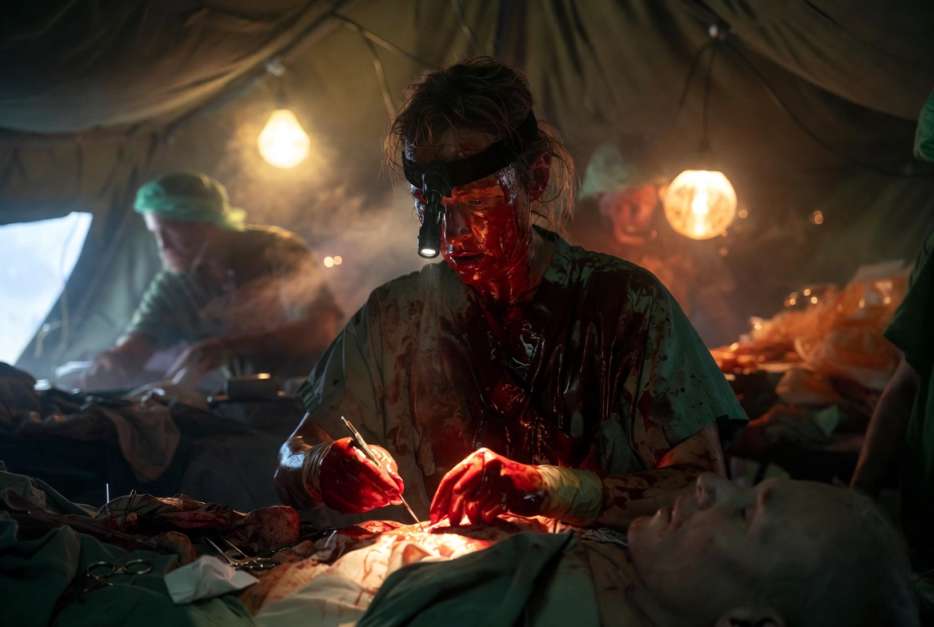
I leaned over the table. Ryan’s eyes fluttered open—hazel like Mark’s, but wild with pain. “C-cousin Mark… tell him… I didn’t talk.”
“Save your strength, soldier.” My voice cut through the beeps and chaos like a scalpel. “You’re not dying on my table. Not today.”
The ground shook as mortars walked closer. Dust sifted from the tent roof. I worked with everything I had—clamping, suturing, calling for instruments while the world tried to end around us. A young medic handed me a retractor, his hands shaking. “Ma’am, they’re coming—”
“Then we work faster.”
I lost time. Minutes or hours—impossible to tell when every heartbeat on the monitor was a battle. Ryan coded twice. I brought him back both times, hands steady even as sweat stung my eyes. The Texas kid from Helmand flashed in my mind—same fight, different face. You’re not dying today.
When his vitals finally stabilized, the team exhaled as one. But relief was a luxury we couldn’t afford. Outside, small-arms fire cracked closer. The enemy knew we had their prize.
An operator burst in. “Exfil in ten, Colonel. We’ve got pursuit. And… there’s chatter. The leak was stateside. Someone with access to family names.”
My stomach tightened. Eleanor’s calls? Or something deeper in the Hargrove web?
We loaded Ryan into the armored medevac bird under covering fire. I rode with him, one hand on the IV line, the other gripping my sidearm. The chopper lifted, rotors thumping like a frantic heartbeat. Below, the desert burned with tracer rounds.
Ryan stirred, voice weak through the oxygen mask. “You’re… her. The one Mark married. He said you were just a nurse.”
I managed a tired smile beneath my mask. “I am. Among other things.”
He coughed—a wet, dangerous sound. “They wanted family intel. Names. Locations back home. I held out… but they had pictures. Of Mark. Of you at that gala.”
The words hit harder than any mortar. The gala. Eleanor’s public accusation. Someone had been watching. Using it.
As the bird climbed toward safer airspace, my secure comms crackled. Ghost-Actual to Voss: Stateside situation developing. Possible threat to family. Advise caution on return.
Mark. Eleanor. The fragile truce we’d built. It was all in play now.
Hours later, on a larger base, I finally stepped away from Ryan’s bedside in the ICU tent. He was stable—for now. I peeled off bloody gloves and walked into the cool night air. Stars wheeled overhead, indifferent. I pulled out my satellite phone and dialed home. Mark answered on the first ring.
“Elena?”
“I’ve got him,” I said, voice raw. “Ryan’s alive. But there’s more. The leak… it’s connected to us. To the family.”
Silence on the line, then Mark’s breath. “Mom’s here. She’s been making calls again. Trying to help. But… someone was at the house tonight. Watching.”
My blood ran cold. In the distance, another chopper thundered past. The war never slept.
Eleanor’s voice came on the line next—shaken but resolute. “Elena, I swear I didn’t know. But I’m fixing this. Whatever it takes.”
I closed my eyes. The woman who once tried to have me arrested was now my uncertain ally in a shadow war. Trust was a scalpel—sharp, necessary, and capable of cutting both ways.
“Stay together,” I told them. “I’m coming home. But the fight might already be there.”
I ended the call and stared into the desert night. Ryan was safe for the moment. But the real wound—the one that could tear my family apart—was opening thousands of miles away.
And I was still on the wrong side of the world to close it.
The C-17’s wheels kissed Andrews Air Force Base under a washed-out dawn. I was off the ramp before it fully stopped, boots hitting American soil with the weight of too many ghosts. Ryan had been transferred stateside under heavy guard—stable but silent about the deeper intel. My body ached from thirty hours without real sleep, but adrenaline kept me sharp. The desert still clung to my skin like a bad memory.
A black SUV waited on the tarmac. Mark stepped out first, then Eleanor—both looking like they hadn’t slept either. Mark pulled me into a crushing embrace the moment I reached him, burying his face in my neck. He smelled of coffee and fear.
“You’re home,” he whispered, voice breaking. “God, Elena.”
Eleanor stood a respectful distance away, perfectly coiffed despite the exhaustion in her eyes. When Mark released me, she surprised me with a brief, awkward hug. “Thank you,” she said quietly. “For my nephew. For proving me wrong every single day.”
I nodded, but my eyes scanned the perimeter. The secure line had warned of watchers. “We need to move. This isn’t over.”
The drive to Arlington felt longer than the flight. Mark filled the silence with details: a suspicious car outside the townhouse two nights running, an attempted breach on Eleanor’s home security system, anonymous messages referencing the gala. Someone had used Eleanor’s very public tantrum as a perfect spotlight.
Inside the house, the familiar walls felt temporarily foreign. I dropped my go-bag and immediately checked sightlines from the windows. Ryan’s file sat open on the kitchen island—Eleanor had pulled more strings.
“He gave them nothing critical,” she said, pouring coffee with steady hands. “But they wanted leverage. Family addresses. Your service record. They knew about the gala before it even happened, Elena. Someone inside fed them the guest list.”
Mark paced. “Who the hell would do this?”
I met his eyes. “Someone who benefits from chaos in the ranks. Or someone who hates what I represent.” My hand brushed the scar at my collarbone. “The kind of people I’ve kept breathing by denying them victories overseas.”
Eleanor surprised me again. She had compiled a list—old contacts, grudges, even a former colleague of mine who’d been passed over for promotion. “I was wrong to dismiss you,” she admitted, voice low. “But I’m not wrong about protecting this family. Let me help. Really help.”
For the first time, I saw possibility in her. Not warmth yet, but steel. The same steel that had raised Mark and nearly broken us.
That afternoon, while Mark coordinated with investigators, Eleanor and I sat on the back patio. The garden smelled of damp earth and late-blooming roses. She handed me a folder.
“Ryan’s full debrief notes. Redacted, but enough. They wanted your clearance levels. Black-tier. They wanted to know what you know.”
I flipped through the pages, the clinical detachment cracking. Photos from the gala—zoomed in on my ribbon bar. My ID scan somehow intercepted. A leak with reach.
“I spent years proving I belonged,” I said softly, staring at the evidence. “Not just to the Army. To you.”
Eleanor looked down at her hands. “And I spent years terrified of anyone who made me feel small. You never did. I did that to myself.” She paused. “Mark loves you. The real you. I see that now. I want… I want to earn a place in this family. If you’ll let me.”
The words landed like careful sutures. Healing, but still tender.
Before I could respond, Mark burst onto the patio. “We’ve got movement. Two unknowns at the end of the street. Local PD is en route but—”
Glass shattered from the front of the house.
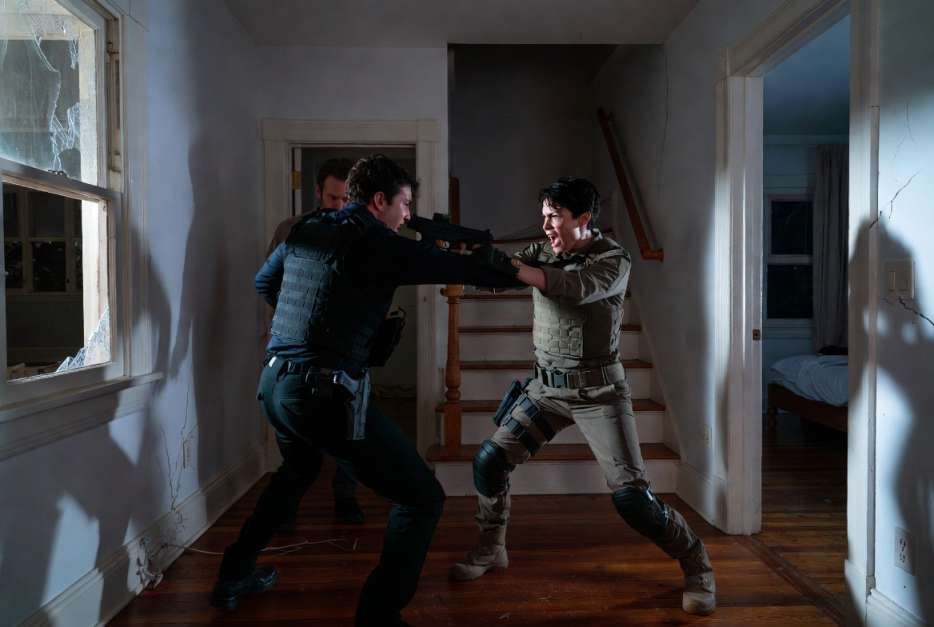
I moved on instinct—grabbing Eleanor and pulling her down as Mark drew his old service pistol. Footsteps on the hardwood. A shadow crossed the window.
“Stay here,” I ordered, voice the one I used in the OR when death hovered close. I slipped into the hallway, back to the wall, heart hammering with the old combat rhythm.
A man in dark tactical gear appeared at the far end—mask up, weapon raised. “Colonel Voss. We just want the files.”
I didn’t answer with words. I answered with movement—years of training and the same refusal to lose that had kept soldiers alive on my table. The struggle was short, brutal, and ended with him disarmed and unconscious on the floor.
Mark covered the second intruder in the living room. Sirens wailed closer.
Eleanor stood in the hallway when it was over, pale but unflinching. “This is because of me,” she whispered. “My pride at that gala painted a target on us.”
I wiped blood from a split knuckle. “No. This is because of what we all are. Together.”
As police swarmed the house and the intruders were cuffed, I caught Mark’s eye across the chaos. Pride. Love. Fear. All of it.
But as the adrenaline ebbed, my secure phone buzzed one final time.
Ghost-Actual: New development. The leak traces higher than expected. Possible inside the Medical Corps. Stand by for recall, Colonel. This fight just came home.
I looked at my family—Mark’s steady hand on my shoulder, Eleanor’s newfound resolve—and felt the ground shift again.
The war had followed me back. And this time, the scalpel might not be enough.
The safe house outside Arlington smelled of fresh paint and tension. We’d been moved under cover of darkness after the break-in—courtesy of contacts Eleanor had activated with a single phone call and the kind of quiet authority only old money could summon. Ryan lay in the upstairs bedroom, pale but conscious, monitors beeping softly in the dim light. I checked his sutures again, fingers gentle over the battlefield repairs I’d made halfway across the world.
“You did good, Colonel,” he rasped, managing a weak grin that mirrored Mark’s. “Guess the family finally got the right in-law.”
Mark stood in the doorway, arms crossed, watching us. Eleanor sat in the corner chair, knitting her hands together—her version of prayer. The four of us in one room felt like a fragile ceasefire in a war that refused to stay overseas.
Outside, federal agents rotated shifts. The intruders from our house had lawyered up fast, but the trail was leading somewhere higher. Someone with access to classified medical files. Someone who knew exactly when I would be vulnerable.
I stepped away from Ryan’s bedside and joined Mark in the hallway. He pulled me close, forehead against mine. “You haven’t slept since you got back.”
“Sleep is a luxury when someone’s trying to bleed your family dry.” I traced the line of his jaw. “This isn’t just about Ryan’s mission. It’s personal. They used the gala—used your mother’s outburst like bait.”
Eleanor’s voice drifted from the bedroom. “I know. And I’ll carry that.” She appeared in the doorway, looking smaller in borrowed clothes. “I’ve been going through old contacts. One name keeps surfacing—Dr. Harlan Graves. He was up for the same Special Operations posting you received years ago, Elena. Passed over. He’s been… vocal about women in combat medicine.”
The name hit like a distant explosion. Graves. A brilliant surgeon with a ego that had cracked under pressure. I’d testified in a quiet review board once—his shortcuts in the field had cost lives. He’d lost his clearance. Apparently, he hadn’t lost his reach.
Mark’s grip tightened on my hand. “We end this. Together.”
That night, while the safe house settled into uneasy quiet, I sat with Eleanor on the back porch under a sky heavy with stars. Crickets hummed. A soft wind carried the scent of pine from the nearby woods.
“I was so certain at that gala,” she said, voice barely above the crickets. “Certain that tearing you down would protect my son. Instead, I painted a bullseye on all of us.” She turned to me, eyes glistening. “Can you ever forgive that kind of arrogance?”
I watched the trees sway. “Forgiveness isn’t a medal you pin on someone, Eleanor. It’s stitches. Ugly at first. Functional over time. You’re trying. That matters.”
She reached over and squeezed my hand—brief, tentative. The first real bridge.
Inside, Ryan’s voice rose in argument with Mark. Family. Blood and choice colliding. I smiled despite everything. This was worth every scar.
But at 0230, the secure line shattered the peace.
Ghost-Actual: Graves confirmed as primary. He’s not working alone—suspected network inside Medical Corps. Target is not just intel. They want Voss neutralized. Evac team en route to your location. Move.
The safe house erupted into controlled chaos. Agents shouted coordinates. I grabbed my go-bag and helped Ryan to his feet. Mark covered our exit, pistol ready. Eleanor—impossibly—had a small revolver from her purse, her face set in grim determination.
We piled into armored vehicles as headlights appeared at the end of the long driveway. Too many. Moving too fast.
“Drive!” I ordered.
The convoy peeled out, tires screaming. Gunfire cracked behind us. A round pinged off the armored plating. Ryan winced in the backseat but stayed conscious. Mark rode shotgun, returning fire through a cracked window.
Eleanor, beside me in the middle row, loaded another magazine with surprising competence. “I learned a few things over the years too,” she said tightly.
We lost them in the back roads, but the net was tightening. My mind raced through surgical options and escape routes with equal clarity. This was no longer just a threat to my career.
It was a threat to everyone I had left.
As we switched vehicles at a pre-arranged rendezvous, my phone buzzed with one final update.
Graves has gone dark. Last known communication references ‘finishing what the mother-in-law started.’ Stand by.
I stared at the screen, the words burning.
The woman who once tried to destroy me was now fighting beside me. But the enemy had twisted her original sin into a weapon.
And the final cut was coming straight for the heart of our fractured family.
The convoy cut through the Virginia countryside like a scalpel through compromised tissue—precise, urgent, leaving no room for error. Dawn bled across the horizon in streaks of blood orange as we reached an isolated warehouse on the outskirts of a small town. Federal agents had secured it as a temporary stronghold. Ryan was moved inside on a stretcher, still protesting he could walk. Mark stayed glued to my side. Eleanor moved with surprising steel, coordinating with agents using names and numbers I didn’t ask about.
Inside the dimly lit warehouse, portable lights cast long shadows across concrete floors. I set up a makeshift command corner with maps, medical supplies, and the growing file on Dr. Harlan Graves. His photo stared back at me—sharp features, colder eyes. A man who once swore the same oath I did, then chose ambition over lives.
“He blames you for everything,” an FBI liaison said, sliding more intercepted messages across the table. “The promotion. The gala exposure. He’s been feeding intel to foreign actors for years, using disgruntled service members as cutouts. You’re the symbol he wants to erase.”
Mark’s hand found mine under the table. “He doesn’t get to touch you. Any of us.”
Eleanor stood nearby, listening. For once, she didn’t insert herself. She simply absorbed, then quietly made another call. When she hung up, her voice was low. “I reached an old friend on the review board. Graves was flagged years ago. My… interference at the gala gave him the perfect opening. He used my accusations as cover to activate his network.”
I looked at her—really looked. The entitled socialite was gone. In her place stood a woman dismantling her own legacy to protect what remained. “We all played into it,” I said. “But we end it together.”
Hours later, the trap was set. Intel indicated Graves would move on a suspected safe house nearby. We waited in the shadows—me in tactical gear beside Mark, Eleanor monitoring comms from the command post, Ryan insisting on a sidearm from his bed.
The night air was thick with the scent of pine and diesel. Crickets fell silent as vehicles approached. Headlights swept the tree line. My pulse steadied into that familiar OR rhythm—focused, lethal, ready.
“Contact,” Mark whispered.
Graves stepped out of the lead vehicle, flanked by two armed men. He looked smaller in person than in photos. Diminished. But the hatred in his posture was unmistakable.
“Voss!” he called into the darkness. “Come out. Let’s discuss how you ruined everything with your so-called heroics.”
I stepped forward into the light, hands visible but body coiled. “It’s over, Harlan. The network’s been rolled up. Your leaks end tonight.”
He laughed—a brittle sound. “You think this is about leaks? This is about legacy. You took what was mine. That promotion. The respect. Even that ridiculous scene at the gala—your mother-in-law did half my work for me. I just amplified it.”
Eleanor’s voice crackled in my earpiece. “He’s stalling. Agents moving in.”
Mark shifted beside me, protective. Ryan covered from a concealed position.
I took another step. “You swore the same oath. To do no harm. Instead, you sold out soldiers who trusted the system.”
Graves’s face twisted. “The system favored you. The golden girl who could do no wrong.” He raised a hand—signal.
Gunfire erupted.
Chaos became a ballet of violence and precision. I moved on instinct, tackling Mark behind cover as rounds sparked off metal. Agents swarmed. Ryan fired from his position, dropping one assailant. Eleanor’s voice stayed calm on comms, guiding reinforcements.
In the melee, Graves lunged toward me with a syringe—something deadly, no doubt. I disarmed him with a move honed in combat medicine and darker training, pinning him to the ground as agents closed in.
“It’s finished,” I said, voice steady as I secured his wrists. “You don’t get to decide who belongs anymore.”
His eyes burned with defeat as cuffs clicked. “You’ll never be safe. Not with the secrets you carry.”
The words lingered as the scene was secured. No casualties on our side. Graves and his remaining men taken into custody. The warehouse lights felt brighter now, the air lighter.
Back inside, the family gathered. Ryan clapped my shoulder weakly. Mark kissed me deeply, uncaring who saw. Eleanor approached last, tears in her eyes.
“I started this,” she said. “With my pride. But you finished it with grace. I don’t deserve your forgiveness, but I will spend the rest of my life earning a place at this table.”
I pulled her into a hug. Real this time. “You’re already earning it.”
Later, as the adrenaline crashed, Mark and I stood on a quiet corner of the property. Stars wheeled overhead. The desert felt farther away.
“You were incredible out there,” he murmured. “Colonel. Wife. Hero. All of it.”
“I’m just Elena,” I replied, leaning into him. “The one who keeps coming home.”
But even as peace settled, my secure phone buzzed softly.
Ghost-Actual: Graves was the tip. Larger network remains. New assignment pending. Rest while you can, Colonel Voss.
I slipped the phone away without telling the others. The fight wasn’t over. It never truly was for people like me.
Yet tonight, in the circle of my fractured but healing family, that truth felt bearable.
For the first time in years, the scars felt like badges instead of burdens.
The safe house had transformed into something resembling normalcy over the next forty-eight hours. Sunlight streamed through reinforced windows, catching dust motes in lazy spirals. Ryan was sitting up in a proper bed now, color returning to his face as he traded barbs with Mark over a deck of cards. Their laughter—raw, genuine, edged with the relief of survival—filled the rooms like fresh oxygen after a long code.
I watched from the kitchen doorway, coffee warm in my hands. The Silver Star felt heavier on my dress uniform hanging upstairs. Not from weight, but from everything it represented: lives saved, lives lost, and now, this improbable family stitched back together in the aftermath of violence.
Eleanor moved around the kitchen with uncharacteristic quiet efficiency. She had insisted on cooking—simple pasta, nothing fancy. No caterers. No show. Just her hands, floured and steady, rolling dough for fresh bread. When she caught me watching, she offered a small smile.
“I used to think domestic things were beneath me,” she admitted, kneading with surprising strength. “My mother taught me to delegate. You taught me—without saying a word—that some things you do yourself. For the people who matter.”
I set my mug down and joined her, chopping herbs with the same precision I used on the OR table. The knife moved rhythmically. “We all have scars, Eleanor. Some on the outside. Some we hide under pearls and protocols.”
She paused, flour dusting her sleeves. “Mine nearly destroyed us. Your scars saved us.” Her voice dropped. “I’ve spoken with Ryan. He told me what you did in that tent. The mortars. The way you refused to let him go. I can never repay that.”
“You already are,” I said softly. “By staying. By changing.”
Dinner that evening was the first real meal we shared without guards at every window. Candlelight flickered across the table. Ryan raised a glass with his good arm. “To Colonel Elena Voss. The woman who stitched this family back together—inside and out.”
Mark’s hand found mine under the table, thumb tracing the faint calluses from years of surgical gloves. His eyes held mine with a depth I hadn’t seen since our wedding day. “To my wife. Who keeps teaching me what courage really looks like.”
Eleanor lifted her glass last. Her hand trembled slightly, but her gaze was clear. “To second chances. And to the daughter-in-law who earned hers the hardest way possible.”
The clink of glasses echoed like a heartbeat stabilizing. For a few hours, the larger network—Graves’s remaining shadows—felt distant. We talked. Real talk. Mark shared stories of growing up under Eleanor’s polished expectations. Ryan recounted lighter moments from deployments. I spoke, haltingly at first, about the weight of Black-tier decisions and the nights the beeps still followed me into sleep.
Later, Mark and I slipped away to the small porch. The night air was cool, carrying the scent of wet leaves and distant woodsmoke. He pulled me into his lap on the wooden swing, arms wrapped tight.
“I almost lost you to this,” he murmured against my hair. “Not just the deployment. The secrets. The way I let my mother’s voice drown out yours for so long.”
“You found me again,” I whispered. “That’s what matters.”
His kiss was slow, deep—full of seven years of missed understanding and new gratitude. When we broke apart, he rested his forehead against mine. “Whatever comes next… we face it as a team. No more carrying it alone.”
But the secure phone in my pocket buzzed like a warning. I checked it discreetly while Mark went inside for wine.
Ghost-Actual: Network partially dismantled. Graves singing in custody. However, one high-level asset remains at large. Your name is still flagged. Recommend extended leave… but we both know you won’t take it. Stand by.
I deleted the message and rejoined my family. Eleanor was showing Ryan old family photos on her tablet—images of Mark as a boy, stiff in prep school uniforms. Laughter rose again.
For tonight, the scars felt like threads binding us closer instead of wounds pulling us apart. Yet in the quiet corners of my mind, the dust of distant battlefields stirred. The OR called. The shadows waited.
A new chapter was already writing itself in blood and choice.
And this time, I wouldn’t face it with silence.
Weeks blurred into a fragile peace. The safe house gave way to our Arlington townhouse, now reinforced with new security and an even stronger foundation of truth. Ryan recovered enough to return to light duty, carrying new scars and a deeper respect for the woman who had pulled him back from the edge. The network around Graves had been dismantled—arrests made in quiet rooms across D.C. and overseas. The final high-level asset had been neutralized in a dawn raid I wasn’t cleared to join, though my file had been central to cracking it.
On a crisp autumn evening, the Mayflower Hotel ballroom opened its doors once more for a smaller, more intimate military gathering. No jazz this time. Just the low hum of genuine conversation and the quiet dignity of those who understood the cost of service.
I stood near the same marble pillar, Army Blue Mess uniform immaculate, ribbons catching the light like quiet stories. Mark was at my side, proud and steady. Eleanor stood with us—not hovering, but present. Her pearls were simpler tonight. Her posture softer.
Ryan approached in his own dress uniform, moving with a slight limp he would carry forever. He stopped in front of me and rendered a crisp salute.
“Colonel Voss,” he said, voice carrying across the subdued room. “Thank you. For everything.”
I returned it, then pulled him into a hug. “We’re family. That’s what we do.”
The two-star general from the original gala stepped forward next. His salute was deeper this time, laced with respect earned in shared trenches none of us spoke about openly. “The Corps is better because you refused to let it define you by anything less than excellence, Colonel.”
Conversations flowed around us. Officers nodded with quiet acknowledgment. No spectacle. No public takedown. Just truth, finally standing unashamed in the light.
Eleanor surprised everyone by approaching a small group of spouses—women who had waited through deployments of their own. “I have a lot to learn,” I heard her say. “But I’m here to listen now.”
Mark squeezed my hand. “She’s trying. We all are.”
Later, as the evening wound down, the general called for attention. The room stilled.
“Tonight isn’t about medals or rank,” he said. “It’s about the unseen battles. The ones fought in operating tents under fire. The ones fought at home when the uniform comes off. Colonel Elena Voss reminded us all what real valor looks like—not in the spotlight, but in the silence after.”
He raised his glass. The room followed. Three hundred officers, spouses, and survivors stood at attention once more—not ordered, but chosen.
For me.
I felt the weight of every life I’d held in my hands. Every night I’d come home to Mark carrying invisible wounds. Every barbed word from Eleanor that had once cut deep. All of it had led here—to a family no longer fractured, but forged.
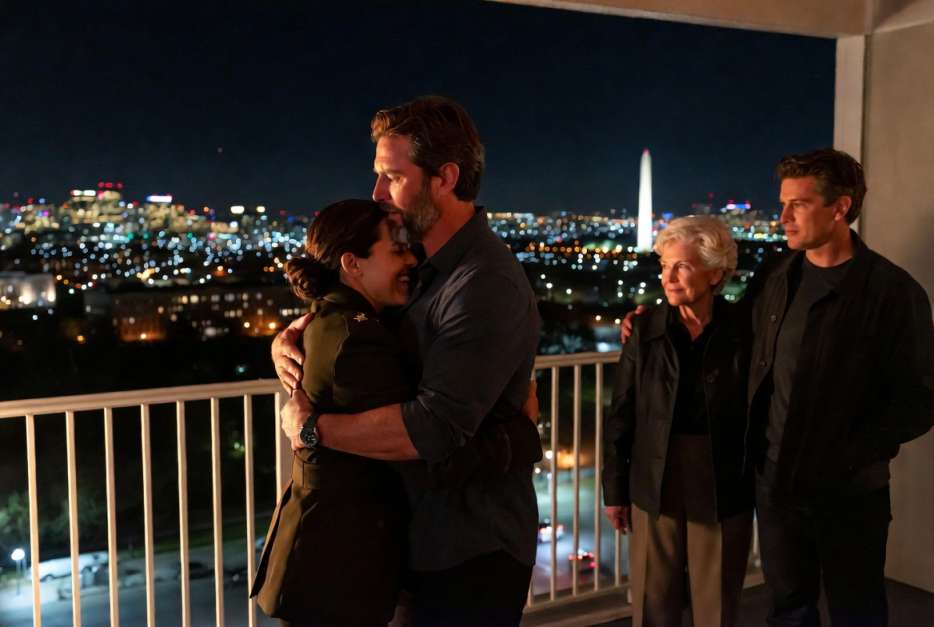
Outside on the balcony afterward, the D.C. lights sparkled like distant tracer rounds turned beautiful. Mark wrapped his arms around me from behind. Eleanor and Ryan joined us, the four of us standing together against the city skyline.
“I was wrong for so long,” Eleanor said softly. “About strength. About worth. About you. Thank you for showing me the truth.”
I turned to face them all. “We showed each other.”
The wind carried the faint scent of autumn leaves and new beginnings. My secure phone remained silent in my pocket—for now. The next call would come. It always did. But I would answer it with a fuller heart, a stronger family, and scars that no longer defined me in secret.
As we left the ballroom, a young corporal held the door. His eyes widened in recognition. He snapped to attention.
“Colonel.”
I smiled—tired, genuine, unbreakable. “At ease, Corporal. We’re all just trying to make it home.”
In the car, Mark rested his head on my shoulder. “Ready for whatever comes next, Colonel Voss?”
I kissed his temple. “With all of you? Always.”
The city lights streamed past like stars falling into place. The gala that had nearly broken us had instead revealed us. Scars and all.
And in that revelation, we were finally, beautifully whole.