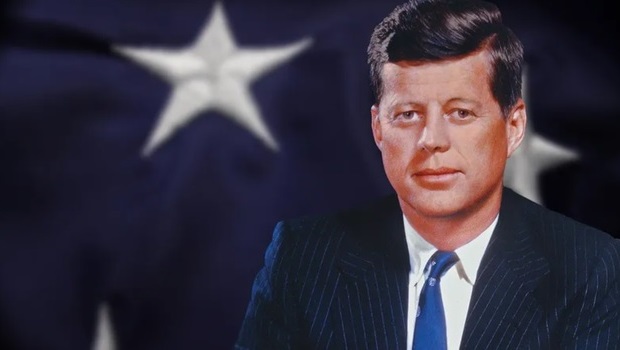
The death of John Fitzgerald Kennedy on November 22, 1963, in Dallas, Texas, did not merely end his life at the age of 46; it inadvertently propelled him into the immortality of history. In the collective consciousness of the American public and the world, JFK was never just a politician; he was an icon, an unfinished promise, a figure representing youth, renewal, and the aspiration to conquer new frontiers. Behind the dazzling glamor of the “Camelot Era” lay a complex narrative woven from the privileges of immense wealth and the agony of chronic illness, and between sharp political instincts and agonizing, high-stakes decisions that reshaped the landscape of the Cold War.
CHAPTER I: THE KENNEDY CLAN AND THE DYNASTIC AMBITION
To truly comprehend the tremendous drive and crushing pressure that weighed upon John F. Kennedy, one must examine his roots: the Kennedy family of Massachusetts.
1. The Shadow of a Patriarch Both Great and Severe
John F. Kennedy was born on May 29, 1917, in Brookline, Massachusetts, the second of nine children born to an Irish-American family. His father, Joseph P. Kennedy Sr., was a shrewd financier and self-made millionaire who amassed a staggering fortune through the stock market, real estate, and the liquor industry. Joe Sr. made no secret of his ambition to elevate his children to the pinnacle of American power.
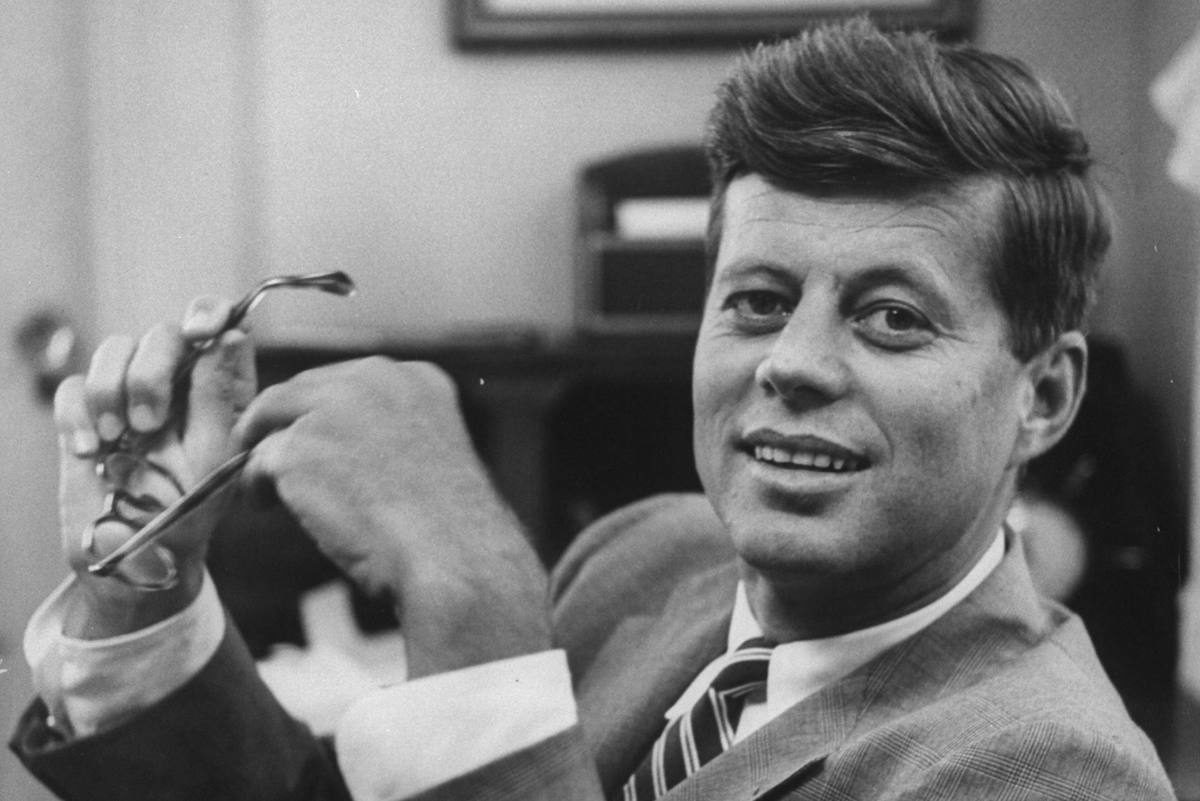
To Joe Sr., finishing second was synonymous with failure. He established an intensely competitive domestic environment where his children vied against one another in everything from sports to political debates around the dinner table. Initially, the heaviest weight of political expectation was placed on the eldest son, Joseph P. Kennedy Jr. Joe Jr. possessed every ideal attribute: he was tall, athletic, decisive, and the perfect vessel for his father’s presidential dream. Within that strategic blueprint, John—often called Jack—was merely a minor player, a slender and somewhat carefree younger brother.
2. A Childhood in the Shadow of Illness
Far from the image of a vibrant, energetic President that the public would later see, Jack Kennedy’s childhood and youth were a prolonged battle against disease. Young Jack constantly suffered from severe medical conditions: scarlet fever, suspected leukemia, colitis, and particularly chronic back pain stemming from a congenital spinal deformity.
His frail health meant that Jack spent much of his time confined to bed at elite boarding schools like Choate and, later, Harvard University. Rather than surrendering to his plight, Jack used these long, solitary months of convalescence to develop a voracious reading habit. He devoured volumes of history, biographies of great figures, and political philosophy. This foundation of self-directed knowledge forged a intellect that was deep and romantic yet profoundly pragmatic—strikingly distinct from his father’s raw utilitarianism.
CHAPTER II: THE PIVOTAL TURN AND THE PACIFIC THEATER
Destiny began to shift with the outbreak of World War II, bringing two major events that completely redefined Jack’s life path.
1. The Hero of PT-109
Despite a physical condition so poor that he was initially rejected for military service, Jack Kennedy used his father’s extensive connections to secure a commission in the United States Navy. In April 1943, he took command of the patrol torpedo boat PT-109 in the South Pacific theater.

On the night of August 2, 1943, disaster struck. The Japanese destroyer Amagiri rammed and sliced PT-109 completely in half in the pitch darkness. Two crew members were killed instantly, while the survivors clung to the remaining floating piece of the hull. Jack himself suffered a severe back injury, but his leadership instincts and raw courage took over. He clamped the strap of a badly burned crewman’s life jacket (Patrick McMahon) between his teeth and swam for hours to tow the man to a small, deserted island.
Over the days that followed, Kennedy swam through perilous straits to scout for rescue, ultimately securing his crew’s salvation by carving a message into a coconut shell and entrusting it to friendly local islanders. The PT-109 incident not only earned him the Navy and Marine Corps Medal but, more importantly, transformed Jack into a genuine war hero in the eyes of the American public—the ultimate calling card for any future political career.
2. Family Tragedy and the Transfer of the Mission
In 1944, the eldest brother, Joe Jr., was killed in a top-secret, highly dangerous bombing mission over Europe. His death was a devastating blow to the Kennedy clan, shattering the grand plan Joe Sr. had meticulously crafted.
Left with no alternative, the patriarch turned to his second son. The dynastic mantle was passed. The responsibility of fulfilling the White House dream now fell squarely on the shoulders of the newly returned war hero from the Pacific. Jack Kennedy entered politics not from an initial personal desire, but to shoulder the destiny of a fallen brother and the unyielding ambition of a powerful father.
CHAPTER III: THE ASCENT TO POWER (1946 – 1960)
JFK’s political journey stands as a textbook lesson in blending financial muscle, cutting-edge media strategy, and magnetic personal charm.
1. From the House to the Senate
In 1946, at the age of 29, Kennedy ran for the U.S. House of Representatives in Massachusetts’s 11th congressional district. Backed by his father’s unlimited financial resources and the active mobilization of his entire family—particularly his younger brother Robert “Bobby” Kennedy as campaign manager—Jack won a landslide victory. He served three terms in the House before setting his sights on a grander target: the United States Senate.

In 1952, Kennedy challenged the formidable incumbent Republican Senator Henry Cabot Lodge Jr. It was a historic showdown. The Kennedy campaign revolutionized traditional electoral methods by leveraging the image of a youthful, dynamic family. Tea parties hosted by Jack’s mother and sisters drew thousands of female voters. Ultimately, Kennedy won a narrow but spectacular victory, cementing his status as a rising star in the Democratic Party.
During his time in the Senate, while undergoing agonizing and nearly fatal back surgeries, Kennedy utilized his long recovery periods to author Profiles in Courage. The book chronicled U.S. Senators who had bravely risked their careers to stand up for national principles. Published in 1956, it won the prestigious Pulitzer Prize, elevating Jack from a wealthy politician to a serious scholar and deep thinker.
2. Jacqueline Bouvier and the Perfect Piece
In 1953, John F. Kennedy married Jacqueline Lee Bouvier, a woman from an aristocratic background who was highly intelligent, fluent in multiple languages, and possessed an exquisite aesthetic sense.
The Essence of a Strategic Marriage: Though their marital life would later face severe storms due to Jack’s notorious womanizing, there is no denying that Jackie was one of his greatest political assets. She brought an aura of elegance and European-style aristocratic refinement to Kennedy’s image, something unprecedented among American First Ladies. The combination of Jack’s charisma and Jackie’s poise created a “golden” couple that captivated both the media and the public.
       [ Wealthy Dynasty / War Hero ] (Jack Kennedy)
                            +
       [ Intellect / Aesthetic / Elegance ] (Jackie Bouvier)
                            =
       [ THE CAMELOT CONCEPT: The Icon of American Political Royalty ]
CHAPTER IV: THE 1960 CAMPAIGN AND THE TELEVISION REVOLUTION
The 1960 presidential election between John F. Kennedy (Democrat) and Richard Nixon (the incumbent Vice President, Republican) entered the annals of history as a monumental turning point in modern politics.
1. The Fateful Night of Television: Kennedy vs. Nixon
Prior to 1960, politicians reached voters primarily through radio, print media, and live stump speeches. But on September 26, 1960, the first-ever televised debate between two presidential candidates changed everything forever.

Richard Nixon had just been discharged from the hospital following a knee injury; he was gaunt, exhausted, refused professional studio makeup, and wore a gray suit that blended into the background. He sweat profusely under the intense studio lights. Conversely, John F. Kennedy had just returned from campaigning in California with a healthy, sun-kissed tan. He looked relaxed, confident, wore a dark suit that offered a sharp contrast, and was impeccably made up.
| Media Platform | Audience Perception | Reason |
| Radio Listeners | Richard Nixon won | Sharp arguments, rich political experience. |
| TV Viewers | John F. Kennedy won in a landslide | Captivating appearance, calm demeanor, mastery of the space. |
This event marked the dawn of the “image politics” era. Kennedy understood that in the age of television, how you looked while speaking was just as vital as what you actually said.
2. Overcoming the Religious Barrier and a Razor-Thin Victory
Beyond the question of experience, Kennedy faced a major hurdle: he was a Roman Catholic. In American history up to that point, no Catholic had ever been elected President, largely due to widespread anxiety among the Protestant majority that a Catholic commander-in-chief would take orders from the Pope in the Vatican.
Kennedy confronted this crisis head-on in a historic speech before the Greater Houston Ministerial Association. He declared unequivocally: “I am not the Catholic candidate for President. I am the Democratic Party’s candidate for President, who happens also to be a Catholic. I believe in an America where the separation of church and state is absolute.” This courageous address dispelled the electorate’s fears.
In November 1960, Kennedy secured victory in one of the closest elections of the 20th century, edging Nixon by a mere 112,000 popular votes nationwide. At 43, he became the youngest person ever elected President of the United States.
CHAPTER V: THE WHITE HOUSE CAMELOT CHRONICLES (1961 – 1963)
On January 20, 1961, beneath a freezing Washington winter sky, John F. Kennedy took the oath of office, officially inaugurating a period later romanticized as “Camelot”—after the legendary, idealistic kingdom of King Arthur.

In his inaugural address, he delivered an immortal line that became a rallying cry for an entire generation of Americans:
“Ask not what your country can do for you — ask what you can do for your country.”
Under Kennedy, the White House transformed into a vibrant epicenter of culture and the arts. Galas were no longer just gatherings for dry politicians; they became meeting grounds for famous writers, classical musicians, and Nobel laureates. His younger brother, Robert Kennedy, was appointed Attorney General, serving as the President’s closest confidant and right-hand man.
Yet, behind this velvet curtain of art and culture lay a highly challenging domestic agenda and a world standing on the precipice of nuclear annihilation.
CHAPTER VI: FOREIGN POLICY ON A RAZOR’S EDGE: COLD WAR CRISES
JFK’s brief tenure was profoundly dominated by intense confrontations with the Soviet bloc, led by Nikita Khrushchev.
1. Failure at the Bay of Pigs (April 1961)
Just three months into his presidency, the young commander-in-chief faced his first test, which resulted in the most bitter failure of his career.
The preceding Eisenhower administration had approved a clandestine CIA plan: train and arm Cuban exiles to launch an invasion at the Bay of Pigs to overthrow Fidel Castro’s regime. Kennedy, green in experience and loath to appear weak before his military staff, allowed the plan to proceed. However, to conceal Washington’s direct involvement, he conditioned it on the cancellation of American air support.
The invasion dissolved into an unmitigated disaster. Castro’s military rapidly crushed or captured the exiled force. Kennedy steadfastly refused to deploy the U.S. military to rescue the operation, avoiding an all-out war. He took full responsibility for the fiasco before the American public. The event was a costly lesson, shattering Kennedy’s uncritical trust in CIA intelligence and Pentagon generals, and deeply altering his approach to crisis management from then on.
2. The Berlin Wall (August 1961)
In June 1961, Kennedy met Khrushchev in Vienna. The Soviet leader, misjudging the young President as weak following the Bay of Pigs disaster, exerted immense pressure regarding Berlin, threatening to sign a separate treaty with East Germany to cut off Western access to West Berlin. Kennedy refused to budge.

By August 1961, to stem the massive exodus of citizens fleeing East Germany for the West, the East German regime—with Moscow’s backing—erected the Berlin Wall. Though it stood as a tragic symbol of division, Kennedy pragmatically noted: “A wall is a hell of a lot better than a war.”
In 1963, he traveled to West Berlin and delivered his famous speech featuring the iconic German phrase: “Ich bin ein Berliner” (I am a Berliner), reaffirming America’s ironclad commitment to defending freedom and democracy in Western Europe.
3. The Cuban Missile Crisis (October 1962): 13 Days on the Brink of Doomsday
In October 1962, American U-2 spy planes discovered that the Soviet Union was secretly constructing medium-range nuclear missile sites in Cuba, barely 100 miles from the coast of Florida. Had these missiles become operational, most major American cities would have been placed within lethal range inside a matter of minutes.
The world plunged into the most terrifying 13 days in human history, as the threat of a global, apocalyptic nuclear war loomed larger than ever before.
[ Soviet Missiles Detected in Cuba ]
         │
         ├──► Military Hawks (Pentagon): Demand immediate airstrikes and military invasion of Cuba
         │
         └──► JFK's Decision: Establish a flexible "Naval Quarantine"
Kennedy rejected the immediate airstrike proposals from his military chiefs, realizing it would trigger a retaliatory nuclear strike from the Soviet Union. Instead, he chose a middle path: a naval “quarantine” around Cuba to block Soviet ships from delivering more weapons. Simultaneously, he opened a secret diplomatic channel to Khrushchev through his brother Bobby Kennedy.
Following breathless, agonizing negotiations, a quiet understanding was reached:
-
The Soviet Union agreed to dismantle and remove all missiles from Cuba under United Nations supervision.
-
The United States publicly pledged never to invade Cuba and secretly agreed to remove its Jupiter missiles from Turkey.
Kennedy’s wisdom, restraint, and mastery of brinkmanship during this crisis saved the world from nuclear devastation, elevating his global prestige to its absolute zenith.
4. The Quagmire of Vietnam: Controversial Decisions
Unlike his success in Cuba, Kennedy’s policies toward South Vietnam remain among the most fiercely debated chapters of his legacy.
Believing firmly in counter-insurgency doctrine, Kennedy drastically increased the number of U.S. “military advisors” in Vietnam from a few hundred to over 16,000 by late 1963. He also permitted deep interventions into Saigon’s volatile political arena. These decisions, though framed as a vital dam against the spread of communism in Southeast Asia, inadvertently laid the groundwork that dragged the United States deep into the catastrophic Vietnam War under his successors.
CHAPTER VII: DOMESTIC POLICY AND THE VISION OF A “NEW FRONTIER”
On the domestic front, the Kennedy administration championed the “New Frontier” doctrine, pushing for sweeping social, economic, and technological reforms.
1. The Civil Rights Movement: A Perilous Transformation
In the early 1960s, the African American struggle for racial equality erupted with immense force under the leadership of the Reverend Dr. Martin Luther King Jr. Initially, Kennedy approached civil rights cautiously, as he required the support of conservative Southern Democrats to pass his economic bills through Congress.
However, as brutal racial violence flared in Alabama and Mississippi, Kennedy recognized that this had transcended mere politics; it had become a profound national moral crisis. In June 1963, he delivered a landmark televised address to the nation, declaring that the rights of every American must be guaranteed regardless of skin color. He subsequently drafted and submitted the sweeping legislation that would later become the historic Civil Rights Act of 1964.
2. The Race to the Moon: Reaching for the Stars
In April 1961, the Soviet Union scored a decisive victory in the Space Race by sending Yuri Gagarin into space as the first human to orbit the Earth. Sensing that American national pride had been deeply wounded, Kennedy made a bold, historic decision.

In May 1961, before a joint session of Congress, and later during his famous 1962 address at Rice University, he declared:
“We choose to go to the Moon in this decade and do the other things, not because they are easy, but because they are hard.”
He committed the nation to landing a man on the Moon and returning him safely to Earth before the 1960s drew to a close. This resolve mobilized the Apollo Program, pouring billions of dollars into scientific research and sparking a grand industrial revolution. Though he did not live to see it, Kennedy’s promise materialized in July 1969 when Apollo 11 successfully touched down on the lunar surface.
CHAPTER VIII: THE FINAL STEPS IN DALLAS AND THE UNRESOLVED VERDICT
In November 1963, John F. Kennedy embarked on a political tour of Texas to heal widening internal rifts within the state’s Democratic Party and lay the groundwork for his 1964 re-election campaign.
1. The Fateful Afternoon at Dealey Plaza
At noon on November 22, 1963, an open-top convertible carrying President Kennedy, First Lady Jackie, and Texas Governor John Connally crawled through the crowded streets of downtown Dallas to the cheers of tens of thousands of citizens.
At 12:30 PM, as the presidential limousine passed Dealey Plaza in front of the Texas School Book Depository, gunfire shattered the air. The first bullet struck the President’s neck; a second, fatal shot struck his head. In sheer, unadulterated panic, Jackie Kennedy crawled onto the trunk of the moving vehicle, trying to retrieve pieces of her husband’s skull. The limousine sped away toward Parkland Memorial Hospital, but all medical interventions were futile. At 1:00 PM, John F. Kennedy was officially pronounced dead.
Hours later, aboard Air Force One as it carried Kennedy’s casket back to Washington, Vice President Lyndon B. Johnson took the oath of office as the 36th President of the United States. Standing beside him was Jackie Kennedy, still wearing her pink Chanel suit, heavily splattered with her husband’s blood.
2. The Mystery of Lee Harvey Oswald and Conspiracy Theories
Less than two hours after the assassination, Dallas police arrested Lee Harvey Oswald, a former U.S. Marine who had once defected to the Soviet Union, charging him with the murder of the President and a local police officer.
However, mystery compounded mystery when two days later, on November 24, as Oswald was being moved through the basement of police headquarters, he was shot dead at point-blank range by Jack Ruby—a local nightclub owner with ties to organized crime—unfolding live in front of millions of television viewers. Oswald’s death permanently silenced the sole suspect.
Although the government-appointed Warren Commission later concluded that Lee Harvey Oswald acted entirely alone, a vast majority of the American public remains deeply skeptical of this verdict to this day. A cascade of conspiracy theories has emerged, pointing fingers at various potential culprits:
-
The Central Intelligence Agency (CIA): Retaliation for Kennedy firing their top leadership after the Bay of Pigs and his plans to curb their power.
-
The Mafia: Outraged by the aggressive anti-mafia crackdown spearheaded by Attorney General Bobby Kennedy.
-
The Cuban or Soviet Governments: Retaliation for the intense confrontations of the Cold War.
CHAPTER IX: GOC KHUAT BEHIND THE GLAMOR
Modern history, aided by declassified documents and candid memoirs, has stripped away the flawless lacquer of the “Camelot Era” to reveal a deeply human John F. Kennedy, complete with vulnerabilities and dark corners.

1. Extensively Concealed, Debilitating Health
The image of a robust, athletic JFK playing touch football on the beach or striding dynamically was entirely a masterful construct of a brilliant media apparatus. In reality, Kennedy was one of the most physically ailing presidents in American history.
He suffered from Addison’s disease (a life-threatening autoimmune adrenal insufficiency). To function daily and endure excruciating back pain, Kennedy relied on a massive cocktail of medications: heavy painkillers, steroids, hormone replacements, sleeping pills, and regular compound injections containing amphetamines from specialized doctors. At times during the Cuban Missile Crisis, he was forced to make decisions determining the fate of humanity while his physical body was gripped by blinding agony.
2. A Reckless Personal Life
Another profound shadow over JFK’s life was his relentless, compulsive philandering. Despite having a beautiful wife and loving children, Kennedy engaged in endless, fleeting extramarital affairs with a long list of women. These ranged from Hollywood stars like Marilyn Monroe and White House secretaries to individuals with dangerous ties to the criminal underworld, such as Judith Exner.
In the modern era, such personal scandals would instantly destroy any politician’s career. But in the 1960s, a gentleman’s agreement existed between the press and the presidency. Reporters deliberately respected the President’s privacy and refused to report on his infidelity, keeping the idealized portrait of the Kennedy family pristine until the day he died.
CHAPTER X: THE ENDURING LEGACY AND THE CAMELOT MYTH
More than six decades after that fateful noon in Dallas, John F. Kennedy consistently ranks near the top of public opinion polls as one of the most beloved presidents in American history. Why does a leader who governed for a mere 1,036 days, whose domestic initiatives were largely stalled, and who oversaw a massive military failure, leave such an indelible imprint?
1. The Awakener of a Generation’s Aspirations
JFK’s greatest legacy does not lie in the volume of legislation he passed through Congress, but in the profound inspiration he left behind. He breathed a fresh, youthful, and unyielding optimism into an America that was growing anxious under the shadow of the Cold War.
His creation of the Peace Corps—sending thousands of young Americans to developing nations to assist with education, healthcare, and community development—perfectly encapsulated his philosophy of national service. His commitment to the Moon landing inspired a generation of youths to pursue fields in science, mathematics, and engineering.
2. The Immortality of a Life Cut Short
In a painful paradox of history, the tragic death that struck Kennedy at the peak of his life preserved his image against the ravages of time.

Had he lived to serve out a second term, Kennedy would have inevitably confronted the bitter fracturing of America over civil rights and the catastrophic quagmire of the Vietnam War—crises that completely incinerated the reputation of his successor, Lyndon B. Johnson. But because he fell on November 22, 1963, John F. Kennedy remains forever frozen at age 46: youthful, elegant, full of boundless promise, and never aged or tarnished by subsequent political failures.
CONCLUSION
John F. Kennedy was a seamless blend of a pragmatic, sharp politician and a noble, romantic icon of 20th-century America. He was no flawless saint; he was a man plagued by intense physical suffering, flaws in his policies, and deep indiscretions in his personal life.
Yet, rising above it all, the story of JFK—from a sickly boy in the shadow of a powerful dynasty, to an ocean war hero, to the pinnacle of supreme power in the free world, and finally falling in a heart-wrenching tragedy—has become an inseparable thread in the tapestry of American mythology. He lived a brief but brilliant life, akin to a shooting star blazing across the night sky, leaving behind a trail of aspiration, courage, and an unshakeable faith in human potential. The Camelot era may have shattered in Dallas, but the eternal flame beside his grave at Arlington National Cemetery burns onward, lighting the spark of inspiration for generations yet to come across the globe.